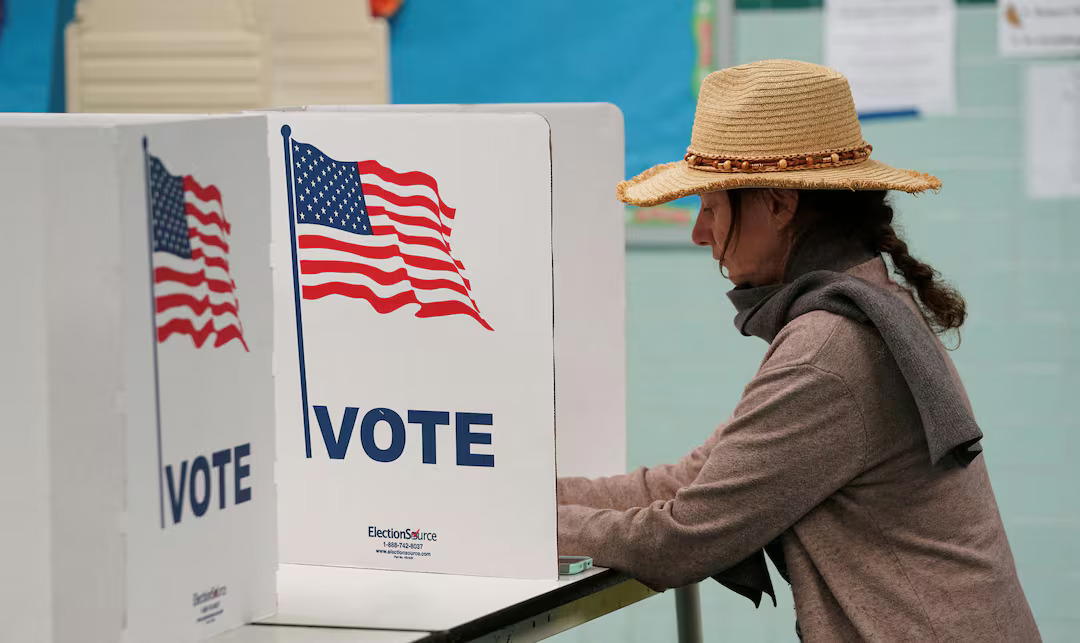
A voter casts her ballot at a polling station on Election Day in Falls Church, Virginia, U.S., November 7, 2023. REUTERS/Kevin Lamarque/ File photo Purchase Licensing Rights
By Efosa Taiwo
As US election day approaches, millions of Americans are gearing up to vote for their next president in a tightly contested race.
This year’s election pits current Vice President Kamala Harris and Minnesota Governor Tim Walz against former President Donald Trump and Senator J.D. Vance, with polls indicating a nearly even split in voter support.
Across the United States, voting procedures and regulations vary by state, but there are universal tips for voters to ensure a smooth voting experience on Election Day.
US election: finding your polling location to cast your vote
Voters can locate their designated polling station by checking with their state or county election office website, visiting Vote.org, or consulting the U.S. Election Assistance Commission site. Polling stations are typically set up in public venues like schools, community centers, and municipal buildings. Because polling locations may shift due to availability or logistical changes, voters are encouraged to confirm their assigned location in advance and verify their registration status.
Polling Hours
Most polling places open early in the morning, between 6:00 a.m. and 8:00 a.m., and close in the evening, between 7:00 p.m. and 9:00 p.m., though these hours can vary by state and, in some cases, by county. For instance, polls in New York generally operate from 6:00 a.m. to 9:00 p.m., while California’s polls are open from 7:00 a.m. to 8:00 p.m. Notably, anyone in line by closing time is legally allowed to vote, regardless of when they reach the front.
Required Documentation
Identification requirements differ by state. In some states, like Georgia, Indiana, and Wisconsin, a government-issued photo ID is mandatory. Other states, including Colorado and Florida, accept utility bills or other alternative forms of ID. Carrying an ID is generally recommended, even in states that don’t mandate it. Voters who encounter issues with their registration may request a provisional ballot, which will be counted after their eligibility is confirmed.
Read also:
US Election: Meet the billionaires, celebrities endorsing Trump and Harris [Full List]
Marking the Ballot
Ballots vary in format, so understanding how to properly mark them is essential:
Paper Ballots: Voters mark these manually, often by filling in an oval or drawing a line next to their candidate’s name. Instructions should be carefully followed, and marks should be reviewed for accuracy before submission.
Touchscreen Voting Machines: Commonly used in several states, these devices require voters to confirm their choices on a review screen. Some touchscreen machines produce a printed record, which should be verified to ensure accuracy.
Ballot Marking Devices: These devices allow voters to make selections electronically, which are then printed onto a paper ballot. Voters can review this printout for accuracy before submitting it.
Voters will likely see options for presidential candidates, congressional representatives, state and local officials, and ballot measures. Ballot measures typically require a simple “Yes” or “No” selection.
Avoiding Common Voting Mistakes
To ensure votes are counted accurately, voters should adhere to the instructions for each ballot type, avoid overvoting by selecting only the allowed number of candidates per race, and carefully review any ballot measures to align their choices with their intentions. Campaign materials should not be brought to the polling station to avoid issues with electioneering laws. Poll workers are available to help with any questions, and replacement ballots can usually be requested if an error occurs on a paper ballot.
Tracking Your Vote
Many states now offer tracking for absentee and mail-in ballots, allowing voters to confirm that their ballots have been received and counted.
As the U.S. presidential election approaches, citizens are urged to review their voting information, understand the requirements for their area, and exercise their right to vote. With a high-stakes election at hand, each vote plays a crucial role in shaping the nation’s future.
Disclaimer
Comments expressed here do not reflect the opinions of Vanguard newspapers or any employee thereof.