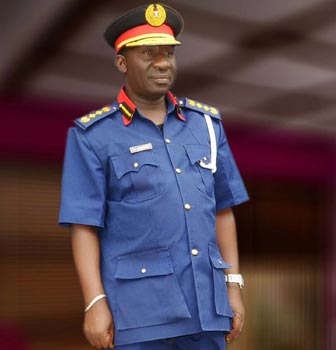
Gana-Mohammadu
The Nigeria Security and Civil Defence Corps, NSCDC, has certainly come a long way in efforts at fighting crime and criminality in the country. Established by Act 2 of 2003 with numerous security responsibilities, the Act was amended in 2007, to further strengthen and empower the Corps for better service delivery. The Corps operates under the umbrella body of the International Civil Defence Organization as its 66th member, an indication that it has a distinct mandate from other security agencies, though working towards the same goals.
To further buttress the very important role the NSCDC plays in national growth, the International Civil Defence Organization (ICDO), Geneva, has proposed to locate its regional headquarters in Nigeria with an overall objective of using the NSCDC as the hub of civil defence activities in West and Central Africa.
After about three months in office, Commandant-General, Abdullahi Gana Muhammadu, in this interview gives insight into some of the NSCDC activities. He spoke with our Crime Editor, Emma Nnadozie, in Abuja.
Excerpts:
Manpower development and staff welfare
I have given top priority to training and manpower development in order to reposition the Corps and to engender skill acquisition and by implication, high level of productivity so as to guaranty operational efficiency. To this end, the Corps has in the last 10 years sponsored over 40,000 personnel on several workshops, seminars and intensive training programmes both at home and abroad, to enhance their capacity to diligently deliver on our mandate.

Gana-Mohammadu
Within the period under review, the Corps has been able to produce Chattered Accountants (ICAN), ICMA members, Chattered Auditors and Chattered Administrators, among other professional qualifications.
To further underscore the importance attached to training and manpower development, the Corps has established three training colleges – College of Disaster and Peace Studies in Katsina, Civil Defence Academy, Sauka, Abuja and College of Security Management, Abeokuta.
The ability of the Corps to handle its mandate can be attributed to the existence of a well-trained and highly motivated workforce. The Corps has broken the jinx of stagnation by ensuring the elevation of qualified personnel through promotion exercise which is the first in the history of the Corps. This exercise has effectively positioned the personnel to adequately man various command positions in the Corps.
Staff welfare matters are being taken with seriousness through our insurance policy with all our officers insured against accident, death and disability in the course of carrying out their assignments. The Corps has also made provisions for distribution of uniforms and other kits to staff while ensuring prompt payment of worker’s salaries and allowances. The Housing unit is also making efforts towards the provision of housing schemes for workers nationwide.
The Nigeria Energy Security Command project
The Nigeria Energy Security (NESEC) project is an initiative of the office of the National Security Adviser (ONSA) being executed under a contract awarded to Messrs Stater Point Integrated Services Ltd (SPIS). The major objective of the project is to provide the NSCDC to drastically reduce or eliminate vandalism of oil and gas pipelines as well as oil theft. The first phase of the project covers Ondo, Delta, Bayelsa, Rivers and Akwa Ibom states.
You will recall that the country has witnessed an upsurge in crime in recent times ranging from vandalisation to insurgency, kidnappings, ethno-religious crises, armed banditry, among others. This development has placed enormous burden of providing all round security on the shoulders of Nigeria Security and Civil Defence Corps. The Corps has been able to tackle the menace of insecurity as it relates to its mandate while at the same time collaborating with other sister agencies to fight some of these vices including insurgency occasioned by the Boko Haram attacks. In its efforts to rid the country of activities of vandals and other criminals, the Corps has made series of arrests of criminal elements, many of whom are currently now facing prosecution while many others have been convicted and sentenced to various jail terms.
Regulation of activities of private guard companies
In the area of regulation of activities of private guard companies, the Corps has succeeded in bringing sanity to bear on the operations of this industry which has since been rid of quack operators.
My tenure has also witnessed the incorporation of the Corps into the Joint Intelligence Board (JIB). Through the JIB, the Corps has gained recognition to the extent that about 30 of our personnel currently work in different departments and sections in the office of the National Security Adviser. The office of the National Security Adviser has also been responsive in terms of manpower development and capacity building for the NSCDC personnel.
The Corps also has an existing partnership with some international donor agencies and affiliated agencies of the United Nations. We have benefited in various manpower development and capacity-building including workshops and seminars, especially with the UNDP. The Corps through its Peace and Conflict Resolution Unit is into partnership with the UNDP in the area of training and the application of Alternative Dispute Resolution (ADR) mechanism in solving disputes.
Collaboration with the Joint Task Force operations in the Niger Delta
The Corps is a component part of the operations of the Joint Task Force (JTF), operating within the Niger Delta region. Members of the Corps contingent to this special squad have distinguished themselves in the discharge of their duties in this regard and have contributed immensely to the successes recorded by the JTF so far. It should be noted that the infusion of the Corps into the operations of the JTF was not an accident but recognition of the contributions the Corps has made to national security.
The Corps is also in partnership with the Nigeria Maritime Administration and Safety Agency (NIMASA) where the Corps has contributed armed personnel to secure NIMASA facilities while providing round the clock security in conjunction with the Nigeria Navy on Nigerian waterways, to checkmate the menace of piracy, oil theft and illegal bunkering.
Terrorism is assuming a very dangerous dimension not only in the country but globally. In the country, however, the wave of kidnappings and violent attacks by militant groups in the country have been on the increase. The Corps is therefore taking proactive steps to ensure that the violent activities of these terrorist groups especially the Boko Haram sect are reduced to the barest minimum. Apart from strengthening our surveillance and intelligence gathering mechanism in this area, the Corps is effectively collaborating with the military to check insurgency especially in the North East.
Protection of Critical National Assets and Infrastructure
The NSCDC has also been mandated to ensure the safety of the entire Critical National Assets and Infrastructure (CNAI) spread across the nation. To this end, the Corps is fully mobilized to effectively carry out this mandate. This includes training and retraining of its armed personnel especially in the area of surveillance and intelligence gathering on a regular basis.
The Corps collaborates with the Ministry of Power, Niger Delta Power Holding Company and other operators in the power sector for effective policing of their infrastructure which has been termed CNAI. The Corps has equally created a Special Weapon Tactics Unit (SWAT) for the same purpose.
Disaster management
The Disaster Management Department has been re-invigorated to enhance quick response in emergency situations. The Corps has established Emergency Response Units at Airports located in Lagos, Abuja, Owerri, Port Harcourt, Kano and has stationed emergency response ambulances along major routes in the country for quick response in emergency situations. The Corps is into partnership with NEMA and other stakeholders to enhance proper management, mitigation and reduction of disasters in the country. The Corps has collaborated well with stakeholders in various rescue operations of accidents and flood victims across the country.
Challenges and prospects
The NSCDC has a number of challenges which include, shortage of operational equipment, shortage of manpower, inadequate security materials and equipment such as communication gadgets, firefighting equipment, operational vehicles, trucks, cranes, speedboats, surveillance equipment, helicopters, speedboats, shortage of office and residential accommodation for staff.
Disclaimer
Comments expressed here do not reflect the opinions of Vanguard newspapers or any employee thereof.