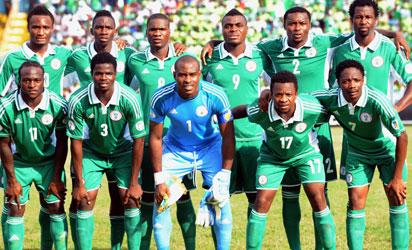
NIGERIA, Calabar : Nigeria’s (top L-R) midfielder John Obi Mikel, defender Kenneth Omeruo, forward Brown Ideye, forward Emmanuel Emenike, defender Godfrey Oboabona, defender Efe Ambrose, (bottom L-R) midfielder Victor Moses, defender Uwa Echiejile, goalkeeper Vincent Enyeama, midfielder Ogenyi Onazi and midfielder Ahmed Musa pose for a group picture before the 2014 FIFA World Cup African zone second leg play-off football match between Nigeria and Ethiopia in Calabar on November 16, 2013. Nigeria won 2-0. AFP PHOTO/
Nigeria football officials are set to implement a code of conduct which they hope will prevent future rows with the national team over bonus payments.
The move is designed to ensure there is no repeat of the dispute that almost caused the country to miss out on this year’s Fifa Confederations Cup.
Players threatened to strike over a 50% cut in their bonus for June’s 2014 World Cup qualifiers in Kenya and Namibia.
Sports minister Bolaji Abdullahi has forwarded a code of conduct, drafted by a committee he set up for immediate implementation by the country’s football federation.

NIGERIA, Calabar : Nigeria’s (top L-R) midfielder John Obi Mikel, defender Kenneth Omeruo, forward Brown Ideye, forward Emmanuel Emenike, defender Godfrey Oboabona, defender Efe Ambrose, (bottom L-R) midfielder Victor Moses, defender Uwa Echiejile, goalkeeper Vincent Enyeama, midfielder Ogenyi Onazi and midfielder Ahmed Musa pose for a group picture before the 2014 FIFA World Cup African zone second leg play-off football match between Nigeria and Ethiopia in Calabar on November 16, 2013. Nigeria won 2-0. AFP PHOTO/
The minister had said that the report of the Segun Adeniyi Committee would be implemented to the letter.
“That’s the right step to take so that the Nigeria Football Federation can implement this before the World Cup,” Julius Ogunro, special assistant to the sports minister, told BBC Sport.
“It [the code of conduct] was kept away to allow the team focus solely on securing a World Cup ticket.
“Now is the right time to get it done and the NFF as a parastatal of the sports ministry are well aware of its importance.
“We need to prevent a bonus row like the one which fueled anger and almost embarrassed the country before the last Confederations Cup in Brazil.”
Back in June, Nigeria’s players had initially refused to to go to the Confederations Cup following their 1-1 draw in Namibia in a World Cup qualifier as they were unhappy with the bonus payments offered by the Nigeria Football Federation (NFF).
The Presidency intervened and made extra money available, eventually allowing the squad to travel to Brazil – two days late and only about 24 hours before Nigeria’s opening game against Tahiti.
The five-part document spells out the obligations of the NFF, coaches and players called up to the national team. Non-compliance could lead to fines, suspensions or even expulsions.
Pay rows have often surrounded Nigerian teams, with coaches not paid regularly, while players have resisted any attempts to review their win bonus during important qualifiers or at major tournaments.
There have been several attempts to introduce a code but they have often been met by a stiff resistance from players in the past.
“This will hopefully bring an end to ugly incidents that often portray the country in a bad light during major tournament,” Ogunro said.
The code of conduct spells out some dos and donts for the Eagles and the football administrators.
It mandates the NFF to officially inform players what they are entitled to before assignments so that bonus row will be avoided.
Players, through the captain or representative are obliged to remain in camp under the code of conduct or leave.
Other matters under the code of conduct include media relations, players’ conduct in camp, authority of coaches over players, etc.
Disclaimer
Comments expressed here do not reflect the opinions of Vanguard newspapers or any employee thereof.