…Lokpobiri assures completion by 2028, commits more funds
By Emem Idio, Yenagoa
The Federal Government has renewed its commitment to completing the Oloibiri Museum and Research Centre ,OMRC, in Bayelsa State, with the Minister of State for Petroleum Resources (Oil), Senator Heineken Lokpobiri, assuring that government would meet its financial obligations to keep the project on schedule.
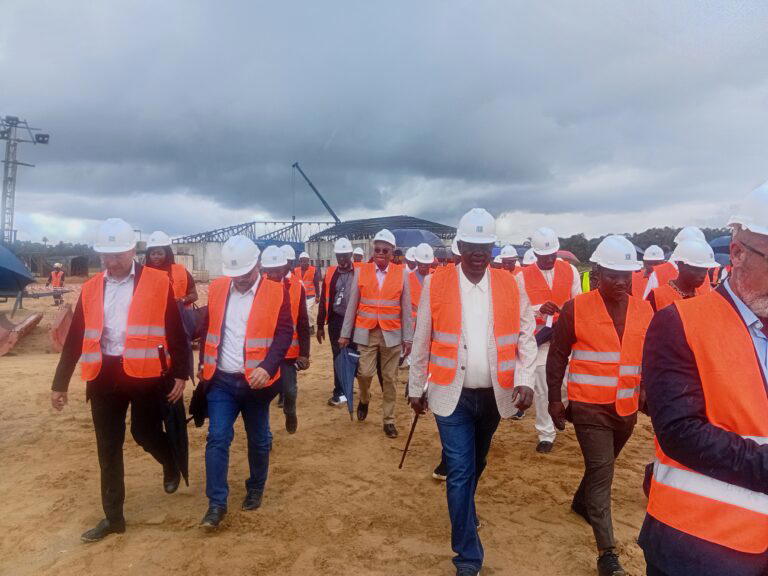
Lokpobiri gave the assurance during an inspection of the ongoing project at Oloibiri in Ogbia Local Government Area of the state, the site where Nigeria’s commercial oil exploration began in 1956.
The minister said the project, which had remained on the drawing board for decades, had gained fresh momentum under the present administration and was now targeted for completion in 2028.
He described the museum and research centre as a national heritage project that would preserve the history of Nigeria’s petroleum industry while providing facilities for research, exhibitions, tourism, conferences and other international engagements.
According to him, the history of Nigeria’s development cannot be properly documented without acknowledging Oloibiri’s central role in the emergence of the country’s oil industry.
Lokpobiri disclosed that about N70 billion had already been paid under the first phase of the project, adding that the Federal Government would continue to meet its obligations to prevent funding issues from slowing construction.
He also said he would make regular visits to the project site, including unannounced inspections, to monitor progress and ensure that the agreed schedule was maintained.
The Project Manager, Botha de Bruyn, said the contractor remained committed to delivering the project in line with the approved designs, specifications and construction schedule.
De Bruyn said the project team would continue to work with the Federal Government, project management team, host community and other stakeholders to address challenges capable of affecting delivery.
He said the historical significance of Oloibiri imposed a responsibility on the contractor to deliver a facility capable of preserving the story of Nigeria’s oil industry for future generations.
The OMRC Project Director, Architect Ladipo Lewis, said the project was conceived to establish Oloibiri as the recognised birthplace of Nigeria’s oil exploration and development.
Lewis said the museum would document the history, culture, environment, technology and heritage of Oloibiri, while also presenting the evolution of the petroleum industry across the upstream, midstream and downstream sectors.
The complex, he said, would include exhibition galleries, archival facilities, laboratories, research spaces, an auditorium, restaurants, shopping facilities and outdoor oil and gas exhibits.
He disclosed that the main museum building covers more than 10,500 square metres, including over 4,000 square metres of gallery space, while the research centre and laboratories occupy more than 5,400 square metres.
Giving an update on construction, Lewis said the project had surpassed 15 per cent completion, with more than 580 foundation piles driven to depths exceeding 17 metres.
He said the concrete slab for the main museum building had been completed, while construction of columns for the mezzanine and upper floors was ongoing.
According to him, Oil Wells 1 and 2 had reached roofing level, while the accommodation facility had been roofed and fitted with windows.
He added that the health centre and perimeter fencing were practically completed, while the major waterway in front of the project site had also been completed.
Lewis said the museum was designed to have an impact beyond the preservation of Nigeria’s oil history, with the project expected to support tourism, research, employment, local content development and economic activity in Oloibiri and the wider Niger Delta.
He said the surrounding area also had potential for eco-tourism and wildlife research, noting that the broader development vision included hotels, restaurants, conference facilities and other tourism infrastructure.
“This is an opportunity to engage the entire world and put Oloibiri on the map of the world,” Lewis said.
When completed in 2028, the Oloibiri Museum and Research Centre is expected to provide a permanent institutional record of Nigeria’s petroleum history, beginning with the discovery and development of oil at Oloibiri, while serving as a centre for research, education, tourism and heritage preservation.
Disclaimer
Comments expressed here do not reflect the opinions of Vanguard newspapers or any employee thereof.