By Chris Amadi
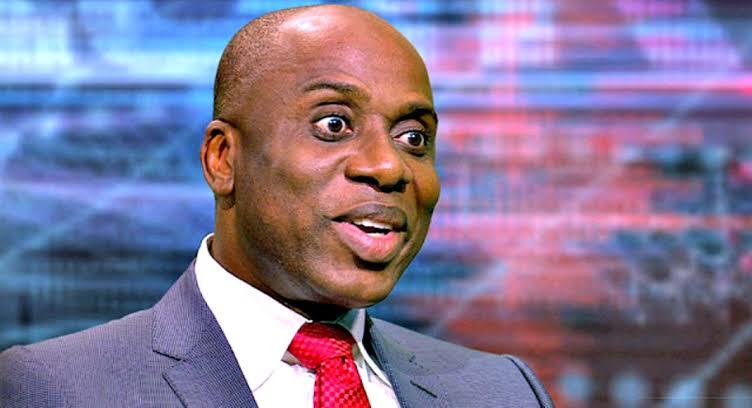
If history is anything to reflect on, we can all agree that some leaders inherit power, while others inherit problems, Rotimi Chibuike Amaechi inherited problems and chose to confront them.
His public service journey spans more than three decades of
leadership, reform, institution-building, security management, infrastructure
delivery, and strategic governance.
In retrospect, few Nigerians have accumulated such a unique
combination of experiences:
- Student Leader
- Legislator
- Speaker of a State Assembly
- Chairman of the Conference of Speakers of State
Legislatures - Governor of Rivers State
- Chairman of the Nigeria Governors’ Forum
- Director-General of a successful Presidential Campaign
- Minister of Transportation
- Lawyer and Legal Scholar
This breadth of experience has shaped a public figure who
understands governance not merely as politics, but as the deliberate construction of systems that outlive individuals.
THE SCHOLAR WHO NEVER STOPPED LEARNING
Amaechi graduated from the University of Port Harcourt with
a degree in English Studies and Literature. Yet his academic journey did not end with public office.
After serving as Governor and Minister, he returned to formal education and law. He obtained an LL.B from Baze University, Abuja. He attended the Nigerian Law School and qualified as a Barrister and Solicitor of the Supreme Court of Nigeria.
He further advanced his legal education through postgraduate
studies in International Corporate and Commercial Law at King’s College London and additional legal studies through the University of London system.
At a stage when many public officials are writing memoirs,
Amaechi was writing examinations. This commitment to continuous learning
reflects a central feature of his leadership philosophy as captured by John F.
Kennedy, “Leadership and learning are indispensable to each other.”
THE LEGISLATIVE REFORMER
For Amaechi, before executive office, came legislative
leadership. Between 1999 and 2007, Amaechi served as Speaker of the Rivers State House of Assembly. At a time when many state legislatures operated as
extensions of executive authority, he emerged as one of Nigeria’s most influential legislative leaders.
As Chairman of the Conference of Speakers of State Legislatures, he became a leading advocate for legislative independence,
constitutional governance, accountability, and institutional strengthening.
Most significantly, these years gave him a deep understanding of governance from both sides of power; those who make laws and
those who execute them.
THE GOVERNOR WHO FACED A SECURITY CRISIS
When Amaechi became Governor of Rivers State in 2007, the Niger Delta was one of the most volatile regions in Africa.
Kidnapping had become a thriving criminal enterprise.
Illegal bunkering was widespread. Militant activities threatened national oil production. Cult violence and organized crime undermined public confidence.
As a result, investors viewed large parts of the region as high-risk territory. Given the magnitude of the challenges, many leaders would have responded with rhetoric. Amaechi responded with architecture. He understood that security could not be achieved through declarations.
It had to be designed, funded, equipped, coordinated and
institutionalized.
BUILDING THE SECURITY ARCHITECTURE OF RIVERS STATE
Beyond equipment procurement and operational support, Amaechi introduced an intelligence-led security doctrine that would later become a defining feature of his governance philosophy.
At the heart of this approach was a framework built around
the principles of Command, Control, Communication, Computer and Intelligence
(C4I). The objective was to move security management from a
reactive model to a proactive one by integrating surveillance, intelligence gathering, communications, rapid response, and inter-agency coordination into a unified architecture.
Through surveillance helicopters, enhanced intelligence
networks, communications systems, and coordinated security operations, criminal
activities could be detected earlier, tracked more effectively, and disrupted more rapidly.
This methodology strengthened the operational capacity of
security agencies across Rivers State and contributed to restoring confidence in previously vulnerable communities and commercial corridors.
More importantly, it established a governance template that viewed security not as isolated law-enforcement activities but as a coordinated ecosystem supporting economic growth, investment, and social stability.
SECURITY AS ECONOMIC POLICY
Specifically, Amaechi understood that no economy grows where
fear governs. No investor builds where criminals dominate and no child learns where insecurity thrives.
This understanding shaped every major decision of his administration. Security was treated not as a separate sector but as the foundation upon which every other sector depended.
Whether it is roads, schools, hospitals, commerce, housing,
or industry, all required security to succeed. The result was a period of reduction in crime and criminalities, expanded public infrastructure, increased commercial activity, and renewed investor confidence across Rivers State.
THE EDUCATION REVOLUTION
Perhaps nowhere was Amaechi’s institution-building philosophy
more visible than in education. His administration launched one of the most ambitious public education transformation program ever undertaken by a sub-national government in Africa.
Between 2008 and 2015, Rivers State invested approximately ₦27 billion (equivalent to about $182 million at the
prevailing exchange rate) in a comprehensive Model Schools Programme that proposed 750 world-class primary schools and completed more than 450 modern schools equipped with ICT centres, libraries, science laboratories, sports facilities, staff accommodation and modern sanitation infrastructure.
Simultaneously, his administration initiated 24 International Standard Model
Secondary Schools through strategic partnerships with leading private-sector
organizations including NLNG, Shell, TotalEnergies, AGIP, First Bank and Zenith
Bank
Hundreds of model primary schools were built, furnished, and
equipped with modern facilities. It is on record that he orchestrated
investments running into tens of billions of naira, including approximately ₦27 billion ($182m) dedicated to the model primary school programme.
To sustain quality, Amaechi recruited 13,210 teachers,
the largest teacher recruitment exercise undertaken by any Nigerian state government at the time. He introduced free and compulsory education, abolished
all fees and levies in public schools, established the Rivers State Quality Assurance Agency, implemented teacher recertification programmes with the British Council, and sponsored over 2,000 Rivers indigenes on overseas
scholarships across Europe, North America and Asia.
These reforms transformed educational outcomes and ultimately earned Port Harcourt the prestigious designation of UNESCO World Book Capital 2014, making it the first city in Sub-Saharan Africa to receive the honour.
In the context of where River State educational sector was
when he became the Governor, the objective of ensuring that the child of a fisherman could learn in an environment equal to that of the child of a banker was revolutionary.
Suffice to state that the program was not simply about education. It was about social mobility. It was about reducing inequality and attacking the root causes of long-term insecurity through opportunity.
HEALTHCARE MODERNIZATION
Amaechi approached healthcare with the same transformational
mindset that defined his education reforms. His administration embarked on one
of the most extensive healthcare infrastructure programmes in Rivers State history, constructing 160 Primary Healthcare Centres, upgrading existing
facilities, and establishing specialist institutions including the Kelsey Harrison Hospital, the Prof. Nimi Briggs Hospital, the Maxillofacial and Dental Hospital, the Mother and Child Hospital, and the Rivers State Mobile Hospital.
To address manpower shortages, his administration recruited 460 medical doctors and 400 nurses, one of the largest healthcare workforce expansions
undertaken by any state government in Nigeria.
These interventions significantly expanded access to healthcare services and contributed to Rivers
State achieving one of the highest immunization coverage rates in the country.
THE INFRASTRUCTURE BUILDER
Infrastructure development under Amaechi was pursued as a
strategic instrument of economic transformation. His administration delivered
over 3,200 kilometres of roads, constructed 29 bridges, and
executed more than 300 road, bridge, shore-protection and land-reclamation projects across the 23 Local Government Areas of Rivers State.
Landmark projects included the Greater Port Harcourt City Development Programme, the
Adokiye Amiesimaka Sports Complex, the Dr. Obi Wali International Conference Centre, and the Rivers Monorail Project. These investments were designed not merely to improve mobility but to unlock economic activity, stimulate private investment and reposition Rivers State as a modern regional growth hub
Amaechi believed that infrastructure was more than concrete and steel. To him, infrastructure was economic freedom. He believers that infrastructure connected communities, created jobs, stimulates investment and strengthened state capacity.
His approach reflected a long-term vision of development
built on physical and institutional foundations.
THE NATIONAL SECURITY ARCHITECT
In 2015, Amaechi moved to the national stage as Minister of
Transportation. There, he confronted a different security challenge.
At the time of his appointment, Nigeria’s territorial waters
had become one of the most dangerous maritime zones in the world. Piracy, sea robbery, oil theft, illegal fishing, maritime kidnapping and organized criminal networks were on rampage.
These threats undermined trade, increased insurance costs,
discouraged investment, and damaged Nigeria’s international reputation.
Again, Amaechi responded not with rhetoric but with
architecture.
THE $195 MILLION DEEP BLUE PROJECT
What began as a state-level security philosophy in Rivers
State evolved into a national maritime-security doctrine under Amaechi’s leadership as Minister of Transportation.
The Deep Blue Project represented the full institutional
expression of the C4I framework on a national scale. Beyond maritime security, Amaechi oversaw one of the largest
transportation modernization programmes in contemporary Nigerian history.
His tenure delivered the Abuja–Kaduna Railway, the Lagos-Ibadan Railway, and the
revitalized Warri–Itakpe Railway while modernizing railway stations nationwide. He also provided strategic leadership for the completion and commissioning of the $1.5 billion Lekki Deep Sea Port, Nigeria’s first modern deep-sea port and one of West Africa’s largest maritime infrastructure investments.
Simultaneously, his ministry advanced the development frameworks, investor engagement and regulatory approvals for the Bonny, Badagry, Ibom and Bakassi Deep Sea Ports, laying the foundation for more than $10 billion in future
maritime investments intended to establish Nigeria as the logistics and shipping hub of West and Central Africa.
Through its Command, Control, Communication, Computer and
Intelligence Centre, the project integrated real-time surveillance,
intelligence fusion, operational coordination, and rapid-response capabilities across Nigeria’s maritime domain.
The security architecture was supported by substantial
investments in technology and operational capability. The Rivers State Government procured two Bell 412 surveillance helicopters, established a sophisticated Security and Intelligence Centre, deployed urban surveillance systems and tactical communication networks, and partnered with international
technology providers to enhance intelligence gathering and rapid response capability.
The administration also established a Counter-Terrorism Training Centre and provided armored patrol vehicles, gunboats, surveillance platforms
and specialist equipment to security agencies. Collectively, these interventions transformed security from a reactive function into an integrated intelligence-led governance system
By linking vessels, aircraft, drones, interceptor boats, armored patrol units, and security personnel through a centralized
intelligence architecture, the project transformed Nigeria’s response to piracy and maritime crime from fragmented enforcement to coordinated deterrence.
The results were remarkable. Piracy and armed robbery incidents in Nigerian waters declined from 41 reported incidents in 2018 to only four incidents by the first nine months of 2021, representing a reduction
of more than 90 percent.
Across the Gulf of Guinea, piracy incidents fell from 81 incidents in 2020 to 34 incidents in 2021, earning commendation from international maritime stakeholders and eventually recognition from the International Maritime Organization (IMO).
The success of Deep Blue demonstrated that Amaechi’s security philosophy was not merely operational but institutional, built on systems capable of delivering measurable and sustainable outcomes.
THE RESULTS
For the first time in decades, Nigeria began changing the
global conversation about maritime security.
The Nigeria’s waters moved from being viewed primarily as a threat zone to becoming a case study in coordinated maritime security reform. Notably, the significance extended beyond security. Simply put, safer waters delivered:
- Increased investor confidence
- Improved maritime trade
- Lower shipping risks
- Better protection of strategic assets
- Enhanced economic competitiveness
In effect, security became economic policy.
THE RAILWAY REFORMER
Amaechi’s ministerial tenure also witnessed the largest railway modernization effort in modern Nigerian history. Projects associated with his period as Minister of Transportation include:
- Abuja–Kaduna Railway
- Lagos–Ibadan Railway
- Warri–Itakpe Railway revitalization
- Port rail connectivity projects
- Modernization of railway infrastructure and operations
For millions of Nigerians, rail transportation returned from memory to reality and the significance was not merely transportation.
Railways reduce logistics costs, improve productivity, expand commerce, connect markets, strengthen national integration and support security by improving mobility and economic opportunity.
THE INSTITUTION BUILDER
In contrast, while many leaders build projects, few build
systems. Projects can deteriorate but institutions endure.
Across every phase of his career, Amaechi consistently pursued institutional solutions. Whether through legislative strengthening,
educational transformation, security architecture, maritime protection, transportation modernization or governance reform. His philosophy remained
consistent in the words of Jean Monnet, “Men are mortal, but institutions are immortal.”
INTERNATIONAL RECOGNITION
Amaechi’s achievements attracted recognition far beyond
Nigeria. Under his leadership, Port Harcourt was designated UNESCO World Book Capital 2014, while Rivers State received national and international commendations for educational excellence, including the UBEC National Best Performance Award and the UNITAR Award for Excellence in Education.
At the national level, his transportation and maritime reforms earned commendation
from the International Maritime Bureau, global shipping stakeholders and, ultimately, the International Maritime Organization (IMO), which cited
Nigeria’s maritime-security gains as a model for regional cooperation.
These recognitions reflect a recurring pattern throughout his public career: the ability to convert ambitious ideas into measurable institutional outcomes recognized both nationally and internationally.
WHY THIS RECORD MATTERS
Nigeria’s contemporary challenges are not merely political. They are institutional.
Security, economic competitiveness, infrastructure,
governance, human capital or national cohesion. Addressing these challenges requires more than ambition.
It requires experience, execution and the ability to build systems that work.
Rotimi Amaechi’s public record offers evidence of all three.
Whether in the Rivers State House of Assembly, Government
House Port Harcourt, or the Federal Ministry of Transportation, his leadership
has been defined by a recurring principle. Confront the challenge, build the institution and deliver the reform.
Perhaps the most compelling validation of Rotimi Amaechi’s
security legacy came not from political supporters but from international institutions.
For example, the International Maritime Bureau reported a
dramatic decline in piracy incidents following the deployment of the Deep Blue
Project, while global shipping organizations welcomed Nigeria’s new maritime-security architecture.
Years later, the International Maritime Organization (IMO),
the United Nations agency responsible for global maritime safety, publicly commended Nigeria’s maritime-security gains and cited the Deep Blue Project as a model of regional cooperation.
What began as a $195 million investment in vessels, aircraft, helicopters, drones, intelligence systems and trained personnel
evolved into one of Africa’s most significant anti-piracy success stories, helping transform Nigerian waters from a global piracy hotspot into a maritime-security case study recognized by international stakeholders.
*Dr. Chris O. Amadi is Convener, A-A Arise Team
Disclaimer
Comments expressed here do not reflect the opinions of Vanguard newspapers or any employee thereof.