By Esther Onyegbula
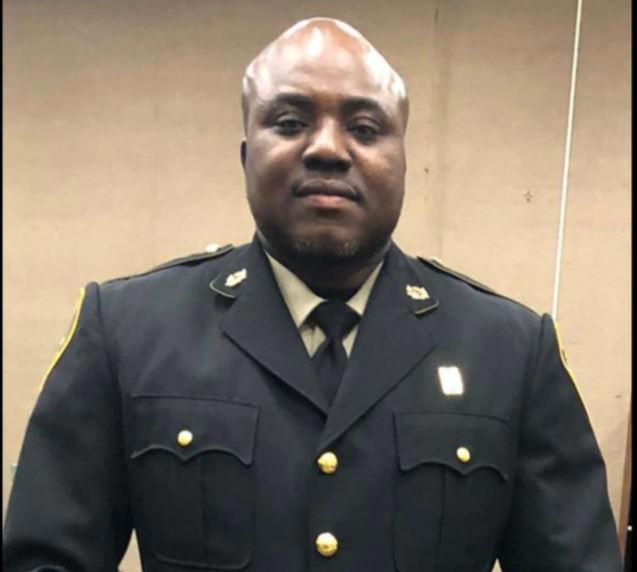
A Nigerian-born police officer serving in the United States has issued a strong appeal to Nigerian authorities, calling for urgent and sweeping reforms to the country’s policing and security architecture. Officer Monday Alade, who is currently serving as a police officer in the State of Maryland, United States, warned that Nigeria’s current security failures reflect a deep-rooted systemic breakdown that demands immediate intervention.
Alade made the call through a public advisory and video statement shared with Nigerian authorities, including President Bola Ahmed Tinubu, all 36 state governors, the National Security Adviser, and the National Assembly.
In the video, Alade documented an aerial surveillance operation by the Baltimore City Police Department over the Lake Clifton area. The flyover, according to him, was part of a proactive security routine designed to deter crime, provide real-time situational awareness, and facilitate rapid tactical response.
According to him, “This was not a video for entertainment,” Alade stated. “It is a wake-up call for Nigeria’s security chiefs. We must stop reacting after communities have been destroyed. We need to modernize our systems and act with foresight.”
Alade who has a Master’s degree in global affairs and human security and Advanced certificate in incident command management system expressed grave concern over the unchecked violence and rampant insecurity across Nigeria, especially in the Middle Belt and northern regions, where communities in Benue, Plateau, Zamfara, Kaduna, Niger, and Borno have faced repeated attacks by armed non-state actors.
“How do you explain that schoolchildren are kidnapped, villages are razed, and citizens are murdered, kidnappers are negotiating ransom with victims families and even with the Nigerian police and actually picking up ransom at designated locations, yet no air surveillance, no ground pursuit, no tactical response, and no forensic investigation follows?” he asked.
Drawing a stark contrast with the U.S. system, Alade explained that in cases of threat or violent crime, American cities respond with a multi-agency tactical ecosystem, combining SWAT teams, K-9 units, thermal drones, and aerial units, to neutralize threats in real time.
According to him, the Baltimore aerial surveillance model presents a practical case study for Nigerian authorities to consider. He outlined how such operations serve not only as deterrents but also as force multipliers:
Deterrence: The visibility and sound of a helicopter overhead alters criminal behavior.
Tactical Support: Aerial units provide live feed to officers on the ground for enhanced coordination.
Rapid Response: Threats identified from the air are intercepted by specialized units within minutes.
Some of the urgent reforms offered byb Alade to reposition Nigeria’s security approach for the 21st century are:
Establish Aerial Surveillance Units in Every State, equip state police commands with helicopters, drones, and night-vision imaging systems.
Create Inter-Agency Fusion Centers , centralize intelligence coordination among security agencies to map and prevent threats.
Deploy Forward Operating Tactical Teams, position mobile, combat-ready teams with airlift capacity in volatile regions.
Implement Crime Heat Mapping and Real-Time Centers, use AI-driven tools to forecast and prevent crime.
Adopt a National Airborne Law Enforcement Strategy (NALES), mandate regional air surveillance units for strategic coverage.
Strengthen Local Intelligence and Community Policing, local vigilantes, foster anonymous, tech-enabled reporting and localized threat detection.
Emphasizing that the root of Nigeria’s insecurity is not merely inadequate manpower or weapons, Alade stated that failure in strategic thinking, technology integration, confidence building training, and coordinated execution.
“Security is not just about guns. It’s about doctrine, data, foresight, and training,” he said. “Nigerian officers are often under-equipped, deployed in the wrong places, or used for VIP protection while citizens die.”
Alade, who has served in multiple tactical roles in the U.S., said his message should not be seen as criticism, but a strategic appeal grounded in experience, trainings and compelling education.
According to him “Nigeria does not lack courage. What it needs is coordination, commitment, and the political will to modernize. If the security institutions are ready, those of us abroad with real-time and proven records are willing to help.”
Calling on Nigerian leaders to rise to the challenge he said: “If cities and counties can do this, why can’t Abuja, Makurdi, Ondo, Edo, or Maiduguri?”
Disclaimer
Comments expressed here do not reflect the opinions of Vanguard newspapers or any employee thereof.