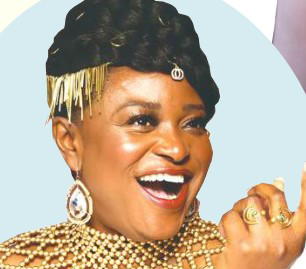
Abiodun Koya
By Ebunoluwa Sessou
Abiodun Koya, is a Classical/Operatic Singer, Poet and a serial entrepreneur by profession. While singing for some of the world’s most influential leaders of today, she has been described as one of the world’s most beautiful voices.
Born and raised in Nigeria, she is one of the very few professionally trained Classical singers of African descent and of her generation.
Her efforts as an Artist have been to creatively and purposefully display a positive message and influence diverse cultures across America and the rest of the world. Through her non-profit organisation, Abiodun mentors at-risk children in Nigeria and in the US, utilizing her “Music Literacy Programme” Initiative.
What is going to be different about your Christmas Carols? Is this the first you are organising?
What makes my Christmas Carols different is the experience. It is not just a carol outing; it’s a carefully curated classical concert that blends traditional Christmas music with orchestral arrangements, choral richness, storytelling, and moments of reflection. I approach it as an experiential production where sound, atmosphere, and emotion come together to create something enchanting and memorable.
I have organised similar concerts in the past, including my annual Frankincense Concert, but this edition is special because it marks my 20th anniversary on stage and also coincides with my birthday. It is both a celebration and a home-coming, hence making it deeply personal and meaningful.
What is your expectation?
My expectation is simple: that people leave feeling uplifted, inspired, and connected. I want the audience to experience the warmth and beauty of Christmas through classical music in a way that feels accessible and inclusive. Beyond entertainment, I hope the concert reminds people of the power of music to heal, unite, rejuvenate and restore joy especially at a time when so much is going on in the world.
Will you like to share some of the things that have shaped your decision to become a classical soprano, and how it has contributed to the adventures you’ve made in life?
My decision to become a Classical Soprano was shaped very early by my love for sound, dilly imagination, storytelling, and emotional expression. Classical music offered me a limitless landscape, it gave my voice room to explore depth, discipline, and drama.
Through my career in classical music, I’ve traveled the world, performed for diverse audiences, met global leaders, and served as a cultural ambassador for Nigeria. It has taken me on extraordinary adventures artistically, personally, and spiritually while allowing me to carry my heritage and roots with pride.
Being a classical soprano is a big deal, especially as it strategically chooses its audience. How does that work?
Classical music naturally attracts passionate music lovers and a more intentional audience-people who are curious, reflective, and open to immersive experiences. While it may seem selective, it is actually an invitation rather than a limitation.
My approach is to meet audiences where they are by contextualising classical music through language, storytelling, cultural references, and relatable themes. When people feel included rather than intimidated, the audience naturally expands. Classical music becomes less about exclusivity and more about connection, thrill and adventures!
What has been the most challenging period in your life, and how did you resolve the conflicts?
One of the most challenging periods of my life was learning how to stand firmly in my truth as a woman in a highly politicised industry. Navigating expectations, power dynamics, and artistic integrity required courage, spirituality and self-awareness.
I resolved those conflicts by choosing divine guidance and authenticity over approval. I created my own platforms, established my own production structures, and committed to doing things on my terms. That decision brought peace, growth, and sustainability and it reminded me that resilience is born when you stop compromising your essence.
Why do you think many people do not appreciate classical music compared to other genres?
I don’t believe people don’t appreciate classical music; I believe many simply haven’t been introduced to it in a way that feels welcoming. Classical music is often presented as formal, distant, or elite, which can intimidate new listeners. Without context or storytelling, it can feel inaccessible.
When classical music is explained, contextualized, and performed with warmth and relevance, people connect to it emotionally often instantly. At its core, classical music is about human feeling: love, longing, triumph, sorrow, and joy. Once people realise that, appreciation naturally follows because it’s relatable.
Will you be willing to be a classical soprano in your next world?
Absolutely without hesitation! Being a classical soprano is not just what I do; it is who I am. It has shaped my discipline, my voice, my worldview, expression and my connection to humanity.
If given another life, I would choose it again perhaps because being in the classical music business has been my greatest teacher. It has taught me patience, resilience, humility, compassion, depth and overall emotional intelligence which is severely lacking in most people today. It is a calling I would gladly answer in any lifetime.
Disclaimer
Comments expressed here do not reflect the opinions of Vanguard newspapers or any employee thereof.