…true federalism and Resource Control
By Ibrahim Hassan-Wuyo
KADUNA — Kaduna and Kano States have presented bold reform proposals at the North West Zonal Public Hearing on the Review of the 1999 Constitution, demanding the entrenchment of true federalism, resource control, creation of new administrative units, and greater grassroots inclusion.
Held on Saturday at Gen. Hassan Katsina House in Kaduna, the hearing brought together stakeholders from Kano, Katsina, and Jigawa States, including civil society groups, traditional rulers, and government representatives.
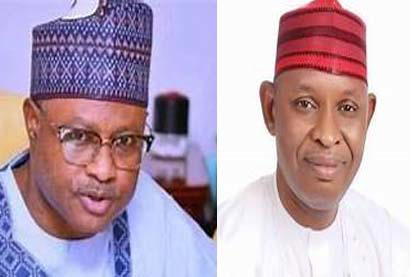
Kaduna State Governor, Senator Uba Sani, represented by his deputy, Dr. Hadiza Balarabe, said the current over-centralized federal system is unsustainable, lamenting that it stifles development and alienates citizens.
“Our current arrangement does not reflect the principle of subsidiarity,” he said, calling for a constitutional framework that allows states full control of natural resources within their territories and the right to legislate on local matters.
He also pushed for the creation of state police, noting that his previous advocacy in the 9th Senate was hindered by political disagreement. “Security cannot be national if it is not local. Kaduna is ready to support constitutional amendments to establish state police,” he stated.
Governor Sani further demanded independence for the judiciary, INEC, and anti-corruption agencies, and advocated for affirmative action to enhance women’s political participation. He also called for formal constitutional roles for traditional rulers, whom he described as “vital actors in grassroots governance.”
Kano State, in its submission, demanded the creation of a new state and 26 additional local government areas to increase its current LGAs from 44 to 70. The submission was presented by Deputy Governor Comrade Aminu Abdussalam Gwarzo and signed by Governor Abba Kabir Yusuf.
“We strongly advocate for restructuring and align with the national call for the creation of more states, provided they meet the criteria of Section 8 of the Constitution,” Gwarzo said.
Kano also demanded full constitutional autonomy for local governments and proposed amendments to Sections 2(2), 7, and 162(5) to ensure recognition and functionality of LGAs as a distinct tier of government.
The state endorsed state police, but called for clear jurisdictional boundaries between federal and state security agencies. It also proposed the establishment of a National Council of Traditional Rulers to advise the federal government and protect traditional institutions from political interference.
On fiscal matters, Kano suggested reducing the Federal Government’s revenue share from 52.68% to 40%, with states receiving 35% and LGAs 25% to promote fairness and development.
The state reaffirmed its support for gender equity reforms, backing legislation to increase women’s participation in politics and governance.
Katsina State, represented by its Attorney General and Commissioner for Justice, Fadila Mohammed Dikko, presented a reform agenda focused on fiscal federalism, institutional strengthening, and inclusive governance.
“The Constitution must reflect the realities and aspirations of Nigerians. We must prioritise devolution of powers, strengthen democratic institutions, and promote social justice,” she said.
Katsina’s proposals include electoral reforms, judicial restructuring, and improved security architecture, stressing the need for a system that is representative, fair, and efficient.
Chairman of the House of Representatives Sub-Committee on Constitution Review for North West Centre ‘A’, Rt. Hon. Madaki Aliyu Sani, assured participants of a transparent and inclusive process.
He disclosed that the current review is addressing 86 bills across 13 thematic areas, including devolution of powers, security, traditional institutions, and gender equity.
“We are not just reviewing texts; we are refining the tools of nation-building. No voice will be too small, no idea too radical, and no region too remote to be heard,” Madaki said.
The event attracted broad participation from traditional councils, civil society organisations, women’s groups, professional bodies, and community leaders—underscoring the growing national consensus for a more inclusive, equitable, and functional Nigerian Constitution.
Disclaimer
Comments expressed here do not reflect the opinions of Vanguard newspapers or any employee thereof.