By Henry Ojelu
Some women pass through history quietly, leaving behind no monuments bearing their names. Their monuments are the lives they shaped, the homes they held together and the children who carry their memory into another generation.
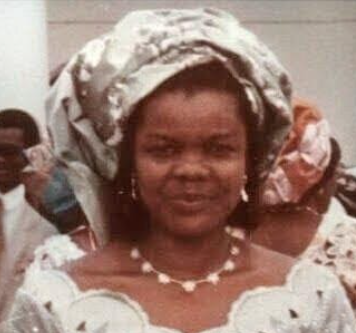
Maria Ukamaka Ojukwu was such a woman. Born on December 3, 1938, Maria was the first of nine children of Matilda and James Aghaji — six girls and three boys. Her parents were teachers and devout Catholics of modest means, but theirs was a home in which poverty could never excuse a deficit of dignity. Integrity, morality, self-respect and good name were not negotiable. Those values became the architecture of Maria’s life.
She grew up moving from one school to another as her father was transferred from one teaching post to another. On some occasions, the man who taught her at school was also her father. The constant movement did not make her rootless. Rather, it seems to have given her an instinct for adaptation — a quality that would later prove invaluable when life itself became a series of upheavals.
She was exceptionally close to her parents, particularly her mother, to whom she was almost a younger sister. And among her siblings, she was the dependable eldest child — the one prepared to give, protect and sacrifice.
In later years, she underwent nursing training at Our Lady of Lourdes Hospital, Ihiala, before taking administrative and secretarial courses abroad.
Then, in 1957, at a young age, her life took another decisive turn.
She married Dr Joseph Okwuabudike Ojukwu at St Michael’s Catholic Church, Umudim, Nnewi. Bishop John Cross Anyogu officiated at the wedding.
It was a marriage that took the eldest daughter of a modest Catholic teaching family into one of the most prominent families in eastern Nigeria. Her husband was the eldest son of Sir Louis Philip Odumegwu Ojukwu and Ogbenyeanu Janet Malize, daughter of Chief Edward, Warrant Chief of Ukpor.
The transition was not merely from one family to another. It was from the orderly world of the Ndi nkuzi — the teachers — into the complicated universe of wealth, influence, expectations and family intrigues. Maria met it in the only way she knew: head-on.
She was fiercely protective of her husband and children. If Joseph was the quiet, gentlemanly presence, Maria supplied the fire. Where he was laid-back in matters concerning family and friends, she was assertive, ensuring that relationships were maintained and obligations fulfilled.
Her children remember, for instance, that whenever the family travelled to the East in the 1960s, Maria insisted that they visit all their father’s uncles and aunties — including those who were not particularly favourably disposed towards them.
Her father-in-law, Sir Odumegwu, recognised something unusual in her. He described her as a woman with initiative, loyal and free of avarice, dishonesty, jealousy, ingratitude and waywardness.
He supported her, protected her and even acquired shares in her name. When Maria gained admission to further her studies while the family was abroad, he wrote to her, cautioning that with three children below five, whatever advantage work or further studies offered might ultimately be outweighed by her absence from them. She chose family. By then, motherhood had become the great work of her life.
Maria was an extraordinary cook, the kind who could enter the kitchen and, almost before anyone realised it, emerge with a meal. Her own joke was that “good soup, na money make am.” Yet her children insist that the quality of what emerged from her kitchen was often far greater than the money spent on it.
But there were rules. A child finished what was on the plate. Two small pieces of meat were the statutory entitlement. A request for more could provoke the teasing question: “Igolu ogo bee agu?” — Are you related by marriage to the Tiger or Lion family?
Maria was also the disciplinarian. Her husband, often consumed by his patients and hospital duties, was the family’s Supreme Court. When he believed the sentence had gone far enough, he would simply say: “Maria, ozugozie.”
But discipline never cancelled affection. Her children knew that punishment was not rejection. It was correction. She also bent over backwards to support their education, arranging lessons, checking their work and urging them never to disgrace themselves, their family or her.
Then history came crashing through the doors. The Civil War transformed everything. The family moved from Lagos to the East in late 1966, stayed briefly in Onitsha and relocated to Enugu in early 1967. When Enugu fell to Federal forces, they moved to Nnewi and eventually Umuahia.
Maria was 29, pregnant and caring for four children when she drove a small two-door Vauxhall Viva towards Umuahia. In 1968, at the height of the war, Nnanna was born at Queen Elizabeth Hospital, Umuahia.
But the war was exacting its own price from her family. Her 20-year-old brother Emmanuel disappeared into the war and never returned. Her youngest brother, Aloy, lost an eye at the front. Martin, the middle brother, survived.
Around her, people were starving, dying and fleeing. Air raids became part of life. Yet Maria remained Maria. She shared whatever little she had. She gave strangers salt and scarce relief materials. She visited refugee camps, including Akokwa, and the prison at Ekwulobia.
In those terrible years, her younger sister Rose was almost a twin in spirit; Josephine provided sustained support; Vero, from America, became a lifeline abroad; Bernadette offered her calm intelligence and practical help, while Chinwe, the youngest, was almost like another daughter.
Maria also found companionship in Njideka Ojukwu, the woman who became known as Biafra’s First Lady. Married to brothers in the same influential family, the two women found in each other something precious in wartime — friendship, understanding and a place to put the fears that could not always be spoken aloud.
The family did not live at the centre of power, as popular imagination might suggest. Maria, her husband and their children visited the State House only three times during the entire war — once in Enugu and twice in Umuahia.
One occasion remained particularly vivid for the children. Their Uncle Emeka arrived alone, driving a convertible Mercedes-Benz sports car, dressed casually in slacks and a short-sleeved shirt. There was no obvious motorcade. It was only after the children’s joyful welcome that they noticed the farm behind the building was crowded with security and military personnel.
Peace brought no easy prosperity. In 1970, Maria returned to the work of rebuilding. The family lived in a modest one-and-a-half-bedroom flat in Enugu GRA. Their principal car was a Peugeot 403. But Maria was not waiting for circumstances to improve.
She bought a second-hand Morris Minor and put it on the road as a taxi. When the challenges of drivers, mechanics and dwindling returns became too much, she moved on to a Volkswagen Danfo, later a Toyota Corolla taxi and two Peugeot 504 station wagons for long-distance travel. She also secured distributorships for Nigercem cement and Golden Guinea Beer.
Her children were part of the enterprise. One son, only 12, was occasionally sent as a conductor in the Danfo to discover what the day’s actual returns were. That was Maria’s school of life: work, responsibility and resourcefulness.
Children were expected to wash and iron their clothes and those of their parents. They did the dishes and performed assigned chores whether or not there was domestic help. Before they were allowed to learn driving, they had to know how to wash a car, change a tyre and check the oil, engine and battery. The older boys became familiar with mechanics and Coal Camp, where spare parts were bought.
Faith remained the thread running through it all. A devout Catholic, Maria was devoted to morning Mass and Benediction. She was an active member and foundation member of Mater Medic and Mediatrix, belonged to the St Anthony’s Society — Anto, Padua — and participated in several Umudim and Nnewi women’s associations.
She was honoured with the titles Ochechinyelu and Eziakpaka.
And then there was the grandmother. For a woman who had spent much of her life disciplining children, she reserved a softer corner of her heart for grandchildren. She adored them.
Even age could not extinguish the “action woman” in her. On one occasion, armed hoodlums dispossessed her of the family Mercedes-Benz 200 near the expressway in Enugu. Shaken but not defeated, she flagged down a taxi, paid the driver and ordered him to pursue the fleeing robbers. Perhaps confronted by a determination they had not anticipated, the hoodlums abandoned the vehicle by the roadside and disappeared into the bush. That was Maria.
She was born into modesty, married into prominence, survived war, rebuilt after devastation, raised children, ran businesses and carried her faith and family through decades of turbulence.
She died on October 8, 2006, and was buried in the family compound at Umudim, Nnewi.
But death did not have the final word. For those who knew her, Maria remains in the discipline of a child who learnt responsibility early, in the generosity of someone who shared even when scarcity was all around, in the laughter of grandchildren she adored, and in the enduring memory of a woman who, whenever life placed an obstacle before her, simply rolled up her sleeves and got to work.
She was, in the fullest sense, an action woman.
Disclaimer
Comments expressed here do not reflect the opinions of Vanguard newspapers or any employee thereof.