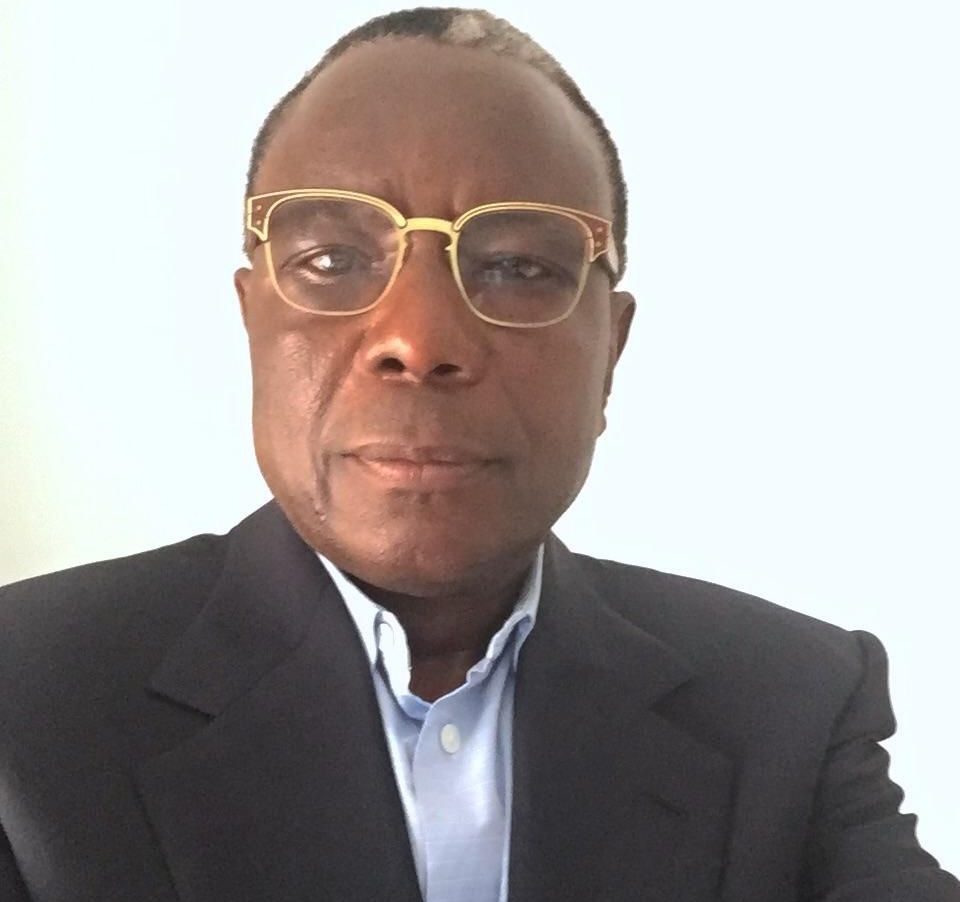
Philip Obazee
By Philip Obazee
A Small Ticket, a Larger Question
For ₦5,250, an eligible Nigerian investor can apply to become a shareholder in Dangote Petroleum Refinery and Petrochemicals FZE. The initial public offering opened on 14 September 2026 and is scheduled to close on 13 October. Its terms are straightforward: 4.1 billion new ordinary shares at ₦525 each, a minimum application of ten shares, and full payment on application. Full subscription would raise approximately ₦2.15 trillion before expenses, with proceeds intended for the refinery’s expansion.
The industrial scale commands attention. The small entry requirement raises a different possibility: someone who could never build a refinery can nevertheless own shares in the company that operates one. Bank and digital subscription channels make that possibility more accessible. The movement from buying a company’s products to owning part of its business is the important change in perspective.
The offer has deliberately been presented as a mass-ownership event. Retail and small investors have been promised priority if it is oversubscribed, and the company has spoken of an ambition to build a shareholder base of at least ten million people across Nigeria and Africa. Public figures have joined the conversation. Emir Muhammadu Sanusi II, a former central-bank governor, publicly urged Kano residents and businesses to consider participating. The response also tested the new digital distribution machinery: Reuters reported that Bamboo’s traffic rose tenfold within thirty minutes of the offer opening, and its chief executive said the surge overwhelmed the platform. Whatever the final subscription numbers, the IPO has already done something economically significant: it has made ownership a popular subject.
That public energy matters. For perhaps the first time in a generation, millions of Nigerians are being invited to think of themselves not merely as workers, consumers, savers, landowners and homebuilders, but as owners of productive enterprise. The task is to turn that attention into a durable habit of ownership.
The ₦5,250 threshold widens access to the market. Valuation remains a separate question: a company can divide its ownership into more shares without changing the underlying value of the business. The useful achievement of the low minimum is social and financial access. It lets far more households begin asking what price they are willing to pay for a claim on future earnings.
Participation should fit the household balance sheet. Essential expenses, emergency reserves and near-term obligations come first; long-term ownership begins with money that can remain invested. The offer is valuable because it opens a door, not because everyone must walk through it immediately.
The Dangote IPO provides an unusually concrete occasion to ask a larger question: where should our long-term savings live? For a household whose answer has always been land and buildings, the offer brings another form of ownership into view. Diversified business ownership deserves a place alongside housing in household wealth.
That is the distinction behind the title: participation in one share is a choice; learning to think as an owner is the larger opportunity. The IPO is a moment of attention, access and possible learning. Its lasting significance will depend less on excitement during the subscription period than on what investors understand and do after it closes.
Where Our Wealth Lives Now
Drive through the outskirts of a Nigerian city and a familiar form of saving comes into view. Walls rise to window height and stop. Iron rods reach above pillars, waiting for another floor. A roof goes on when money becomes available; windows, plastering and tiles follow later. The family’s ambition is visible, but so are the interruptions in its financing.
Incremental building is best understood as a household response to missing long duration finance. A conventional mortgage lets a family occupy a completed house now and repay it over twenty or thirty years. Where affordable mortgages are scarce, the Nigerian household often reverses the sequence: it pays gradually for years and receives the completed asset at the end. The family manufactures the missing mortgage for itself.
The numbers explain why. Mortgage lending in Nigeria remains below 1 percent of GDP by widely cited industry estimates, dramatically below the depth of mature housing finance systems. Commercial borrowing rates have commonly been around 20 percent and, depending on borrower and product, substantially higher. The National Housing Fund and other subsidised programmes provide valuable alternatives, including construction finance, but their reach is small relative to Nigeria’s population and housing need. One reported comparison is especially stark: roughly six million contributors to the National Housing Fund against fewer than 500 mortgages booked in a year.
Seen this way, the half-built house is not evidence of irrationality. It is a household financing technology. The economic question is what that technology costs in delayed use, illiquidity and concentration, and whether part of long-term saving can be placed in assets that perform different functions.
A household also has reasons for wanting something tangible. A building can be inspected. Progress can be measured in walls, doors and rooms rather than entries on a statement. For someone uncertain about financial intermediaries, that visibility matters. And where cash can be consumed piecemeal, a building imposes discipline: money committed to a foundation cannot easily be withdrawn for an unplanned purchase.
The aspiration is larger than an investment return. A completed home provides shelter, continuity and a place to retire. It can reduce exposure to future rent increases and give children an inheritance. These benefits belong in any serious comparison. An argument that asks families to disregard them will fail, and deserves to.
However, the costs of prolonged construction also deserve attention. If an unfinished building cannot be occupied or rented, its housing services are postponed. Materials may deteriorate, security and maintenance may cost money, and completing the project may become more expensive. The household can own a substantial asset while remaining short of usable cash.
Consider a family with ₦6 million committed to an incomplete house. It cannot ordinarily sell one-tenth of the structure to meet an urgent bill while leaving the rest of its ownership unchanged. Selling the entire property may mean abandoning the housing plan and accepting an unfavourable price. The difficulty is not that the asset necessarily lacks value. It is that the value cannot readily be divided and used.
The money originally spent has not vanished from the economy. It has paid builders, suppliers and transporters. What remains tied up is the family’s wealth in a particular asset. The economic cost concerns delayed use, concentrated exposure and reduced flexibility—not money disappearing into concrete.
Housing is productive investment, too. A completed home supplies a service whether a tenant pays rent or its owner lives there; national accounts recognise owner-occupied housing services for precisely this reason. Property may also appreciate, although appreciation must be weighed against costs, deterioration and the price obtainable on sale. A building that provides no current income does not necessarily have a total return of zero.
The question raised by the Dangote offer is therefore not whether houses are economically inferior to factories. It is whether a household should have to place nearly all its ambitions in one project, in one location, with one difficult route to getting its money out. The case for a broader range of assets begins there.
What a Share Actually Is
A share is an ownership interest in a company. It is not a deposit with the company, a guaranteed stream of income, or a claim that the purchase price will be returned on demand. Shareholders may benefit through dividends and increases in the market value of their holdings. They also bear losses, and ordinary shareholders stand behind creditors if the company is liquidated.
Owning ten refinery shares does not give someone ten identifiable pieces of machinery to remove from the premises. The company owns its assets. The investor owns rights in the company, including the relevant rights to distributions and participation in shareholder decisions. Economic ownership is real, but it is exercised through accounts, boards, contracts and enforceable rules rather than personal control of a tank or processing unit.
This is different from lending. A conventional bond promises specified payments under its terms. A share offers no comparable promise of a fixed return. Creditors bear risks as well, and a bond sold before maturity can change in price. The distinction is between contractual payment obligations and the shareholder’s residual claim, not between investments that are risky and investments that are entirely safe.
The Dangote offer also helps explain how stock markets connect savers to businesses. When investors subscribe for newly issued shares, they supply money to the company. When they later buy existing shares from another investor, the seller ordinarily receives the money. The first transaction raises corporate capital; the second transfers ownership. Both transactions matter, but they do different work. A functioning resale market can make investors more willing to provide capital initially, because they need not remain owners forever. A company can retain the capital it raised while particular shareholders enter or leave. That separation between the life of the business investment and the holding period of an individual investor is one of the market’s important capabilities.
In the refinery’s case, the prospectus describes an expansion from approximately 700,000 to 1.4 million barrels a day, financed through several sources, of which the offer proceeds are one part. New units must still be constructed and commissioned. An investor is buying exposure to existing operations and future possibilities, not abolishing the time and risk required to turn construction into output.
For a household, the practical attraction is that ownership can be accumulated in manageable portions. A saver does not need enough money to buy an entire enterprise. A holding can also be reduced in portions, unlike a single unfinished house. But divisibility is not the same as guaranteed liquidity. A sale requires a buyer at an acceptable price, and a listed share can lose value just when its owner needs cash.
An IPO adds a further distinction: applying for shares is not the same as owning an immediately tradable investment. Subscription, allotment and admission to trading are separate stages. Money committed to the offer should not be treated as an emergency balance awaiting instant withdrawal.
A Home and a Portfolio
The useful comparison is not “a house or Dangote.” It is the household’s next use of available savings, considered against the benefits, costs and deadlines attached to each possibility.
Take two hypothetical families. The first can complete a modest home within six months. Its next contribution to construction will allow it to move in and stop paying rent. The second owns a plot but cannot identify a credible route to finishing a proposed building for many years. Diverting money from the first project and postponing the start of the second are not equivalent decisions. The immediate housing benefit differs, as does the uncertainty surrounding completion.
The second family may find value in reconsidering the size or timing of its building project while accumulating other assets. The first may reasonably give completion priority. Neither conclusion follows simply from a view about the stock market. It follows from what the next increment of spending will accomplish.
A completed rental property requires its own comparison. Its income, vacancy risk, maintenance costs, title, management demands and resale prospects differ from those of an unfinished structure. It cannot simply inherit all the disadvantages of a building that provides no current services.
The most important distinction is between money that has a fixed job soon and money that can genuinely remain invested. School fees, rent, business working capital and scheduled construction payments have claims on the household’s resources. A long-term ambition may tolerate postponement; a contractor’s invoice usually does not. Investment horizon and capacity to bear loss therefore belong at the beginning of the decision, not in a warning added afterwards.
A portfolio can contribute to a distant housing goal when the date and scale of the purchase remain flexible. As that goal becomes a firm commitment, the amount needed for it should no longer depend on favourable stock prices. There is no virtue in a strategy that promises a roof in June but requires an equity market recovery by May.
This leaves a substantial role for equity ownership. A household can work towards a home while gradually acquiring diversified interests in businesses. The objective is not to deny housing its importance. It is to stop requiring one asset to serve simultaneously as shelter, emergency reserve, retirement income and the sole store of a lifetime’s savings.
What Time Can Add
Compounding occurs when returns remain invested and can themselves earn returns. It is not exclusive to equities: interest-bearing assets, reinvested rental income and other investments can compound. What equities offer is participation in uncertain business returns, some of which may be distributed and some retained for future growth.
Consider an illustration, not a forecast. A saver contributes the equivalent of ₦10,000 a month in today’s purchasing power. The nominal contribution rises over time to keep that purchasing power constant. Assume all distributions are reinvested and the investment earns a steady annual return after inflation, fees and taxes of either 3 percent or 6 percent.
At a real annual rate of return of 3%, total contributions of ₦2.40 million over 20 years grow to ₦3.27 million, while total contributions of ₦3.60 million over 30 years grow to ₦5.79 million.
At a real annual rate of return of 6%, total contributions of ₦2.40 million over 20 years grow to ₦4.53 million, while total contributions of ₦3.60 million over 30 years grow to ₦9.75 million.
These calculations assume end-of-month contributions, with effective annual returns converted to equivalent monthly rates.
The inflation adjustment is essential. Someone who keeps paying exactly ₦10,000 in nominal currency while prices rise is making smaller contributions in real terms. That saver should not expect the same real balances shown here.
The smoothness is an assumption, too. Actual returns arrive unevenly. With continuing contributions, their sequence affects the final result: a decline early in the saving period does not have the same consequences as a decline just before money must be withdrawn. Neither a long horizon nor regular contributions guarantee the illustrated outcomes.
What the arithmetic does show is the value that sustained saving and reinvested positive returns can add. It also shows why a ₦5,250 subscription should be understood as a possible beginning rather than a complete wealth strategy. The habits and later contributions matter far more than the symbolism of having participated in a famous offer.
For a household unable to contribute regularly, the constraint is not defective character. Income must first leave something to save. A low investment threshold improves access; it does not create the surplus on which accumulation depends.
Why It Matters Beyond Your Wallet
The Dangote offer links a household decision with a larger financing problem: how to assemble capital for investments that exceed the resources of individual savers. A public share issue can combine many small commitments with larger ones and give an operating business capital that does not carry a scheduled obligation to repay principal like a conventional loan.
The potential national benefit comes from useful investments being financed and managed well. It does not follow automatically from more trading or a higher stock-market index. A busy secondary market can change the ownership and valuation of existing businesses without directly financing an additional machine. The economic case rests on the connection between reliable markets, capital raising and worthwhile business activity.
Domestic ownership can broaden the group that participates in business earnings. It can also expand the investor base available to companies. But local investors remain exposed to local shocks, and their nationality does not make them permanently patient. Broader ownership is a financing opportunity, not insulation from the business cycle.
Nigeria’s pension system illustrates both the scale and the variety of pooled saving. On 31 March 2026, PenCom reported assets of approximately ₦29.52 trillion. Federal Government securities accounted for 58.07 percent, domestic equities for 18.50 percent, and corporate debt for 7.62 percent. The portfolios also contained money-market instruments, property-related investments and other assets.
Those figures should not be read as a division between money doing useful work and money doing none. Companies can obtain finance through debt as well as equity; public borrowing can finance investment as well as other expenditure. The instrument alone does not establish the economic quality of the expenditure it supports.
For pension savers, the relevant financial questions concern purchasing power, diversification, liquidity and the ability to meet retirement benefits. A refinery’s importance does not remove those questions. Pension money is the deferred income of contributors, not a free resource that loses its obligations to them when an industrial opportunity appears.
This is where the household and national arguments meet. Capital markets are most useful to ordinary savers when access to business ownership is accompanied by trustworthy information and a realistic choice of investments. The Dangote IPO can be a significant instance of that process without becoming the test on which every argument about Nigerian industrial finance must stand or fall.
The Risks Nobody Should Hide
An argument for ownership becomes a sales pitch when it treats risks as ceremonial warnings. In this offer, the refinery’s visibility makes the distinction between a business and an investment especially important.
A business can produce essential goods and still disappoint its shareholders. The investor’s return depends on the price paid, the cash the business can generate, its financing needs and what ultimately accrues to each share. Admiring the achievement of building a refinery does not answer those questions. Nor does confidence in a familiar name establish that the offer price leaves room for an adequate return.
Refining illustrates the difference. Profitability depends not simply on the price of crude oil, but on the relationship between input costs and the prices obtained for refined products, together with operating and financing costs. Higher fuel prices do not mechanically mean higher shareholder returns. The prospectus identifies refining margin, supply, operational and expansion risks.
Expansion can create value, but it can also absorb more cash, take longer or earn less than anticipated. A growing business is not necessarily producing growing cash distributions for its owners. When valuing future profits, the investor must ask what spending is required to obtain them.
The refinery’s currency exposure cannot be read from receipts and bills alone. The prospectus says substantial revenues and costs are dollar-denominated or dollar-linked, while naira balances and currency conversion still create risks. The currency in which a customer pays is not necessarily the currency that determines the product’s price. A weaker naira can therefore have different effects across revenues, costs and balance-sheet items.
Tax assumptions require the same discipline. The prospectus describes conditional tax treatment and changes affecting free-zone enterprises. Current benefits should not be treated as an unconditional, permanent addition to shareholder income. These matters belong in an assessment of sustainable earnings, rather than being overwhelmed by the physical scale of the plant.
One company is not a portfolio
A household that exchanges all its property savings for shares in a single refinery has changed the form of its concentration, not eliminated it. Diversification means owning investments whose fortunes are not wholly dependent on the same business or exposure. It can cushion companyspecific losses; it cannot prevent an entire market from falling.
Nor is a long list of company names sufficient. Several businesses may depend on the same currency conditions, customers or sources of finance. The household may already have its job, trading income and property tied to that economy. The relevant question is what can go wrong together, not simply how many shares appear on a statement.
A diversified approach therefore considers the household’s whole financial position. Different industries help, but holdings across asset types and, where accessible and suitable, markets can address risks that a collection of domestic stocks leaves intact. Diversification is a way to limit dependence, not a promise of safety.
A small owner depends on the rules
The shares in the base offer would represent approximately 3.3 percent of the enlarged ordinary share capital, calculated from the prospectus’s existing share count and the 4.1 billion shares offered. Control would remain concentrated.
That makes minority shareholder treatment a practical investment issue. How are transactions with related businesses priced? What information reaches outside owners? Who scrutinises decisions that may benefit another part of the controlling group? A small shareholder cannot answer these questions by visiting the refinery. The investment depends on the institutions through which ownership rights operate.
A prospectus provides a basis for scrutiny, not a substitute for it. Regulatory clearance does not certify the investment’s merits; the offer document expressly makes that distinction. The test of ownership extends beyond admission to the shareholder register to the treatment received afterwards.
The lessons of 2008
Nigeria’s earlier market experience should remain part of this discussion. The historical witness is unusually relevant: Sanusi Lamido Sanusi, the Central Bank governor who documented the crisis and who now serves as Emir Muhammadu Sanusi II, is the same man publicly encouraging participation in the Dangote offer. In his account of the banking crisis, Sanusi described a stockmarket collapse of about 70 percent in 2008-2009 and linked the damage to weaknesses that included governance, disclosure, supervision and margin lending.
The lesson is not confined to investor impatience. A household can avoid borrowing and still suffer a severe market loss. It can study published accounts and still be harmed by information it could not reasonably uncover. Sound personal behaviour matters, but it cannot replace reliable financial institutions.
Borrowing nevertheless adds a separate danger. Loan obligations persist when shares fall, and a lender may force a sale before the investor is ready. For a household beginning to build an equity portfolio, debt-financed participation in an IPO converts uncertain business returns into a risk to an already committed repayment schedule.
Liquidity presents another difficulty. An unfinished house may force patience because it is hard to sell. A shareholding allows an anxious decision to be executed quickly. The appropriate response is not an instruction never to sell. Some businesses deteriorate permanently. It is to distinguish a planned adjustment or a changed assessment from a reaction driven entirely by the latest price movement. Patience belongs to a defensible strategy, not automatically to every losing stock.
Ownership Done Properly
The practical task begins before opening a subscription screen. A household needs to know which savings are available for long-term risk and which already belong to essential expenditure, emergencies, debt repayment or its business. Money needed to replenish a shop’s inventory is not spare capital simply because it sits temporarily in an account.
Expensive debt deserves particular attention. Reducing it saves a known interest cost, whereas an equity investment offers an uncertain return. Similarly, maintaining an accessible emergency reserve can protect a long-term portfolio from forced sale. The amount should reflect the family’s essential expenses, income stability and obligations, rather than a universal figure copied from an investment advertisement.
Once genuine long-term capacity has been identified, pooled investment can offer an alternative to selecting individual companies. A mutual fund combines investors’ money under a stated investment mandate. Its usefulness depends on that mandate, its actual holdings, costs and management—not on the fact that it is called a fund.
The same scrutiny applies to an index fund. An index may be broad or narrow, heavily concentrated or more evenly spread. Tracking it does not remove its risks, and not every index fund is inexpensive. Before investing, a saver should understand what is owned, all material charges, how value is reported and the conditions under which money can be withdrawn.
The pension account is another place to look. A contributor may already own equities indirectly without ever placing a stock market order. Checking statements, contributions, investment exposure and the options available within the scheme can therefore be as important as applying for an IPO. An account label alone does not reveal how much business risk the household already bears.
For eligible self-employed and informal sector participants, PenCom’s Personal Pension Plan provides a voluntary retirement saving arrangement through licensed pension fund administrators. Contributions are divided between contingent and retirement savings, with access governed by the applicable rules. It is a retirement arrangement with defined conditions, not an ordinary transaction account and not simply a substitute for a freely accessible equity fund.
Regular contributions can help make investment a continuing practice rather than an occasional response to publicity. Investing a consistent amount buys more units when their price is lower and fewer when it is higher. This does not guarantee a profit or make the chosen investment sound. Its practical value is to reduce dependence on a single purchase date and establish a saving routine compatible with earned income.
For someone with irregular earnings, the routine might be a sustainable share of surplus income rather than a rigid monthly payment. It should not require borrowing to keep up appearances. And for someone who already has a lump sum, spreading purchases over time is a separate decision: it postpones part of the exposure and may help or hurt depending on subsequent returns.
The Dangote offer can occupy a place within such a plan, but it should not define the plan. An individual holding should be small enough that a serious disappointment would not overturn the family’s main objectives. That is a more useful test than choosing a percentage without considering the rest of the household’s finances.
Execution also matters. Nigeria’s Securities and Exchange Commission provides a register through which investors can check operators. For an IPO application, use an authorised receiving channel, retain confirmations, and understand how allotment and ownership will be recorded. For a fund, establish who manages and holds the assets and how statements and withdrawals work. A familiar logo or a message forwarded by a relative is not verification.
The objective is not to review prices every day. It is to review whether the strategy still fits: whether debts or family needs have changed, whether a holding has become too large, whether costs are acceptable and whether the information on which the investment rested remains credible. Discipline means consistency of purpose, not refusal to reconsider evidence.
From a Moment to a Culture
After the Dangote subscription period, attention will move towards allotment, the anticipated listing and eventually the quoted share price. A rise may invite stories of effortless enrichment. A decline may revive the conviction that financial assets cannot be trusted. Neither reaction, by itself, is an adequate interpretation.
One company’s price cannot settle the case for equity ownership. But its treatment of shareholders can teach something important about the institutions through which that ownership is offered. The two issues should not be confused. A disappointing business outcome is different from misleading disclosure, just as a profitable trade does not prove that an investor understood the risk.
A more durable measure of this moment would be what remains after the publicity: investors who understand the difference between access and valuation; households with more than one way to accumulate wealth; reliable records of ownership; and financial arrangements that can be explained without promises of inevitability. Those are outcomes to look for, not achievements that follow automatically from a large subscription book.
For a new investor, the lasting lesson may be that the refinery is not the only business available to own. For someone who does not subscribe, it may be a decision to examine a pension account, investigate a diversified fund or prepare financially to invest later. Both would represent learning from the occasion rather than surrendering judgment to it.
The family home retains its place. Its shelter and meaning do not diminish because other forms of ownership become accessible. What changes is the range of possibilities around it. A household can aspire to own its home without making that home carry every financial burden. It can also acquire a share in enterprises whose assets, earnings and risks extend beyond the family plot.
The Dangote IPO gives that possibility a recognisable form. Whether to buy its shares remains an investment decision. Understanding that one can own the factory as well as the house is the larger opening. That is a moment worth taking seriously. It does not need to be a miracle.
_____
Philip Obazee retired as a managing director and head of derivatives from Macquarie Asset Management – a global asset management company with office in Philadelphia, PA, USA, and currently, he is the founder and chief executive officer of Polymetrics Americas Research.
Disclaimer
Comments expressed here do not reflect the opinions of Vanguard newspapers or any employee thereof.