…As Gov Otti says Nigeria can learn from China
By Adesina Wahab
Experts in linguistics and education have called on the Federal Government to reverse its decision to stop the use of Mother Tongue, MT, to instruct pupils in early childhood education system.
This is just as the Abia State Governor, Dr Alex Otti, has suggested that Nigeria should learn from countries such as China, India, Korea and others where instruction in MT has been successful and has significantly contributed to the technological and economic growth of those nations.
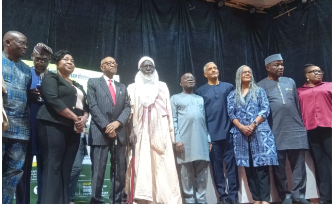
They spoke in Lagos on Wednesday during the Annual Lecture/ Symposium of the Fafunwa Educational Foundation.
The foundation was set up by the late Education Minister, Prof. Babatunde Fafunwa, the pioneer researcher in the use of MT in Nigeria.
In a communique at the end of the event, the participants held that the major impediments facing mother tongue education arose from weak and half-hearted implementation. Such factors as inadequate funding, insufficient teacher training, and lack of instructional materials undermined the proper working of mother tongue learning.
They therefore called on the Federal Government of Nigeria to reverse its cancellation of the 2022 National Language Policy and reinstate mother tongue as the medium and basis of the country’s basic education.
In his incisive keynote address, Professor Francis O Egbokhare of the University of Ibadan made the case that the “fundamental mismatch between the language of instruction and the mother tongue of the learner sits at the heart of Nigeria’s persistent learning crisis.”
He added: “What appears to be poor academic performance may actually reflect language barriers rather than intellectual limitations. When children are educated in foreign languages, they may become less able to access the wisdom encoded in their own linguistic traditions. Thus, the sidelining of mother tongue in education translates into “language loss” and “worldview loss.”
Guest Speaker, Professor Angelina Kioko of the United States International University of Africa in Kenya robustly articulated the argument for African nations to take seriously UNESCO’s declaration that “Every learner has a right to learn in a language they understand.”
While recognizing that familiar languages strengthen foundational learning and other positive goals, the Kenyan academic underscored what countries must do to reap the sustained rewards of mother tongue education.
She stated that “the success of mother tongue education in multilingual Africa can only be achieved if there is consistent implementation of language in education policies that move beyond short-term language transition models, and which are supported by strong political will, sustained teacher preparation, appropriate teaching/learning materials, context-sensitive multilingual practices, and community engagement.”
Governor Otti, who was the Chairman of the occasion, described the use of MT at early childhood education level as very relevant to the evolution of education, especially at the foundational level.
“It is fulfilling that the Fafunwa Educational Foundation is keeping alive, a compelling, research-supported observation made several decades ago by Prof Fafunwa and others that children learn better when taught in indigenous languages. While it is fine to disagree with the findings of a research work, it is, however, not acceptable to reject a viewpoint for the simple reason that agreeing with the facts challenges individual biases and ego.
“If research says that early learners do better when instructions are passed through the vehicle of indigenous languages, my preference would be to identify and address the probable limitations to teaching pupils in their native languages, including inadequacy of skilled instructors that are fluent in the languages or perhaps, the challenge of limited relevance outside one’s own community or maybe region.
“The fears, I have to admit, are real but we may also have to look at a few countries where early education is driven by indigenous languages including South Korea, India and China. In so doing, we may learn a few lessons from the success they have achieved over the years. Moreso, looking at these successful cases would provide some perspectives on how the use of indigenous languages in passing classroom instructions may have shaped the economic and technological exploits of the aforementioned countries on the global stage,” the governor said.
In her message, delivered by her daughter , Prof. Sheri Ndibe, the wife of the ex Minister, Chief Mrs Doris Fafunwa, described her husband as someone who would prefer to stand alone on a matter he had strong conviction.
The event also had a panel discussion where Prof. A A Adeyinka, Dr Ebele Okafor, Dr Hamisu Aliyu, dissected the theme of the event, “What does research say? Mother Tongue instruction and the future of early education in Nigeria.”
Also, post-doctoral awards in education were given to Dr Ogundowole Ayodeji of the Lagos State University, Ojo, Dr Tomi Ogundipe of the University of Ibadan and Dr Ishola Joshua of Ekiti State University, Ado Ekiti.
Disclaimer
Comments expressed here do not reflect the opinions of Vanguard newspapers or any employee thereof.