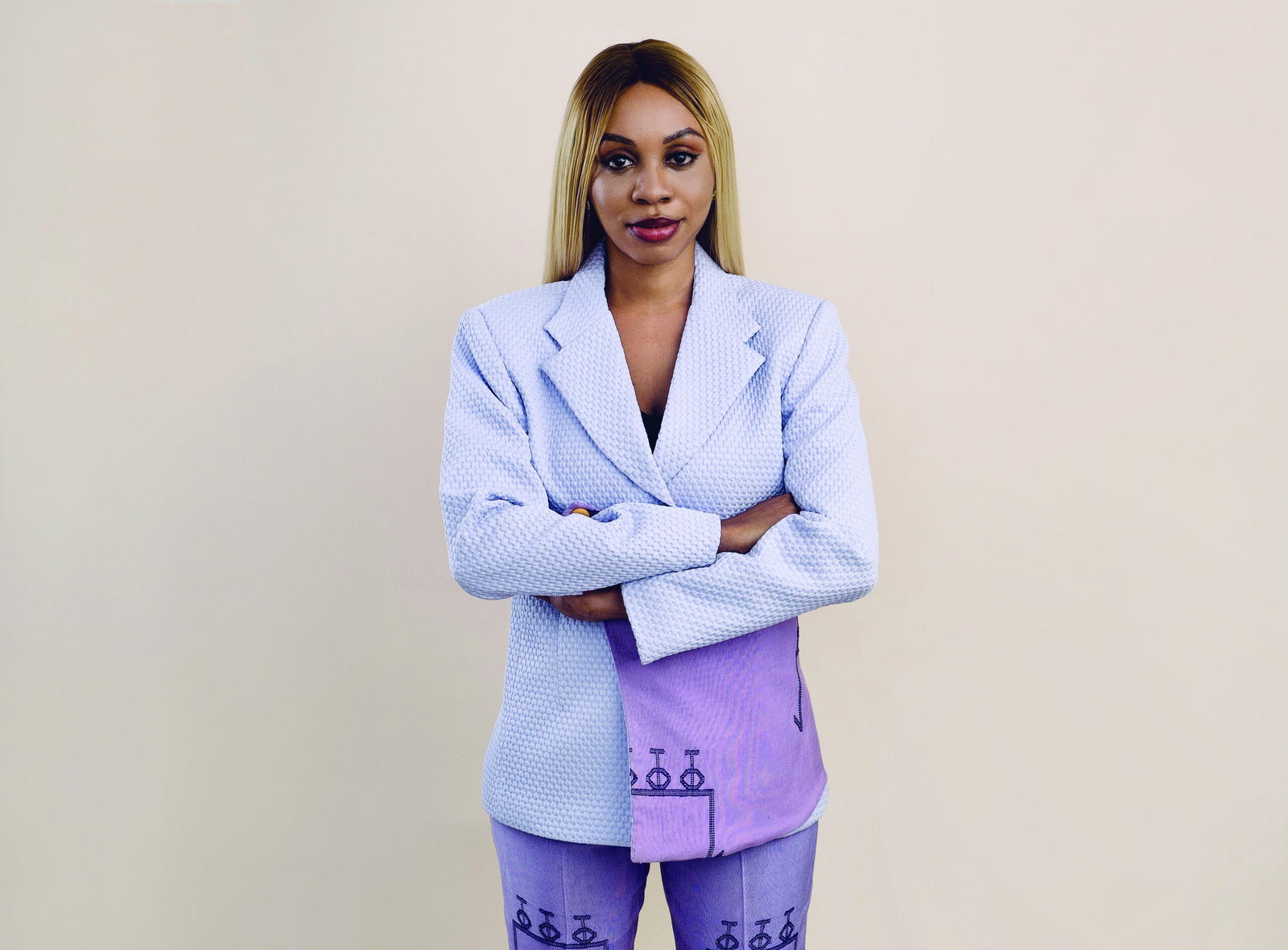
Before starting her business career, Sandra. Chukwudozie worked with the United Nations Industrial Development Organization as a Sustainable Development Consultant. Her focus in this regard concerned clean energy and energy efficiency in industrial development for developing countries.
She also worked in the Office of the Director for the General Assembly and ECOSOC Affairs Division at the United Nations Headquarters. She made significant contributions in mobilizing and coordinating political support to the office in the context of the implementation of the 2030 Agenda for Sustainable Development. It was during this time that Sandra got to be mentored by globally renowned professionals.
She is currently the CEO, Salpha Energy, a renewable energy company that focuses on solar solutions that can enable homes and businesses in rural and urban areas to have access to clean energy.
What informed your interest in renewable energy?
My vision was to go into the oil and gas sector. I was fortunate to start my career with the United Nations in New York in 2015 when the Sustainable Development Goals, SDGs were launched. I learnt that energy needs to be clean, modern, affordable, reliable and sustainable; to reach those people who do not have access to it and take away energy poverty. That mindset changed me completely and made me want to transition into clean energy. I was also inspired by lots of Nigerian women like Ms. Amina J. Mohammed, the Deputy Secretary-General of the United Nations and Chair of the United Nations Sustainable Development Group; and some other women who were talking about clean energy and why Africa needs to embrace it. I decided to leave my career at the UN to come to Nigeria to set up this solar energy business. The excitement was also to see how I can bring young entrepreneurs who could work with me to actualize my vision.
READ ALSO: Premium Energy Drink offers firsthand experience of product with High-Energy event
Tell us about the deal you signed with All On recently…
The deal with All On is the $1million investment that is supposed to help Salpha Energy to scale its deployment of solar home systems across Nigeria and the plan is that we are focusing on the areas where people do not have access to energy, for instance, Niger Delta area. These people are the ones that have the most to gain and the most to lose from access to clean energy. We are also working with distributors to expand our services and businesses in the Nigerian market.
What are your plans to scale the business?
We will be opening at least between 10 to 12 retail outlets in Nigeria including the South-South, South-East, South-West, North Central and North West. We had a project with All On, with the US African Development Fund, USADF. That was a project to deploy 2000 solar home systems at the entry level. It lasted for a year and six months. The aim of the project is to help people especially women in that area to have experience with clean energy instead of using kerosene. We finished the project nine months beyond schedule which is an important breakthrough for us to be able to scale this solution quickly. The challenge is that in solar energy, you do not see enough solar products in key marketplaces and we are trying to make sure that these products are visible and they are of good quality.
What are the challenges in the Niger Delta?
The issue with the Niger Delta is the fact that the area generates lots of revenue for the country, yet we have the most impoverished people there. Their lands are destroyed, women do not have proper work they are doing. We want to make sure that these people who have been forgotten and deprived of their oil wealth are being taken care of.
We will that their children have the quality of life that does not endanger their health. There are women who are living in the riverine areas who do not have access to quality medical care. Most of the hospitals do not have access to power to store vaccines, medical equipments and the issue around women is the fact that they are the most vulnerable. Most of the girls go on their streets at nights and are raped; we have seen this issue happen even in IDP camps that we deploy this solution to. These solutions help to transform the environment and the people are happy to go about their daily activities.
How deliberate are you in engaging more women in the renewable energy system?
Basically, we have over 75 percent women in the business. They are both direct and indirect employees and that consists of our staff, sales representatives, installers, distributors, customer care representatives among others.
Our focus is to bring more women who are indigenous in their thinking and solving energy problems. We have a gender quota and we want to make sure that the effort is balanced. We also reach out to different associations of women, especially in engineering and technology.
Clean energy is not totally new but it is more pronounced now that Nigeria as a country is lamenting unavailability of power supply as well as hike in price of cooking gas. What is the challenge you and other stakeholders in the sector encounter when it comes to government policies?
The biggest challenge is financing. Because it is a new industry, lots of financing comes in to ensure that the players are well supported. It can come in form of subsidy, grants and loans, among others but these opportunities are missing because people are used to other industries within the energy space which is the oil and gas that is booming. Therefore, government can bring in subsidies into the industry to ensure that companies are able to compete fairly with other stakeholders. There is need for government to subsidize solar to enhance value chain. The last clean energy meeting that was held, COP 26 some weeks ago, there were calls for us to transition to clean energy.
Tariffs need to be waived. We want to make sure that the household needs are met without struggle.
What lesson did you take out of the COP 26?
The unfortunate part is that Nigeria is an oil exporter that has suffered so much from the impact of climate change. Climate change is real and we are seeing evidences of this in a various ways. Farmers cannot till the ground, herders and farmers are in conflict zones. So, we need to see how we can find this policy that can help us to transition the bulk of our population from depleting our natural resources. For instance, how do we help people who are using firewood? How do we bring those who do not have access to electricity to be able to use solar energy? The main point is that we cannot move into clean energy overnight. There is need for complete energy mix. Our hydro, gas and solar need to be completely mixed and we must make sure that we are not polluting the environment and that is what I took away from the COP 26. Before this period, the main challenge that brought us to where we are is the COVID-19 pandemic and we have been able to manage the pandemic. Our focus during the COP 26 meeting was how to help Nigeria in the area of finance to scale its business on the green path. And so, we have lots of future prospects to grow the nation.
The World Bank through the Central Bank of Nigeria, CBN is pushing out intervention funds to the most vulnerable industries, manufacturing, and agriculture among others for the people in the industry to bounce back from the post-COVID times.
In what areas are stakeholders advocating for clean energy policy that will be different from the PIB?
There are clean energy policies that are available from minigrid electrification. There is a project by the World Bank called the Nigeria Electrification Project to ensure that companies are mobilized in the private sector to deploy solar home systems of different solutions and when you have been verified and the minigrid is installed, you are given a result based grant.
Our policies are there but they need to be sharpened. How do we increase the ease of doing business? How do we make these industries attractive not only to national players but for the international financiers to come in? Implementation of these policies is what we all should fight for.
Is there a discussion already by the key players to ensure implementation of these policies?
All On works with a UN body called Sustainable Energy for All and they published a report that speaks about localizing the solar value chain in Nigeria. In that report, they looked at components of solar home system or minigrid to see how these products can be produced in Nigeria at a competitive cost. So, this dialogue has been circulated globally across the UN system, the World Bank and other global bodies and the ministries were involved in the sharing of the report. This kind of advocacy which World Bank, African Development Bank, AfDB, All On, are doing goes into helping the industry to progress and become scalable.
For the common man on the street, how accessible is renewable energy?
A common man on the street whose income is between N70, 000 to N100, 000 and needs to light up his home, charge his phone, to power his fan, watch television, just needs a solar solution with as low as N100,000 to N200,000. You just need to pay of deposit of N30, 000 and pay installment of three, six or twelve months depending on the budget. It is for those who cannot afford upfront payment. We deployed this type of solution in Akwa-Ibom state and the payment was done within twelve months. This helped to beat our sales target by nine months.
This is festive period, what effort is put in place to curtail fire outbreaks, especially from cooking gas?
The fire outbreaks are around fossil fuel. If we transition into solar energy, you are guaranteed of a safer way of consuming energy.
Disclaimer
Comments expressed here do not reflect the opinions of Vanguard newspapers or any employee thereof.