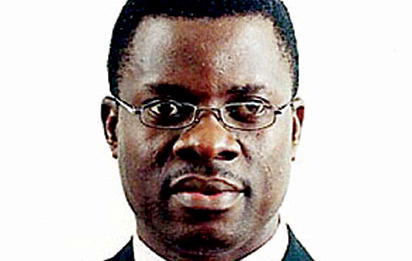
Mike Igini
By Emmanuel Aziken, Political Editor
Barrister Mike Igini, the Cross Rivers State Resident Electoral Commissioner may have become a template for the evaluation of the past pontifications of civil society activists now settled in public office.
His conduct of the recent round of elections in Cross River State was remarkably revolutionary.
Following the elections, Igini in this online interaction relates his views on the successes and challenges of the commission in the last election and declares that the time to commence preparations for the 2015 election should be now.
Excerpts:
What are your impressions on the just concluded elections?
Indeed, INEC has made some progress given where we are coming from and where we are with the outcome of the just concluded elections but there is room for a lot of improvements in future elections.
To make a proper assessment of the elections, one must first begin with the prevailing attitudes of key stakeholders to election and the enabling policy environment because it is often said that public benefits start from the identification of public issues or problems, and the formulation and implementation of policy to address them such as the challenge of conducting free, fair, credible and, more importantly, acceptable elections.
In this regard, the connection must be made between the electoral laws, guidelines and the uncommon political will the government demonstrated in ensuring that these laws and guidelines were implemented without interference, despite the fact that the incumbent government had a lot at stake.
It shows that statesmanship and leadership maturity is essential for democratic culture to take root. The administration of President Goodluck Jonathan must be credited with the political will and maturity that was shown in the last election, which allowed Nigerians to freely express their sovereignty at the polling units and did not resort to unbecoming conduct in trying to influence the elections in his party”s favour.
Also one must give credit to Professor Attahiru Jega because whether political leadership is even handed or not, if the leadership of the electoral body does not assert its autonomy all the endeavours of everyone else would have come to naught.
In all, we must be mindful of the fact that the cases now going on in the election tribunals are also part of the test of the implementation of the electoral policy and until concluded, the elections are still in progress in a manner of speaking. However given the fact that the number of electoral petitions are minimal compared to the elections of 2003 and 2007, we can indeed say that INEC has made reasonable progress.
What would you consider as the major challenges of the elections?
Some of the major challenges have to do with ever-changing electoral laws given the late commencement of the amendment of the 1999 constitution and the Electoral Act for the conduct of the election, funding and of course government did very well in this regard unlike the delays and frustration of the commission prior to the 2007 elections that contributed also to the setback of the commission, motivating INEC staff, procuring and deploying election operational requirements as and when due that was largely achieved, other issues relate to the proper identification of voters as it pertains to the voters” Register.

Mike Igini
The national identification process remains poorly developed, for this reason there will still be a weak link although the biometric registration mitigated this weak link, but the secure thing will be to back this up with the establishment of a forensic unit in the commission that would enable INEC to timeously deal with cases of alleged multiple voting by subjecting ballot papers to forensic analysis before final votes are declared. This will help to discourage the idea that votes could just be returned from places where elections did not take place or returning bogus votes from polling units or LGAs over and above total registered voters or even the population of such places.
Regarding operational deployment, some of the problems have to do with poor infrastructural development of our countries especially in the rural and some urban areas. To give you an instance, there is a town in Cross River State, Npot in Akamkpa local government, which shares contiguity with the state capital, it is a journey of 21 kilometers.
The town in question has such poor access that to get election materials there, electoral officials have to go for about two hours first on motor bike because of the terrain, and then trek through bushparts for about six hours to get to the town. In some cases, there are no phone networks and the waterways are poorly accessible. Others are within the control of the commission, such as proper delineation of polling units to reflect new realities, particularly demographic changes in several areas.
In Cross River like other states, the demand for polling units in many new satellite towns and communities was very challenging but for the understanding and maturity of the people and our determination to be even-handed even though some misconstrued our endeavours. This may have been because some did not fully know our background on issues of fairness, justice and equity.
The issue of ballot box snatching is becoming a thing of the past but for two cases, although we had instructed our officials not to struggle with anyone who attempted to snatch ballot boxes because there will be no return of votes for any party or candidate, in one case, the Youth Corpers, who had a box snatched from them because the poll officials declined allowing them to vote because accreditation had closed and they were at the stage of counting of votes, the poll officials quietly boarded their boat and set out to leave the village without the box.
But the culprits realised the futility and the consequences of their action, begged the Corpers and election officials and dropped the ballot box. In all such cases which came to our attention, arrests were made and culprits properly arraigned in court and they are still on trial.
Other serious concerns within and outside the Commission, have to do with some insalubrious conduct as well as laissez-faire values reflecting our larger society. Election period is seen as ““Harvest time’’” to make quick unearned illegitimate money at the expense of the electoral system by some unscrupulous elements. This is a major betrayal of trust of the electorates that we must do away with. After elections, as we witnessed in Imo and some other states, it should be the people, the electorates that should rejoice and not managers of elections that should be the ones rejoicing and smiling to banks.
What possible reforms can address these challenges?
First, we need to start planning early. Significantly, we must improve on the voters” register and commence the process of continuous registration as soon as possible. We may stop this idea of shutting down the entire economy through enforced idleness because of elections.
Once the voters” roll is right and the content known to all stakeholders, by a simple authentication process of biometrics of a voter, accompanied with issuance of a slip from the authentication machine, like the ATM after cash withdrawal as evidence, a voter could vote immediately and return back home or to his or her place of business. The automated system should be able to bar such voter using biometrics from voting again for that election if it is well linked to our national ID system, like someone who cannot collect money beyond his/her allowable daily withdrawal limit. This is to obviate this whole idea of somebody standing and waiting for accreditation from 8-12 noon and even till 1pm for commencement.
Although the previous practice has been necessitated by our technical limitations as a country, but technology is developing speedily and we can adapt these to our local electoral needs.
We can use the remaining gubernatorial elections that are coming up soon as pilot schemes to correct observed shortcomings about what happens between polling units and ward collation centres after results have been announced publicly at polling units.
Also, we need polling units in several satellite communities that came after the last Polling Units creation exercise. We do not need to manage such crisis again. Therefore based on the current information available and the outcome of the continuous registration, we ought to be able to make reliable guesstimates based on projections and scenario simulations.
Additionally, there is the issue of the template for nomination of party candidates; without doubt, here is one area where we must heed the advice of President Obama, that Africa needs strong institutions, not strong men. The loopholes inherent in the guidelines for party nominations is not only trouble waiting to happen, but it is a stone that has already blinded some who even saw it coming, but who decided to stop the stone with their valuable ocular cavities and its contents.
I make the latter allusion, with direct reference to politicians, who in serious discussions upon my engagement with their constituency, have insisted that the parties should be left alone to produce their own candidates. No one is debating the fact that parties should produce their candidates, but the processes leading to that outcome should be acceptable to party members and credible before objective observers.
We know that party nominations can sometimes be adversarial and rancorous, and that candidates who emerge may not enjoy the support of all party members, but we are saying that some minimum standards of transparency should be observed by all, and those who fail to do so, must be subjected to some administrative and impartial guidelines, which from our last experiences we may add, that it should also be ““injunction-proof’’”, so that parties do not have to enter a general election with ““egg-shell” candidates that are not “tamper-proof” from their party members, and the parties will not need to be making surreptitious entries into Abuja to submit their party candidates” lists like bearers of the offerings of an oracle.
As l have said previously, God forbid that INEC should be interested in the specific candidates presented by parties at elections, but we are saying that parties should have clear guidelines and processes of producing their candidates which leaves no one, party members or electorates in doubt as to the validity of that process and therefore the credibility of that candidate. Generally, the matrix for the elections proper will be reviewed following lessons learnt from the last election, we have to strengthen what works and change those things which did not work well, but as I said previously, that will depend partly on the outcome of some aspects of the issues addressed at the election tribunal.
Should the public expect any specific areas of governance changes?
We must urgently come up with a program of re-orientation for people that work in sensitive institutions like INEC particularly in areas of commensurate pay package in addition to the fact that we must also come up with new codes of conduct for those who work in INEC in terms of the extent to which they can fraternize with key political actors particularly during electioneering periods. I am convinced that the type of leadership which Professor Jega has shown, that encouraged good and commendable actions should be maintained; while steps must be taken quickly to remedy insalubrious actions.
Now also is the time to examine the sham called elections at the Local Government levels across Nigeria? Why is it that states controlled by different parties have suddenly become conquered political territories for exclusive victory?
If the culture of genuine electoral processes is not allowed at the LGAs, what foundation are we then building to sustain our democracy at the states and federal level? Elections conducted by INEC even during worst times before the coming of the present INEC leadership are better and in a different class from the ones conducted by the states. We have 774 LGAs that should be the building blocks of our democracy yet we are not focusing on the sham called elections at that level and the urgent need to reverse the situation in order to have an enduring political culture.
Disclaimer
Comments expressed here do not reflect the opinions of Vanguard newspapers or any employee thereof.