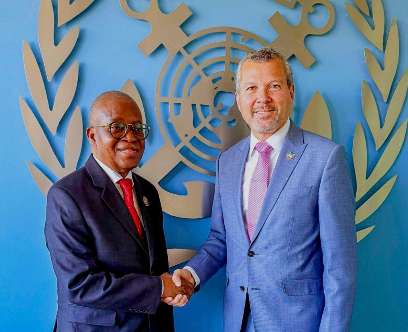
By Efe Onodjae
The Minister of Marine and Blue Economy, Adegboyega Oyetola, has called for a fair and inclusive pathway to net-zero shipping, warning that developing nations must not be sidelined as the global maritime sector works towards its 2050 emissions target.
Oyetola made the call amid ongoing efforts coordinated by the International Maritime Organization to decarbonise international shipping and achieve net-zero greenhouse gas emissions by mid-century.
Speaking at a maritime decarbonisation forum, the minister stressed that while cutting emissions from shipping is essential in addressing climate change, the economic realities of developing countries must be carefully considered. He noted that Africa and other developing regions contribute only a small fraction of global shipping emissions but risk bearing a disproportionate burden from stricter environmental regulations.
According to him, increased compliance costs, higher freight charges and heavy dependence on imports could place additional strain on vulnerable economies if fairness is not embedded in the transition process.
He emphasised that the move towards cleaner shipping must be both “just and equitable,” calling on global stakeholders to provide targeted support through financing, technology transfer and capacity building to help developing countries adapt.
Oyetola further highlighted that maritime transport accounts for more than 90 per cent of global trade, making it a critical sector where environmental sustainability must be balanced with economic growth and trade stability.
He urged African countries to take a more active role in shaping international maritime policies, stressing the need for a stronger voice in negotiations that will define the future of global shipping.
The minister added that the transition to net-zero shipping presents significant opportunities for the continent, including investment in green port infrastructure, renewable energy and job creation.
However, he warned that these benefits would only be realised if global frameworks are inclusive and responsive to the needs of developing economies.
Global decarbonisation efforts in the maritime sector are being driven by the IMO’s greenhouse gas reduction strategy, which includes measures such as carbon pricing mechanisms and incentives for the adoption of low-emission fuels.
Disclaimer
Comments expressed here do not reflect the opinions of Vanguard newspapers or any employee thereof.