By Henry Ojelu
A Senior Advocate of Nigeria, Dr. Anthony Idigbe, has urged restraint, sensitivity and deep reflection in the renewed agitation for the creation of Anioma State, warning that a poorly managed process could reopen old wounds and generate fresh divisions among the Igbo.
He made the call in Lagos while delivering the keynote address at the 2025 Annual Dinner and Award Night of Otu Oka Iwu (Association of Igbo Lawyers).
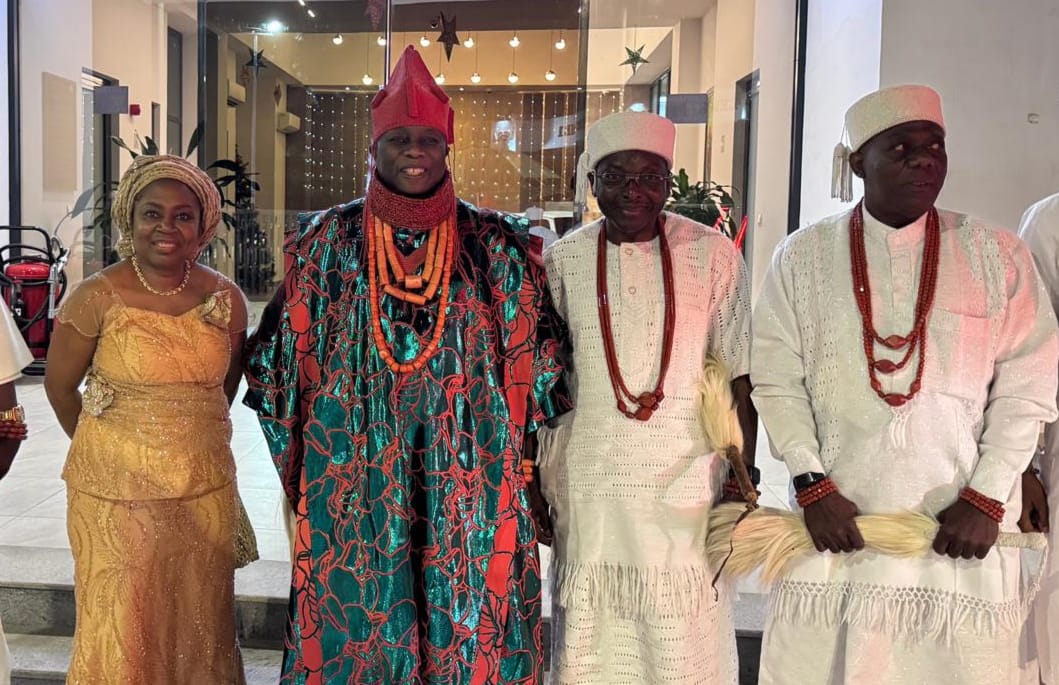
The event, chaired by Abia State Deputy Governor Ikechukwu Emetu, had in attendance the Asagba of Asaba, Obi Prof. Epiphany Azinge (SAN), and President-General of Ohanaeze Ndigbo, Senator John Azuta-Mbata.
Idigbe urged leaders to rise above personal ambition and approach the issue with maturity, describing it as “a highly sensitive national and ethnic question” that requires sober analysis rather than emotional posturing.
He explained that the push for Anioma State is driven by two broad interpretations: a liberation movement for Anioma people who feel culturally and politically hemmed in by neighbouring groups, and a proposal to give the Southeast an additional state as part of Nigeria’s structural balancing.
Both perspectives, he noted, come with complex identity and territorial implications.
He said, “Anioma State can be viewed as a form of liberation for people who feel surrounded by other cultures in ways that have created survival challenges.
“From that angle, the agitation is about self-determination. The other perspective is to see it as compensation for the Southeast. But once you say that, questions arise.”
He warned that the debate could easily trigger sensitive concerns: whether the creation of Anioma State would expand what is traditionally regarded as Igboland or extend the Southeast geopolitical zone across the Niger.
“These are delicate issues and we must be extremely careful,” he cautioned.
Idigbe also cautioned against rhetoric or actions that could create an impression of domination or annexation.
According to him, Anioma people must never be made to feel like they are exchanging one form of control for another.
“We must avoid the feeling that one Igbo group has the right to dominate another.Anioma people do not want to leave one bondage only to enter another. They will resist it,” he said.
He warned that failure to manage the agitation thoughtfully could reproduce historical mistakes rooted in elite power struggles.
Drawing on past experiences, he recalled that the creation of the former Midwest Region was marred by misplaced priorities that may have hindered long-term development.
“Maybe if we had focused on getting the capital and premiership right, who knows how our area would have turned out? Who knows whether the metropolis between Awka and Agbor would have been more established today if larger interests had prevailed over personal ones?”
Idigbe said he was aware that personal ambition was already shaping some of the current agitation.
“People are positioning themselves to be governors or senators.And because of that, they are ready to discard what we already have,” he said.
Reaffirming shared identity, he stressed that Anioma people are fully part of the Igbo nation.
He described culture as the strongest unifying force, explaining that Igbo identity is rooted in language and the long-standing traditions of respect for age and merit.
“If you adopt the culture,” he said, “you are Igbo.”
Idigbe called on leaders to communicate responsibly and ensure that the relationship between Anioma people and the Southeast is clearly understood.
He warned that the agitation must not be allowed to degenerate into ethnic suspicion or political manipulation.
“We need to send the right message to our people.This is a moment that demands careful thought, unity of purpose and wise leadership,” he concluded.
Disclaimer
Comments expressed here do not reflect the opinions of Vanguard newspapers or any employee thereof.