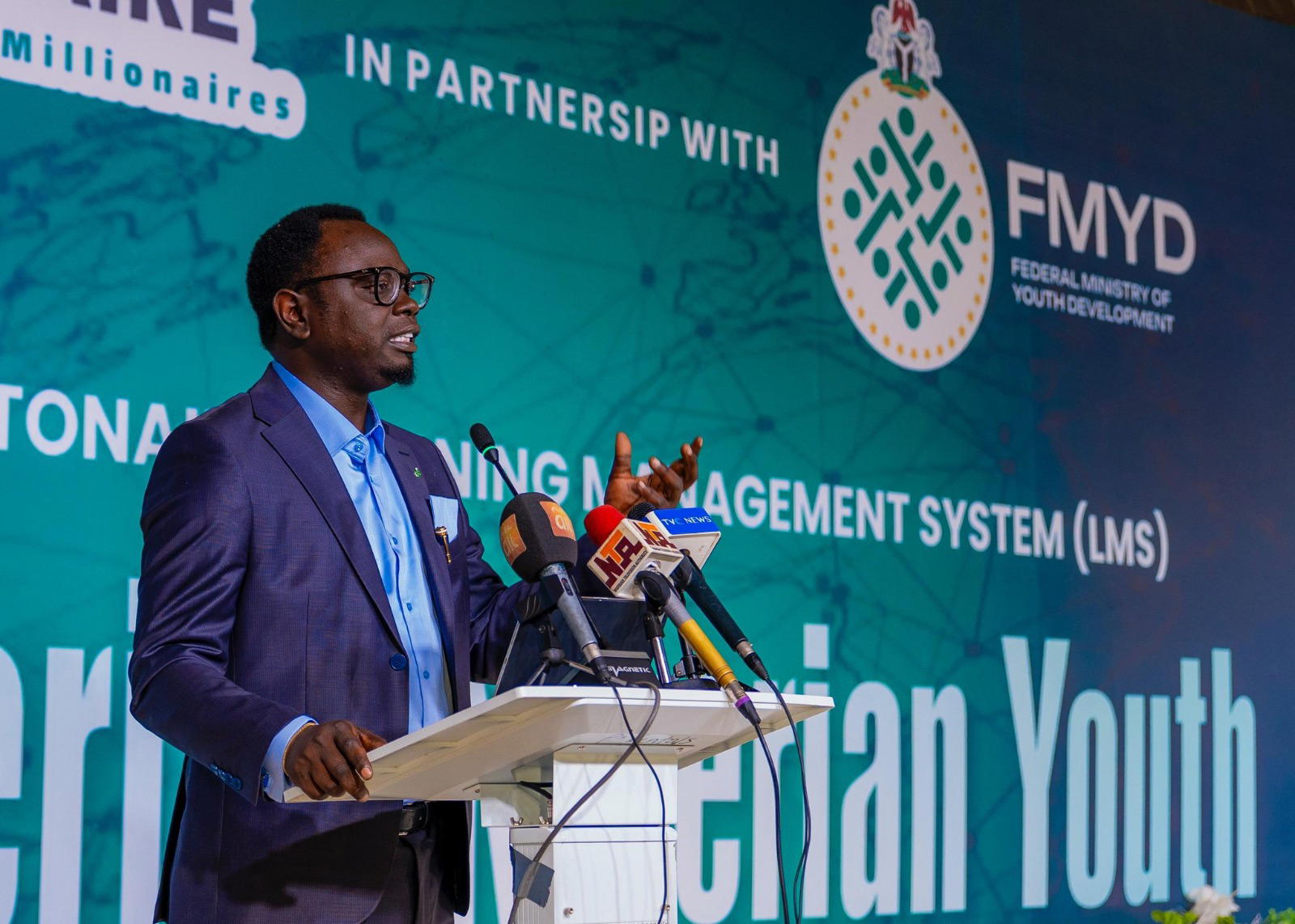
In a country where youth policy has often meant cash handouts, empowerment T-shirts, and photo ops, Ayodele Olawande is trying something different.
Nigeria’s Minister of Youth Development is quietly building an infrastructure of opportunity, not pity, and it is beginning to look like a real break from business-as-usual.
Take the new National Financial Literacy, Investment and Wealth Creation Training Programme. It is not just another workshop. It is framed as a national push to teach millions of young Nigerians how money actually works, from savings to investment and risk management.
At the launch in Abuja, Olawande called financial literacy “a survival skill” and insisted that young people must “see themselves as creators of value,” not job seekers queueing forever for government employment.
For years, Nigeria has told its youth to “hustle” without giving them the tools to build anything sustainable. Here, the target is concrete.
The programme aims to train 100,000 youths annually in financial literacy and forex, with a clear bias for entrepreneurship and startup building.
The minister talks about supporting thousands of corps members and empowering at least 200 startups before the end of the year. It is an audacious promise, but for once, the metrics are not vague.
The same philosophy runs through his digital agenda. The Nigerian Youth Academy (NiYA) is being positioned as a national online learning hub, and Olawande has taken it global, signing an MoU with the UAE’s Digital School to deepen digital skills training for Nigerian youth.
Through that partnership, Nigeria is set to plug into a ready-made ecosystem of digital content, infrastructure, and expertise, expanding access to modern skills for millions of young people who will never set foot in a foreign classroom.
Then there is the AI-powered Youth Help Desk WhatsApp chatbot, a rare example of government actually going to where young people already are. Built on WhatsApp, it promises verified job opportunities, mentorship, entrepreneurship resources, mental health signposting, and civic education, all delivered through natural language conversations.
In a labour market polluted by fake job ads and scams, a credible, government-backed, AI-powered help desk could be a game-changer if it works as advertised.
Even the “traditional” empowerment programmes are getting a different spin. The Electric Tricycle Empowerment Initiative, under his ministry, is not framed as gifts for party loyalists but as a pathway to self-employment, lower transport costs, and greener mobility for young Nigerians trying to earn an honest living.
Of course, there are complicated questions. Will these programmes reach a young woman in Kaura Namoda as easily as a graduate in Lekki? Can financial literacy and forex training avoid becoming another speculative craze rather than a foundation for real wealth? Will NiYA and the WhatsApp chatbot be accessible in local languages, with real-time support, or will they remain shiny slides in conference halls?
Still, it is difficult to ignore the pattern emerging under Ayodele Olawande. The centre of gravity is shifting from motivational speeches to systems, platforms, and skills.
Suppose he can match the ambition of these initiatives with ruthless execution, transparency, and genuine inclusion beyond the usual urban elite. In that case, he may not only rewrite the story of Nigeria’s youth ministry, but he may also prove that government can do more than tweet hope. It can build it.
Segun Adeyemi, the special assistant on print media to the minister of youth development, writes from Abuja.
Disclaimer
Comments expressed here do not reflect the opinions of Vanguard newspapers or any employee thereof.