By Efe Onodjae
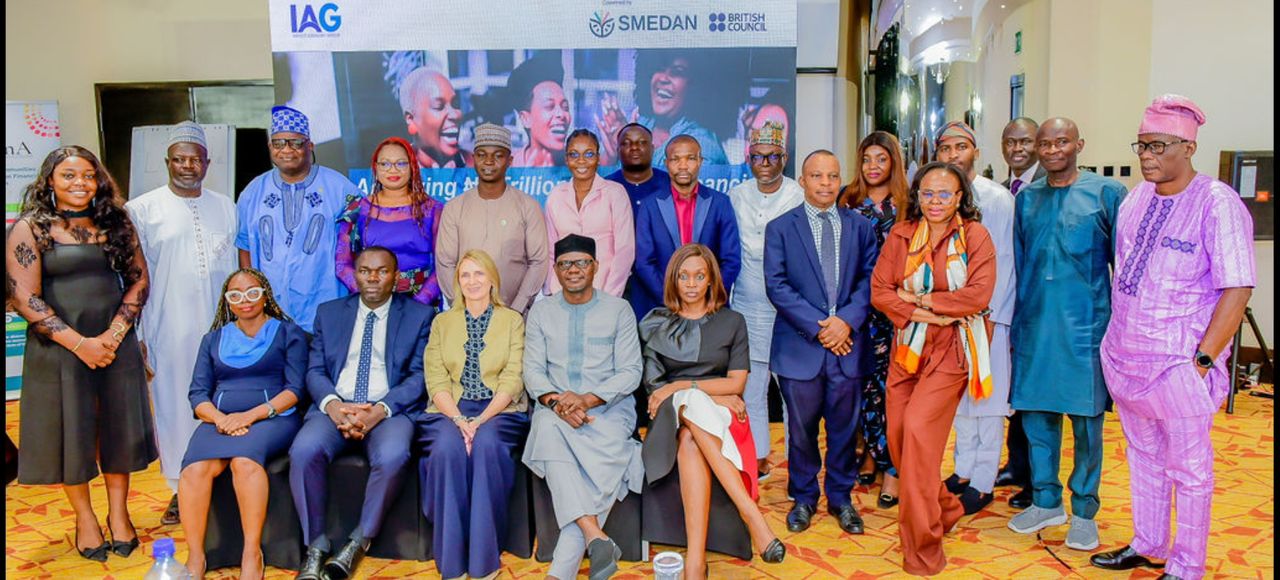
The British Council, in partnership with the Small and Medium Enterprises Development Agency of Nigeria, supported by the Investment Climate Reform Facility, has inaugurated the Impact Advisory Group, a multi-stakeholder platform established to sustain inclusive business environment reforms and strengthen access to finance for Micro, Small and Medium Enterprises across Nigeria.
The inauguration, held alongside the National Roundtable on MSME Financing at the Lagos Continental Hotel last Thursday, brought together policymakers, development partners, financial institutions, and private sector actors to discuss strategies for unlocking inclusive access to finance for MSMEs in Nigeria.
In her opening remarks, the Country Director of the British Council, Donna McGowan, emphasized the Council’s commitment to deepening Nigeria’s reform ecosystem and fostering inclusive economic growth.
She explained that the Council’s support to the IAG aligns with its broader mission of empowering women and young people with the skills, confidence, and networks needed to succeed as entrepreneurs and innovators.
Donna highlighted that “women economic empowerment is a critical driver of sustainable economic growth, and the shared vision of a more peaceful and prosperous world can only be achieved when women have access to the right opportunities and financial resources to grow their enterprises.”
She also said “As the ICR programme winds down, sustaining outcomes has become a pressing priority. Hence, the convening of the day’s event and the inauguration of the Impact Advisory Group (IAG). “This platform is designed to sustain inclusive business environment reforms beyond the ICR in Nigeria while promoting awareness and adoption of gender-inclusive access to finance for women-owned businesses and setting up a tracking mechanism for implementation by key stakeholders.”
Representing the Director-General of SMEDAN, the Director of the DG’s Office and Monitoring & Evaluation, Mr. Dabureje Onesi-Lawani highlighted the Agency’s ongoing efforts to enhance MSME financing and competitiveness through evidence-based policy and public-private collaboration.
He stated that while SMEDAN had benefitted so much support in the implementation of many initiatives from the ICR, such as the development and coordination of the National MSME Policy 2021-2025 and the study on access to finance for women-owned businesses, among many others, there is the need to sustain the impact of these initiatives. Hence, the need for the launching of the IAG.
He concluded with an encouragement to all attendees, stating that the collective effort that has started at the launch is to close up the 3 trillion funding gap within the MSME ecosystem, and everyone in the room should be involved in that important process.
In a presentation by the IAG Secretariat, the Group was described as a non-donor, non-governmental coalition of impact enablers working with national partners to ensure sustainability, evidence-based policymaking, and inclusive innovation.
The IAG’s mission is to sustain and scale reforms that promote inclusive MSME growth, especially for women, youth, and persons with disabilities through advisory, advocacy, research, and coordination.
The Secretariat also noted that while the ICR Facility is winding down in Nigeria, the IAG will serve as a sustainability mechanism to scale the ICR impacts to subnational levels, co-creating solutions with public institutions, innovation actors, and MSME enablers.
A key highlight of the event was the signing of a Memorandum of Understanding between SMEDAN and the IAG’s implementing partners: EFInA, FATE Foundation, Sterling One Foundation, Africa Venture Philanthropy Alliance, Impact Investors Foundation, and Octoville Development Company.
During the Roundtable Session, the secretariat of the IAG, represented by Mr. Nelson Okwonna delivered a lead presentation titled “Achieving N3 Trillion Inclusive Financing for MSMEs in Nigeria.”
He described the MSME Financing Paradox, noting that while the private sector share of loans has grown to N77 trillion (CBN, 2025), less than 2% of this portfolio reaches MSMEs.
He also cited SMEDAN data showing that only 25.9% of women entrepreneurs have ever accessed formal financing, despite MSMEs contributing over 46% to GDP and accounting for about 87.9% of employment.
The technical expert highlighted key barriers, including high collateral requirements, short loan tenors, weak institutional capacity, and poor coordination between financial and policy actors.
The session concluded with a proposition of a coordinated blended finance architecture that de-risks MSME lending, scales proven financing models, and aligns state, donor, and DFI interventions to unlock the N3 trillion financing target.
Participants then engaged in breakout sessions on four selected thematic areas: Asset Financing, Trade Finance, Agric Financing, and Start-up Equity Financing.
Each group developed practical recommendations to expand MSME financing, leverage blended finance instruments, and improve access for women and youth-led enterprises.
Overarching recommendations centered on Dedicated state-level matching funds and de-risking instruments for MSMEs; Collaboration among DFIs, donors, and banks to extend long-term capital lines; Expansion of equity and impact investment through co-investment schemes and Support for digital trade finance infrastructure and inclusive credit scoring systems.
Director of Programmes at the British Council, Mr. Chikodi Onyemerela, commended the collaborative effort of all partners and emphasized the need for sustained multi-sectoral engagement to drive inclusive MSME financing and reforms nationwide.
The event concluded with a renewed commitment from all stakeholders to own and commit to actionable steps to enhance access to inclusive finance for MSMES, strengthen coordination among DFIs, donors, and state actors, ensuring that reforms are sustained beyond donor cycles and effectively cascade from the federal to subnational levels.
Disclaimer
Comments expressed here do not reflect the opinions of Vanguard newspapers or any employee thereof.