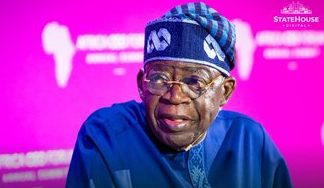
President Bola Tinubu
By Progress Godfrey
Every nation that has sustained economic growth has done so by investing in its people. For Nigeria, the challenge is no longer whether reforms are needed, but whether they can translate into healthier families, better schools, more productive workers and stronger communities that drive long-term prosperity.
Against that backdrop, the Federal Government recently unveiled a $3.05 billion package comprising the Nigeria Community Action for Resilience and Economic Stimulus Additional Financing (NG-CARES AF), the Solutions for Internally Displaced Persons and Host Communities (SOLID) programme and the three-in-one Human Capital Opportunities for Prosperity and Equity (HOPE) programme, positioning them as the next phase of efforts to strengthen human capital, reduce poverty and build resilience across the country.
Taken together, the five flagship interventions seek to improve livelihoods, expand access to quality healthcare and education, strengthen governance and support vulnerable households. The package consists of the $1.25 billion NG-CARES AF, the $300 million SOLID programme and the $1.5 billion HOPE programme, which includes HOPE-GOV, HOPE-Primary Health Care (HOPE-PHC) and HOPE-Education (HOPE-EDU), with the education component backed by $552 million.
Speaking at the launch, President Bola Ahmed Tinubu, said the programmes reflected the administration’s commitment to ensure that economic reforms deliver tangible benefits to ordinary Nigerians rather than remaining visible only in economic indicators.
Represented by the Minister of Finance and Coordinating Minister of the Economy, Taiwo Oyedele, Tinubu maintained that improving macroeconomic conditions must translate into better livelihoods, noting that the programmes align with the Renewed Hope Development Plan 2026-2030 by combining economic diversification with investments in people and stronger institutions. He added that the interventions were designed to ensure no Nigerian is left behind as the country pursues its long-term growth ambitions.
“Today’s programme builds directly on that momentum. So what are we launching today? NG-CARES additional financing, about U.S. dollars 1.25 billion, World Bank-supported programme that is focused particularly on smallholder farmers and small businesses.
“SOLID, a U.S. dollar 300 million World Bank finance initiative that bridges humanitarian relief and long-term development, investing in infrastructure, livelihoods, and services for displaced persons and the communities that host them. And HOPE, the 3-in-1 programme, is a U.S. dollar 1.5 billion flagship investment in Nigeria’s greatest assets, our people,” the president said.
He further explained that the three initiatives are designed to work as one coordinated national strategy rather than isolated interventions. According to him, healthcare, education, governance, livelihoods and social protection reinforce one another, particularly at the grassroots where the impact of reforms is expected to be felt most.
He said the ultimate goal is to reduce poverty, strengthen community resilience and ensure every Nigerian has access to better opportunities through improved public services.
Minister of Budget and Economic planning, Senator Abubakar Atiku Bagudu described the programmes as a coordinated response to Nigeria’s development challenges, saying they were designed to complement one another by strengthening social protection, expanding economic opportunities and improving human capital. He noted that together they translate the Renewed Hope Agenda into practical interventions targeted at poor and vulnerable Nigerians.
Bagudu explained that NG-CARES AF builds on the achievements of the parent programme, which reached 17.6 million direct beneficiaries between 2021 and 2025, while SOLID adopts a long-term development approach for Internally Displaced Persons (IDPs) and host communities.
“The true strength of these programmes lies in their complementarity. NG-CARES builds resilience and strengthens institutions. SOLID restores dignity, opportunity and stability to displaced persons and host communities and HOPE builds human capital required for long-term prosperity through investments in health, education and governance.
“Together, they form an integrated framework for tackling poverty and vulnerability while creating opportunities for sustainable development. They ensure that economic reforms are complemented by social investments, human capital development and targeted support for those most in need,” he said.
The minister emphasised that implementation would require strong coordination among the Federal Government, state governments, development partners and implementing agencies. He also called for transparency, accountability and prudent management of public resources to ensure the programmes deliver measurable improvements in the lives of vulnerable Nigerians.
Highlighting the health component, the Minister of Health and Social Welfare, Professor Muhammad Ali Pate, said the administration has revitalised more than 3,000 Primary Health Care (PHC) centres nationwide, while another 1,000 facilities are nearing completion. He said the reforms are aimed at making quality healthcare more accessible and affordable for Nigerians.
He disclosed that quarterly visits to PHC centres had risen from fewer than 10 million in 2023 to about 45.5 million, while 43,000 pregnant women and newborns had benefited from the national emergency medical transport system. He added that 78,000 frontline health workers had been retrained and that the government aims to provide quality basic healthcare services to more than 40 million Nigerians.
“We are transforming health for Nigerians from a luxury for a few to a fundamental right for everyone. We’re aiming to provide quality affordable basic health care service to more than 40 million Nigerians and to ensure that all Nigerians have access within reasonable distance and within affordable limits for their households or for themselves,’ he said.
Turning to education, the Minister of Education, Dr Tunji Alausa, unveiled the $552 million Human Capital Opportunities for Prosperity and Equity Education (HOPE-EDU) programme, describing it as a major investment to improve the quality and reach of basic education across the country.
He said the programme would support more than 30 million public school students, impact over 500,000 teachers in 65,000 public schools and strengthen more than 10,000 non-formal learning centres. He added that it will improve foundational literacy and numeracy while deploying digital technology to strengthen planning, accountability and education management nationwide.
“With this HOPE World Bank credit we will be supporting over 30 million public school students nationally. Over 500,000 teachers in 65,000 public schools would also be impacted as well as over 10,000 non-formal learning centres nationally. This is huge impact on our basic education,” the minister said.
Reinforcing the development partners’ support, the World Bank Country Director for Nigeria, Matthew Verghis, said the programmes reflect a shared commitment to invest in Nigeria’s people, describing human capital as the country’s greatest asset. He noted that the interventions are designed to strengthen resilience, improve livelihoods and expand access to quality education, healthcare and other essential services.
“These programmes recognise that Nigeria’s greatest asset is its people. Creating opportunities for Nigerians to realise their potential and access productive employment is central to the country’s development journey. Through the HOPE series, we are investing in stronger education and health systems, supported by more effective institutions that can deliver results for Nigerians,” he said.
Focusing on the humanitarian dimension, the Minister of Humanitarian Affairs and Poverty Reduction, Dr Bernard Doro, said the Solutions for Internally Displaced Persons and Host Communities (SOLID) programme marks a shift from short-term humanitarian assistance to long-term recovery by rebuilding livelihoods, strengthening local services and integrating displaced persons into sustainable development efforts.
“SOLID changes our story. The One Humanitarian, One Poverty Response System is designed to move Nigeria from palliatives to pathways. SOLID rebuilds social infrastructure and strengthens local service delivery for IDPs and host communities.”
Chairman of Nigeria Governors’ Forum (NGF), and Governor of Kwara State, AbdulRahman AbdulRazaq, represented by Ondo State Governor Lucky Aiyedatiwa, reaffirmed the commitment of the 36 states to implement the programmes effectively and strengthen accountability at the subnational level.
“We are not simply launching new projects. We are building the institutional foundations required to sustain inclusive growth, improve service delivery, and enhance the resilience of our various states,” he said, adding that the states would continue working with the Federal Government, the World Bank and other development partners to ensure the programmes achieve their intended impact.
Also lending legislative backing, Senate President Godswill Akpabio, represented by Chairman of the Senate Committee on Finance, Senator Mohammed Sani Musa, pledged the National Assembly’s support through enabling legislation and oversight.
He said lawmakers would ensure that resources appropriated for healthcare, education, livelihoods and social protection translate into measurable outcomes for citizens.
He stressed that oversight would focus on accountability and value for money, insisting that the programmes must deliver real improvements for vulnerable households rather than remain policy announcements.
Taken together, the messages from government officials, development partners, state governors and the legislature pointed to a common strategy. Rather than treating healthcare, education, governance, livelihoods and humanitarian support as separate priorities, the programmes seek to connect them into a single framework aimed at reducing poverty, strengthening institutions and improving resilience across Nigeria.
Looking ahead, the success of the $3.05 billion package will not be judged by the volume of funding or the number of programmes launched. It will depend on whether more children receive quality education, more families gain access to healthcare, vulnerable communities rebuild their livelihoods and stronger institutions create the foundation for higher productivity and sustained economic growth.
Disclaimer
Comments expressed here do not reflect the opinions of Vanguard newspapers or any employee thereof.