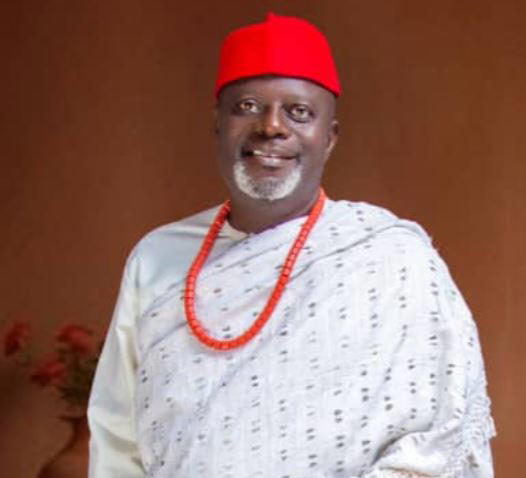
By Kennedy Kanma
As a young man growing up in the defunct Bendel State in the 1970s and ’80s, I read some of Professor Zulu Sofola’s seminal literary works, and I was greatly inspired. I dare say her plays and essays left a lasting impact on my impressionable mind.
Today, I still remember Sofola’s works such as Wedlock of the Gods, King Emene, The Sweet Trap, Old Wines Are Tasty, and The Deer and the Hunter, among others. Back then, I had no inkling that Professor (Mrs.) Sofola hailed from Aniomaland. But I was in awe of her brilliance and the settings of her plays, especially King Emene and Wedlock of the Gods, which were obviously set in Anioma. I later learnt, in adulthood, that Sofola was not only an Anioma daughter from Issele-Uku but also Nigeria’s first published female playwright, and Africa’s first female professor of theatre arts. What a revelation!
But Sofola is not the only female scholar or woman of influence from Anioma. For instance, Ogwashi-Uku, my community, also gave the world Professor Tess Onwueme, playwright, scholar, environmentalist, and professor of English, well known for her socially engaging, politically conscious, and environmentally focused plays such as Desert Encroaches, The Broken Calabash, Then She Said It, and Banana Leaves, among others. In diplomacy, global affairs, politics, and public administration, Ogwashi-Uku also produced Ambassador Raph Uwechue, one of Nigeria’s finest diplomats. And the list goes on.
I hasten to add that from the colonial era to the present day, the Anioma people’s most resounding display of courage, audacity, hope, and heroism remains the famous and unforgettable Ekumeku liberation war, a proud chapter in our collective history. For 31 years, between 1883 and 1914, our people made history with Ekumeku as one of the most determined resistance movements against British colonial rule in Nigeria. It was an unparalleled guerilla struggle marked by courage, secrecy, and an unyielding commitment to freedom. Even though the movement was eventually subdued after more than three decades, the bravery of the people of Aniomaland remains a shining example of an uncommon people who refused to surrender their freedom, land, culture, and dignity to an invading force.
The truth, and this must be told, is that our heroes and their acts of heroism from time immemorial are evident everywhere in Aniomaland: from Oshimili and Aniocha to Ika, Ukwuani, and even Igbanke in Edo State, where our people are also doing exploits, inspiring hope, and proving that greatness knows no boundaries.
I decided to celebrate Anioma, her nobility, and a few of her extraordinary women today because of the changing times. And I must say that I was motivated by this immortal saying of our people: “When the big oak tree that once stood tall and majestic, offering shade and shelter to all who came near, dies, where is the sucker that will replace that big tree?”
In all honesty, I have always been bothered by today’s bad politics, driven by greed and avarice. As we all know, unhealthy politics plagues Delta North in a way that does not represent who we are. How long shall we continue to practice cash-and-carry politics of self-interest and privilege for a few at the expense of the common good?
As politicians, we must ask ourselves what example of integrity, vision, orderliness, and selfless service we are truly setting for the young people who look up to us. Must politics still be defined by thuggery, forgery, underrepresentation, imposition, and violence, even in this century when the world has become a global village? Where is that noble spirit of service, empathy, humility, appreciative sympathy, and quality representation that once defined the politics of old, especially in our part of Nigeria? Your guess is as good as mine. But there could not have been a better time to reflect on posterity and what we will leave behind as mortals who must, one day, depart this earth.
I believe, strongly, that public service through politics is neither for advantage nor personal aggrandizement. If you ask me, I insist, and this has always been my position, that politics is the highest form of public service, and every politician in public spaces must be constantly reminded of their duty to serve.
As I write, let me add that I am guided by the fact that true leadership is measured not by raw power or great wealth but by the lives positively impacted. Without fear of contradiction, let me state that the progress of any nation depends on the character and vision of its leaders.
A couple of days ago, I feted Nigerian youths on International Youth Day, celebrating their achievements and potential with joy and admiration. I was frank about their contributions to Nigeria’s growth and development as a nation. But in doing so, I punctured the long-held, deceptive notion that young people are merely leaders of tomorrow. In truth, the youth we see are also leaders of today, and as politicians, we must come to terms with that reality.
Again, I recognized and appreciated the invaluable contributions young Nigerians bring to the table of our national development. On a day like this, I said: “I recognize the value, contributions, and dreams of young people, particularly in Nigeria. I salute the energy, creativity, courage, and resilience of these young people who are contributing their quota everywhere. And this is verifiable through their impact in various sectors. As we all know, our youthful population is driving change and making its mark in various fields of life, including education, technology, music, fashion, sports, literature, entrepreneurship, the arts, and the professions. Nigerian youths in foreign countries are also our veritable ambassadors, projecting the nation’s image beyond our shores, and rewriting the ugly narratives about Nigeria into stories of hope, resilience, and progress. Nigerian youths are not just leaders of tomorrow; they are the hope and the real change-makers of today. Their great ideas and resourcefulness, I must confess, are reshaping our communities in many ways. I am glad they are injecting fresh perspectives into the discourse on politics and governance. Their talents are enriching our culture, and their courage is inspiring change and a new era of possibilities, progress, and consciousness.”
For emphasis, I also addressed, in my goodwill message, the age-long issues of complacency, indifference, ignorance, and lack of interest in politics, often ascribed to Nigerian youth. As far as I am concerned, that belief is not entirely true. I said: “It is also gratifying to note that Nigerian youths are fully aware and very much alive to their responsibilities. Until very recently, the average young Nigerian never bothered much about politics and elections, but all that is changing, and very fast too. We are all happy for these developments. Therefore, I can say with every sense of responsibility that young people now fully appreciate the consequences of electing ill-prepared and bad leaders. They are working hard, through their informed choices, to break the cycle of poor representation in both the legislative and executive arms of government in Nigeria. They are not only conscious of party politics and political developments; they are also putting measures in place from their different corners of Nigeria to ensure that votes count. Therefore, no one, no matter how highly placed or connected, can take the Nigerian youth for granted in today’s Nigeria. Even at the risk of sounding repetitive, let me state again that no one is oblivious of the remarkable contributions of young people in Nigeria today, both personally and collectively, to better our country. So, on this International Youth Day, I stand with them, and I will continue to support them as they build the future and the common world we all deserve. Therefore, I urge them to remain steadfast, conscious, and vigilant as we work and pray together for a new dawn that is already within touching distance.”
These are hard facts about who our young people are, no matter how much we try to discount their relevance or the promise they hold for our country.
As we all know, what eventually becomes of a country depends on how it treats its young people and the next generation. From our antecedents as a people, I believe we are too perceptive to ignore or underestimate this truth. Undoubtedly, this is the time to think about our young people, our dear country Nigeria, and the future we hope to leave for our children and generations yet unborn.
Kanma, a lawyer, entrepreneur, and politician, writes from Ogwashi-Uku, Delta State.
Disclaimer
Comments expressed here do not reflect the opinions of Vanguard newspapers or any employee thereof.