By Ayo Onikoyi
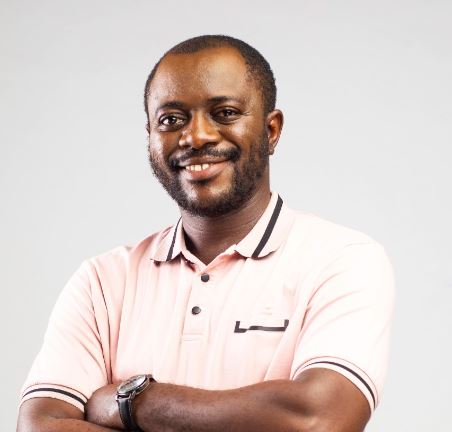
UK-based Nigerian filmmaker, Toyosi Ige is an engineer who became a filmmaker because of his love for the art. He is an award-winning Nigerian screenwriter and director.
Armed with Masters degrees in film as well as civil engineering, Toyosi has written several short films, feature films, and TV series. As a director, he is the brain behind “Fading Echoes”, “Oiza’s Nexus”, “My Oga na Tailor” and so on.
Toyosi’s films have been screened at various International Film Festivals, including Birmingham Film Festival, Realtime Film Festival, Abuja International Film festival, Coal City Film Festival and so on and his new film, Fading Echoes,shot in the United Kingdom and Nigeria, is currently showing for the first time in Nigeria at the Abuja Film Festival. He is also in the preproduction stage for a web series titled “Heirloom”
In this no-holds-barred interview with Potpourri, the filmmaker takes us through his journey down the alley of filmmaking, and acting while sharing his insights on the challenges in Nollywood. Excepts:
Nollywood, seemingly has come of age, or so it seems. What do you believe are still missing and needs to be done to reposition the industry?
Identity is still our biggest problem.
What exactly qualifies to be a Nollywood film? A film shot in Nigeria or a film made by Nigerians. Going by the latter definition, what is unique about our films? What separates our films from Hollywood, British or Korean films?
Our films are not distinct enough in my opinion. We need to determine the right audience for each film.
Secondly, storytelling craft.Storytelling nous has been an age-long malaise in the industry. Our stories are oftentimes undercooked, under-researched or just flat. No matter how good the other technical elements are, if the story and screenplay are not good enough, the overall level of the film will drop.
Lastly, distribution platforms and studio systems. The industry right now does not have a structure that supports profitable distribution of films and the lack of enough screens in the country is also a big problem. The more the number of screens and streaming platforms, the higher the profit margin for Nigerian films.
What shaped your vision to seek a livelihood/calling in the make-believe world?
Right from my childhood, I have always thought in images. Having grown up listening to my mum’s folk stories every night, my imaginations widened and I kept visualizing her description of events. Also, I grew up in an extended family. Living in the same house with my uncles and aunties meant I was exposed to lots and lots of stories and scenarios.
As I grew older, I became passionate about using my gift of storytelling to change the world. By changing the world I mean shaping narratives, highlighting history and cultural practices, and using relatable stories to impact individual viewers positively. As a member of secondary school’s drama society, albeit I was in science class, I won many inter-school titles and ended up becoming the President. In my third year as an Engineering student in the University, I finally made up my mind to follow a filmmaking career.
Having had stints in dance and theatre, film is the medium in which I find the best expression for my stories.
Many would have sought to be an actor, to be the nucleus of attention but you chose behind the scene. Why all that you are, are behind the scene and not an actor in the spotlight?
Funny enough, I started off as an actor in primary and secondary school. In my final year as a secondary school student, I was tasked with the responsibility of directing one of our plays. I fell in love with directing and enjoyed it more. I started writing proses, poems and love letters as a senior student. After my University education, I decided to gain more knowledge by attending Wale Adenuga’s PEFTI film Institute in 2012. While at PEFTI, I was able to determine my biggest areas of strength, which are directing and screenwriting.
I love creating great visual stories from nothing. I act occasionally but my first love will always be directing.
What are your most memorable moments as a director, screenwriter and playwright?
As a director, winning the best Nigerian short film at the 2022 Eko Film Festival will always stand out. It was a film I made in the middle of the lockdown in 2020. It was tough to make but I had to employ all my directorial know-how to make the film work and I’m happy with the outcome. As a screenwriter, a top Hollywood executive reviewed and gave a largely positive feedback on a screenplay written by me. That only fueled my confidence. And as a playwright, writing plays like Sham complex and The Trymo, and seeing the audience’s reactions to the brilliance of the play will always linger in my memory.
What should Nigerian films focus most about in view of several topical conversations dictating the affairs of men in the world right now?
In all honesty, I don’t think there should be a general blueprint for topics that Nigerian films need to focus on. Beyond entertainment, film is supposed to also engage in cultural/historical preservation and social commentary. Now, there are so many issues bothering the nIgerian society and everyone can decide which one to talk about in their films. That said, every filmmaker’s interpretation depends on their world view, beliefs, experiences and agendas.
What should be paramount is excellent storytelling, effective visuals, beautiful performances and all round positive films that will be successful, critically and commercially.
As for me, in my films, I try to strike a realistic balance between contemporary realities and cultural nuances.
What have been your most challenging experiences in your sojourn as a filmmaker?
As a filmmaker, I have experienced the good, the bad and the ugly. One of the greatest challenges has been in the area of matching the available equipment and personnel with the scale of the idea. As an independent filmmaker, access to funding is limited so one is forced to make low budget films. Also, the difficulty in getting effective distribution and visibility for my film projects have also been a problem.
Access to desired locations and protection from local film commissions (that is even where they are present) has also been a challenge.
Why did you “japa” and what has been your experience in the UK compared to when you were in Nigeria?
I came to the United Kingdom to study for an M.A in film and screen form at the University of Wolverhampton. I did an M.A because I have a passion for teaching film. Having done that in my academy, I intend to teach in a conventional University system. My first degree in Civil Engineering was not going to suffice. I needed the education, exposure and leverage. Hence the decision to go abroad. However, I still intend to work as frequently as possible in Nigeria and other parts of Africa.
Which of your works is your favorite and why?
This is a tough question. Right now, my favourite has to be Oiza’s nexus. Why? Because of all the difficulties myself and the whole team went through while making the film. Shooting in the middle of lockdown and having to transport cast between Ilorin and Lagos was far from easy. The fact that it eventually won us awards is another reason why I love the film.
Actors appear to be better paid than directors or others, or is it the other way round? What’s your take on the remuneration structure amongst the cast and crew of a film project?
In this case, one has no choice but to follow industry standards and practice. What determines payment is value. I don’t compare two different personnel. I look at their antecedent, what they command in the market and the value they’ll bring to the project. After all these, I look at my budget.
What’s your ultimate goal as a filmmaker?
My ultimate goal is to tell visual stories that resonate with the right audience. I aim to tell real stories in real situations and transform people. Having trained over 200 filmmakers, I also want to create a platform that can also train and elevate upcoming filmmakers, giving them platforms according to global best practices. I aim to get my films on the right platforms and be a global ambassador for Nigerian cinema. If one life can be transformed by my films, then I will be a fulfilled man.
About Toyosi Ige
In 2022, his short film, Oiza’s Nexus, won the award for Best Short film at the Eko International Film Festival.
Toyosi is also a playwright, having written and directed many theatrical productions, including The TRYMO, Sham Complex, Ajuwaya, Cesay’s Truth, and The Stone of Taakanda.
Between 2014 and 2018, Toyosi worked as a TV producer, writer, and director with Africa Independent Television (AIT).
In 2012, he founded Rayhouse Studios and the Rayhouse Academy, which followed in 2017.
As a teacher, Toyosi Ige has trained over 200 filmmakers, some of whom are active in mainstream Nollywood today.
Presently residing in the United Kingdom, Toyosi is inspired to ignite conversations pertaining to social and national development matters through visual storytelling.
He is presently a cohort member of the Rockup ready Filmmaking Skills Accelerator Program at the Birmingham City University, United Kingdom.
Disclaimer
Comments expressed here do not reflect the opinions of Vanguard newspapers or any employee thereof.