…. says U.S. private sector will partner in critical areas of mutual interest
By Gabriel Olawale
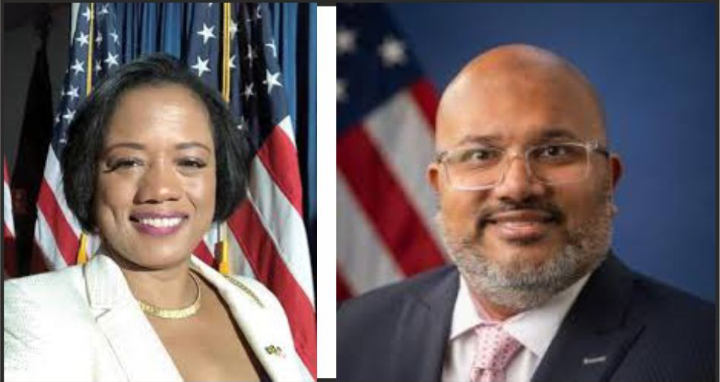
The Assistant Secretary of Commerce for Global Markets and Director General of the U.S. and Foreign Commercial Service, Department of Commerce, Venkataraman Arun has identified important role Africa will play in addressing current and future world problem.
Speaking ahead of U.S.-Africa Leaders Summit bid to hold from 13th to 15th December in Washington D.C, Arun said that Africa is more critical than ever in shaping international rules and collective action, as African solutions will be needed to address current and future world problems.
He disclosed that Africa’s youth population, growing entrepreneur class, reserves of rare earth minerals critical for the green energy transition, and regional integration are all key reasons for this.
“It is our role as the U.S. Government to work with African governments to create commercially enabling environments in which two-way trade and investment can flourish. And it is a priority for us here at the Commerce Department as we host the first U.S.-Africa Business Forum, USABF in six years.
“The U.S. Department of Commerce, in partnership with the U.S. Chamber of Commerce and the Corporate Council on Africa, are pleased to be hosting the U.S.-Africa Business Forum as a part of the U.S.-Africa Leaders Summit on December 14th. The Forum will bring together key players from the United States and African governments and private sectors to build partnerships that will increasingly be a vital source for solutions to shared challenges going forward.”
He hinted that U.S. government among other things will support in area of energy and infrastructure finance, food security and digital economy.
“One of the most important lessons of the past two years has been the importance of the digital economy and digital technology to economic growth, to recover as well, and to our connections with each other and how necessary all of this is to support the long-term economic growth of our economies.
“As you all know, the theme of the U.S.-Africa Business Forum this year really is partnering for a prosperous and resilient future, and central to that theme is the U.S. focus and commitment on investing in a mutually beneficial economic partnership for the 21st century that’s going to deepen U.S. ties with African nations so that we can develop solutions jointly to global challenges,” he said.
Corroborating his view, Deputy Assistant Secretary for the Middle East and Africa, Department of Commerce, Camille Richardson said that Africa has really proven to be a very dynamic environment and an attractive place for doing business. U.S. companies are taking notice in no small part due to the market intelligence that we’re providing to our U.S. companies to attract them to the continent.
“But I would say that perhaps one of the largest barriers to trade and investment is the lack of physical infrastructure, and it’s one of the Biden administration’s top focuses. So infrastructure is definitely an area where we see opportunities for collaboration between our governments as well as our private sector companies.
“And we really do believe that by focusing on some of the sectors that are highlighted under the President’s Global Infrastructure Initiative – energy, the transition to clean energy infrastructure, finding finance for infrastructure projects; transportation infrastructure, digital infrastructure, also very important; health care, agribusiness – all of these are very key sectors and we developed the agenda for the U.S.-Africa Business Forum in collaboration with African governments and the African private sector.
“So USABF will allow us to explore how we can advance together to really move the needle in a transformative way on these sectors of focus. We have 42 heads of state confirmed and I think nearly 300 companies on both sides of the Atlantic that are coming together for this.
She explained that several plans are in place to ensure adequate coverage, “I think one of the key differences with this particular forum is that it will also be livestreamed so that if – even if a company is not able to be at the forum they’re able to hear and see what is going on. But I would say that one of the big differences for us, we’ll be announcing a lot of very high-level deal commitments.
“As you noticed, the foreign policy of the United States has changed so that it is more about partnering with Africa. It’s not about just trade and aid. It’s really about building a partnership and having a starting point for those conversations about how do we work together to meet the goals of Africa’s industrialization agenda in 2063, how do we get more small companies and more medium-sized companies doing business together as the African Continental Free Trade Agreement is implemented over time? It’s really about focusing U.S. Government resources to support the private sector, which is really the driver of transformation, of change, of trade, of being very forward-leaning. So this USABF is all about building a transformative partnership that is economically inclusive,” She said.
Disclaimer
Comments expressed here do not reflect the opinions of Vanguard newspapers or any employee thereof.