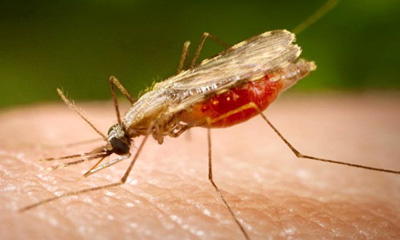
Mosquito
By Chioma Obinna
Even as the whole world is celebrating the new malaria vaccine by German researchers, a top Nigeria Entomologist and Coordinator, Malaria Research Programme, Nigerian Institute of Medical Research, NIMR, Dr. Samuel Awolola, has cautioned Nigerians not to be carried away by the result of the clinical trials, insisting that there is no effective malaria vaccine yet.
The world was weekend greeted with the news of discovery of an effective vaccine that offers up to 100 per cent protection from malaria by German researchers at the University of Tübingen in collaboration with the biotech company, Sanaria Incorporated.
The researchers demonstrated in a clinical trial that a new vaccine for malaria called Sanaria PfSPZ-CVac has been up to 100 per cent effective when assessed at 10 weeks after last dose of vaccine.

Mosquito
But the Nigerian malaria Researcher disagreed with the claim, saying it is not time to conclude that the vaccine is effective as many of such have been announced in the past.
According to him, “It is all the same story after sometime you will hear what will happen. We do not have effective malaria and registered malaria vaccine at the moment. What they give in the USA that people think is vaccine is prophylaxis that will protect people when they come to malaria endemic countries. That will only prevent malaria for a while.
Awolola said: “There are several malaria trials going on across the globe. We do not have any malaria vaccine recognised by the World health organisation, WHO.
“There are some that are giving promising results and this is one of them. These vaccine trials most times give 100 per cent at first, but after some time they will come down.
“Based on our experience in the field, these multi billion Naira companies from the UK will come and say they have a vaccine, just give it three months it will come down to 70 percent. In another six months, it will come down to 30 per cent. It is still far from uhuru.” Awolola urged Nigerians to continue to use what they are using for malaria until an authentic vaccine is discovered.
Statistics available have shown that Nigeria loses over 300,000 children annually and N480 billion spent on the treatment and control of the parasite annually.
However, in the new malaria vaccine research results published in the latest edition of the journal Nature, Professor Peter Kremsner and Dr. Benjamin Mordmüller of the Institute of Tropical Medicine and the German Centre for Infection Research (DZIF) used malaria parasites provided by Sanaria. The vaccine incorporated fully viable, not weakened or otherwise inactivated, malaria pathogens together with the medication to combat them.
The Tubingen study involved 67 healthy adult test persons, none of whom had previously had malaria. The best immune response was shown in a group of nine test persons who received the highest dose of the vaccine three times at four-week intervals. At the end of the trial, all nine of these individuals had 100 percent protection from the disease.
Prof. Peter Kremsner explained: “The 100 per cent protection was probably caused by specific T-lymphocytes and antibody responses to the parasites in the liver. The researchers analyzed the bodies’ immune reactions and identified protein patterns which will make it possible to further improve malaria vaccines.”
Disclaimer
Comments expressed here do not reflect the opinions of Vanguard newspapers or any employee thereof.