By Muyiwa Adetiba
I am not sufficiently grounded in the Catholic traditions to understand why the month of May is devoted to Mary, the virgin mother of Christ.
It could be because the first two alphabets of the name and the month are the same and they therefore sound alike. It could be more. I hope someday, to know more about this (Fr Kukah where are you?)
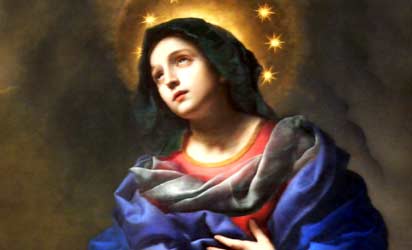
What I do know however, is that every year, over six million pilgrims – the number is heightened in May – throng to Lourdes, France to pay homage to the Virgin Mary. In 1858, the Virgin Mary appeared to a poor shepherd in a grotto in France. During those apparitions —18 in all — certain messages were passed through this girl to her community and the world. And through her, miracles were performed; the most notable of which was the healing water that sprang up where she was told to dig. A whole industry has developed around this healing water creating employment and tourist money to France.
This person, Bernadette, whose message created this industry, lived and died poor. She could have lifted her family members up financially from abject poverty had she capitalised on the fame that the apparitions and their miracles brought her. She could have tapped from the adulations and financial offerings of the faithful. She could have sold items relating to the apparitions such as pieces of her clothes (she was not short of offers). In short, she could have become a spiritual superstar, with more claims to that nomenclature than our modern day spiritual superstars.
But she steadfastly refused all gifts and money, insisting that her family do the same. Many people, including bishops and lay worshippers wanted her to touch their rosaries. Many wanted to touch her clothes or simply to sit where she sat at church. But she refused to be part of this preferring to downplay her celebrity status. And as soon as the apparitions were declared authentic in 1862, she quickly slipped out of limelight. Four years later, she joined a convent and went through the discipline and anonymity of that institution. When she was about to die, all she requested for was a crucifix; she wanted to fix her eyes on Jesus. All other things were unnecessary.
The lesson about her life was the way she deflected attention from herself, choosing to decrease so that the work of God could increase. She did not want any interest in her to becloud people’s understanding of how God wanted to work in their lives. She also wanted to live and serve God without any fuss or attention.
How does that compare with the people of God today who thrive on image and public acclaim? People who project their public persona using Jesus as a prop? People who revel in their healing and prophetic power forgetting that these are gifts from God and not testimonies to holiness?
When I think of the celebrity lifestyles of our men of God – designer suits, armoured cars, flamboyant entries into churches and gatherings, posters round the cities – my mind goes back to those who brought Christianity to West Africa in the first instance and the humble and often perilous lives they led (one was reportedly killed when a bottle was grinded and put in his food). Yet they were able to build churches,schools and hospitals from next to nothing.
Last month, two majestic churches were declared open amid characteristic pomp and pageantry with the very influential men in the society attending either or both. Figures running into billions were mentioned as the sums that completed the buildings. These also joined a few other edifices that had been erected by other churches to sit thousands of worshippers. These men of God must be elated that they had put up structures befitting the ‘status’ of God; much like King Solomon who built for God in the Bible. But what happened to the temple of gold and cedar that Solomon built? And what happened in the latter days of King Solomon himself?
A place I stay in Sutton, England, has about five churches within a two hundred meter radius – all sparsely populated now even on Sundays. There must have been a need for these churches at some point in time. What happened to that need?
May we not forget when we are erecting these superlative, multi-level edifices that the ark of God was just as effective in a tent as it was in the temple if not more so; that Bethel, where Jacob met with God, was a deserted bush; ditto where Moses encountered God. Also my earlier story of Bernadette, the poor daughter of a miller who encountered Mary, happened in a grotto and not a cathedral, not even a chapel. The message is that God visits –and dwells –where there are piety, sincerity of heart and humility of soul.
For our churches not to become like the church in Laodicea, or in contemporary times, the churches in Europe where tepid, and watered down messages spew forth, they will need a spiritual revival like in the days of the Pentecost that will strip off ego, ostentation, hypocrisy and feeding off the flesh and replace them with humility, spiritual and heaven bound activities. Maybe then, God would be pleased to visit and dwell in those architectural masterpieces.
After all, a house is not a home until someone lives there. The hood does not a monk make.
Disclaimer
Comments expressed here do not reflect the opinions of Vanguard newspapers or any employee thereof.