Other People’s Sundays
By Nasirudeen Muritala I have watched families eat togetherthrough windows I was never invited behind,a father stealing meat from his child’s plate,a mother complaining about the messwhile secretly smiling at it. They make ordinary things look sacred,school runs, arguments, birthdays,someone shouting from upstairs,“Have you seen my keys?” and another voice answering from the kitchen.I used […]





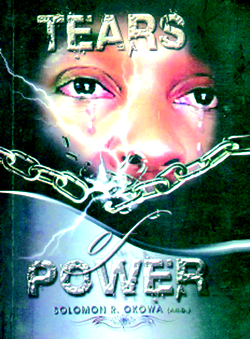
Trinity verses from Okowa
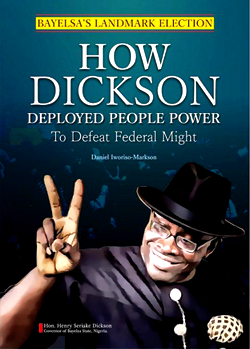
When you mention Delta state, the thing that easily comes to the mind of many is militancy. But, a critical assessment of the state reveals that the state is blessed with abundant talents, many who has excelled in many areas of the endeavor. One of them is Amb. Solomon R. Okowa, a business man, dedicated writer and film maker who has strong passion for entertainment.
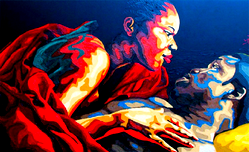
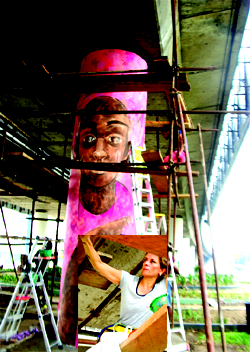
Nigerian arts make historical appearance in Venice
This year’s participation heralds a new dawn for Nigerian arts and contemporary culture
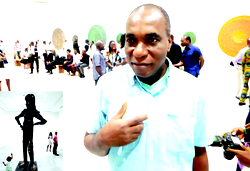
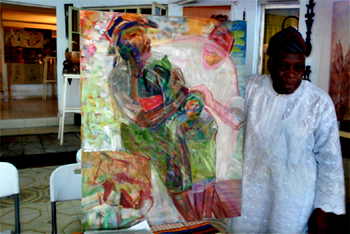
How Olu Amoda creates wealth, stems consumerism
Consumerism is a well-known ecological problem. It is associated with the throwaway culture of the modern society – a culture that prefers to throw away used objects instead of repairing or recycling them. Consumerism depletes the non-renewable resources of planet earth and therefore detrimental to sustainable development. Olu Amoda is a renowned mixed media artist who uses his art to stem the tide of consumerism and in the process, create greater wealth.
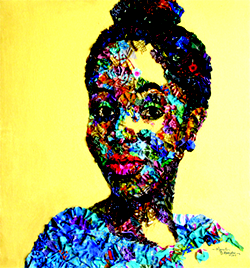
Celebrating women’s creativity with Standing Out
The Wheatbaker Boutique Hotel was a beehive of activities when it hosted a private Collectors’ Preview of The Art of Nigerian Women Book as well as the opening of Standing Out II, an art exhibition featuring stunning works by ten female artists of Nigerian descent.
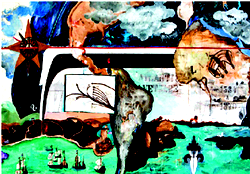
Unraveling the history of Lagos Brazilian Quarter
Atlantic Triangle, an exhibition of artworks organised by the Goethe Institut, Lagos, is set to tell the historical reconstruction of the conditions of exploitation through timely configuration of cultural dynamics and interdependence of the Brazilian Quarter in Lagos.