By Tabia Princewill
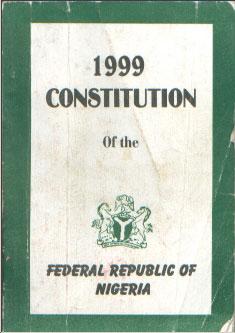
If one is to believe Section 10 of the Nigerian Constitution which reads: “The Government of the Federation or of a state shall not adopt any religion as a state religion” then it is clear that Nigeria is a secular state. Section 14(2) (a) further states: “sovereignty belongs to the people of Nigeria from whom Government through this Constitution derives all its powers and authority”.
Indeed if the people are the nation’s top authority and it is through them that a secular government derives its power, then said power and authority belongs not to religious or even traditional leaders but to the people themselves. Section 15 of the Constitution also states “discrimination on the grounds of place of origin, sex, religion … shall be prohibited.”
The Constitution is clear on certain things but for political reasons, we have chosen to ignore the very ideas that make a multicultural, multi-ethnic nation possible.
In the usual illogical manner we have become used to, policies strayed from the Constitution in order to promote certain agendas: indeed if discrimination on the basis of place of origin and religion are prohibited, how was federal character allowed to eschew meritocratic promotion in favour of selecting candidates based on their state of origin?
Qualified candidate
Why must we have a minister from every state? What if the more qualified candidate is not from the state the position has been zoned to? Isn’t that discrimination? And does having a minister from your state guarantee that he or she will favour that state? Isn’t that contrary to the very idea that Ministers because they work at the federal level, should work to empower and develop all of Nigeria not just their home town?
Nigerians have been manipulated by politicians for too long, made to fight their battles when their interests are contrary to ours. If ministers are to work for their states, what then is the point of having governors? We shouldn’t have 36 ministers, one for each state and also have 36 governors while the average Nigerian remains so poor.
In other climes, portfolios are combined to reduce the cost of governance: in most developed nations, the ministries of aviation and transportation are run by one person.
Information and communication should go together and why separate mines from petroleum resources (both are natural resources) if not to create space and employment for jobless politicians who cannot survive and compete in the society due to their lack of natural talents and abilities?
We must decide what exactly it is our Constitution stands for or rather, we must go back to its original spirit, before public office became a quest to provide “jobs for the boys”, meaning we must revert to observing the Constitution’s initial provisions to enable justice, fairness and stability, and forget twisted interpretations which allow a greedy political elite to get its way.
In many ways, religious organisations in Nigeria have made themselves the mouthpieces of powerful individuals and preach the gospel as interpreted by or as suitable to said individuals’ interests in society. The Constitution says in Section 23: “The National Ethics shall be discipline, integrity, dignity of labour, social justice, religious tolerance, self-reliance and patriotism”. How ironic given the fact that many so-called spiritual leaders today preach fear and intolerance of others and speak only of quick gains and fast money which amounts to making it into public office. What should be the sanctions for any organisation which not only preaches hate (in other climes there are fines for proven and offensive”hate speech” against any religion or ethnicity) but also encourages derogatory remarks against members of another faith or community?
The politicisation of the Christian Association of Nigeria, CAN, under Ayo Oritsejafor hasn’t enabled much peace or unity, quite the opposite in fact. Rather than being the voice of the voiceless (of all faiths), CAN has often been seen as an arm of the PDP.
The Nigerian Constitution, the laws it supports, are perhaps not clear enough in terms of what exactly religious organisations are permitted (or not) to do. CAN recently kicked against the banning of school prayers and it seems all actors involved have forgotten Nigeria is a secular state: there can be neither Muslim nor Christian prayers said in any official building belonging to the Federal Government.
Yet, conferences, dialogues officiated by governors, senators, ministers, etc, are often opened by prayers. Before my inbox is inundated by those who will try to misunderstand my point and call me a heathen, let me say, categorically, that it is not religion or prayers in themselves, that are the problem but rather, their utilization as a tool to antagonise citizens, pit them against each other, destabilise the polity and even, in the case of the insurgency in the North East, undermine government. Which is why governments usually stay well away from any outward show of support for any religion.
In a country as fractured as Nigeria, where citizens are so alienated from government and hostile towards each other, any small spark can trigger major disagreements.
The problem with religious thought and morals is that depending on who preaches or who heads an organisation, dangerous ideas can be emitted. Nigeria must develop secular morals: one does not need to be a practising Muslim or Christian to know it is wrong to kill or to steal. Ethics, civics, not religion should be taught in government owned classrooms. Those who wish their children to further their religious studies have the option of private schooling, as is done all over the world.
As for the uncharitable comments CAN has made about giving Fulani herdsmen land for their cattle to graze, they are an example of why religious leaders should stay away from governance. Conflicts between nomadic groups with their roving cattle and settlers occur over land, which the settlers use to grow crops.
Reserves for herdsmen
From the World Bank to any sentient human being with common sense, all agree the solution is to give the herdsmen their own reserves therefore prohibiting them from going into farms. So is it simply because they are Muslim and from the North that Mr Oritsejafor believes their needs should be ignored? Infractions such as destruction of property should of course be punished, but let us look at the root causes of problems to solve them.
Bridges between religions and ethnic groups are constantly being destroyed, particularly by the same religious organisations that should be working to protect them. The Constitution allows every Nigerian to propagate their religion but rather than manifest conscience and spread goodwill, our religious pronouncements are now almost warlike.
From jihad in the North East to an evangelism that now reeks of bigotry, Nigeria is at war on so many fronts.
The hostilities are unnecessary. Yes, we are all competing for scarce resources but we can develop a sharing formula without killing each other with guns or with evil words. Nigerian clerics, across board, spread xenophobia, scapegoat members of other faiths, without seeing the humanity in those they cruelly disparage.
The Pope addressing the United Nations told politicians to seek for others the same possibilities they seek for themselves.He might as well have been speaking to Nigerian clerics. The Pope also said: “Real human beings take precedence over partisan interests.” Now, that is Christianity.
Governor Amosun
He reportedly had a blogger arrested for making corruption allegations against his wife, even after a court granted the man bail. Where is this blogger now? This is not military rule.
Not only is freedom of speech sacrosanct, neither the police nor the military exist to do private individuals’ bidding, no matter how powerful they may be. Defamation of character is indeed an offense, but so is taking the law into one’s own hands.
Dele Momodu
IS journalism dead in this country? What was the point of the Diezani interview? The mix of celebrity gossip, sycophancy and the attempt to constantly prove one knows “big people” distracts from serious issues at hand. #BringBackJournalism.
Disclaimer
Comments expressed here do not reflect the opinions of Vanguard newspapers or any employee thereof.