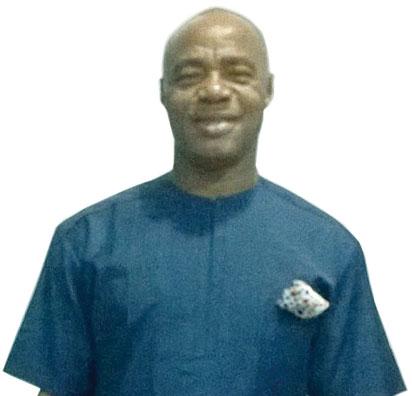
Euriel-Chukwudum
By Ebele Orakpo
C hief Euriel Chukwuka Chukwudum is the Chairman/Chief Executive Officer of Denis Hotel, Ltd., Abuja. The native of Azia, Anambra State, speaks to Financial Vanguard on why he got into the hospitality industry, the challenges of doing business in Nigeria and appeals to government to look into the issue of multiple taxation.
Excerpts:
Early Years:
 According to Chukwudum who shares the same birthday with Nigeria, he attended Santa Maria Primary School in Port Harcourt and Aba and had his secondary education at St. Anthony Secondary School, Azia. Thereafter, due to circumstances beyond his control, he could not further his education and so veered into business. He did not allow this situation to stop him from being his best.
Going into business:
“On October 1, 1979, I went into business. The grace of God was with me and I was able to achieve so much first as a trader and then in the hospitality industry. That was April 1, 2005. I chose the hospitality business because I wanted to create jobs for people.
As a trader, I discovered that my capital could only give me an employment capacity of not more than 10 but the same amount created jobs for almost 200 people in the hospitality industry. I can now see the difference. I found out that the hospitality business has a better future than trading. But what interested me most was not the money but my ability to create jobs for humanity, not just for Nigerians alone.
Expansion and Challenges:
“We started with 84 rooms and very soon, we are going to have additional 300 rooms and that will create jobs for about 500 people or more and with that, we are helping to grow the economy. “In any business, there are drawbacks. Definitely, Nigeria is a virgin country for anybody to come and do business; at the same time, it has the capacity for patronage due to our population, but like I said, the drawbacks are enormous because government is not helping matters. The hospitality industry is service based and it is all about functionality. You need certain things to be in place to be able to do the business.
Electricity:
“Electricity is essential. You need to be serviced with electricity 24 hours, seven days a week, pipe-borne water and access roads, communications etc. Unfortunately, we suffer most with electricity because most of the money we make is ploughed back into the system for power generation. We generate power ourselves and it costs a lot.
In fact, if you don’t do your calculation very well, you will lose because to burn diesel for 12 or 24 hours every day is a lot and before you know it, depending on the capacity of the generator, you will be spending nothing less than N4 million – N5 million monthly on diesel. But if government has done its duty of providing power, at least we will be spending less than N2 million if we have regular power supply, even though we are worse off with privatisation of power where we pay almost thrice as before with less power.
Exploitation:
“In fact, my understanding of the privatisation of the power sector is not what we are getting; they are exploiting us and giving us less. The exploitation is so much that people are complaining, especially those of us in the hospitality industry. I have not seen any positive difference since the privatisation. So government should look into it and see if they should review the policy. Ours is a service industry and you have no excuse to give to your guests for not providing those services.
Also, we generate our water from boreholes and installed treatment plants so with all these, there is no way you will get the best out of the business. But with the transformation going on, we believe that sooner or later, things will be okay and it will create a very good platform for Nigerians to do better business.
Multiple Taxation:
“I don’t know if it is a crime for some entrepreneurs to create jobs. Government is punishing employers of labour with lots of taxes, rent charges and fees. A lot of exploitation is going on in the system. We are not saying we will not pay tax as good citizens but government should provide us with the services the taxes are meant for. If any Nigerian refuses to pay tax, he can be justified because what the money is meant for, government is not giving to us so government is as guilty as tax defaulters.
The multiple taxation such as local government levies, the municipal, Environment charges, educational tax, industrial training fund, VAT, income tax, over 15 direct and indirect taxes imposed on businesses, should stop and be streamlined to one or two. “It seems it is a crime for employers of labour to create jobs for people because it really exposes them to government’s exploitation. With all these taxes, how do you survive? And knowing the Nigerian environment, each of them must have its own complications. So in a situation in which you find yourself being hammered with uncoordinated taxation, what do you do?
“Government should do something to ensure they coordinate taxation in Nigeria especially as it affects businesses so that we will not fall prey to tax agencies. They should make policies that would encourage people to be in business and create jobs. When you look at it, you find out that you either bend or break. The way it is now, we are being taxed for everything, even those things that government is supposed to provide are not done.
Unique Selling Point:
I was a trader for almost 30 years, and for you to be a successful trader, you must be a tactician and strategist, otherwise, you will not be able to thrive in that sector. I know there were many hotels in Abuja before our entrance. As a trader, it is the difference that you create that gives you the edge. So when we came in, I looked round to see where I could make a difference. I felt we could make a difference in the area of security which we did because security is very paramount to guests. The security agents were very impressed with us and ICT was very rare then and we were the first hotel to introduce ICT in Abuja in 2005 for our guests’ premium comfort.
Again, the one that gave us an award from Akwaaba is our initiative of having a 24-bed drivers’ lodge for our premium guests’ drivers and aides. We found out that when most car owners travel, they go with their drivers. Unfortunately, they check into comfortable rooms in a hotel and leave the drivers in the car. In the morning, the same driver who probably may not have slept well and had no place to probably refresh himself, will still drive his boss. This poses a very serious threat to the life and comfort of not only the boss, but the driver and the public. So it was something that should be dealt with.
I began to think of how we could absorb this discomfort of our guests. I decided to build a drivers’ lodge and before we knew it, we started getting more patronage. I know that quite a lot of our guests patronize us because of that. If not for any other thing, their drivers will have comfort and it is complementary. That created an edge for us and in recognition of that, Akwaaba gave us an award.
Disclaimer
Comments expressed here do not reflect the opinions of Vanguard newspapers or any employee thereof.