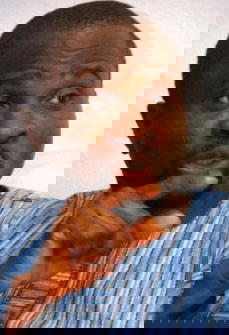
Paul Odili
By Olayinka Ajayi
Governor Emmanuel Uduaghan of Delta State is a passionate environmentalist, championing initiatives that support environmental awareness and protection. He was the first governor to call attention to the harmful effects of climate change and why Nigeria should be proactive in confronting this problem.
His administration seeks to diversify Delta’s economy from over reliance on crude oil, a known major source of environmental pollution and carbon emission.
One of the steps the Uduaghan administration is taking to promote its Delta Beyond Oil vision is by adopting green initiatives. Paul Odili, Communication Manager and Green Economy Project lead, gives further insight into the quest by Uduaghan to build a green economy in the state.
What is the Green Economy initiative of the state about?
Sustainable development and climate change has been part of this administration’s agenda. When the governor talks about ‘Delta Beyond Oil’, there are critical pillars that support that initiative.
Beyond just diversifying the economy of Delta State from reliance on crude oil as a major source of revenue, it was important that we also think in terms of sustainable development initiatives. It simply means the ability to consume resources in a more efficient and environmentally friendly manner, such that we do not waste resources and it does not compromise the ability of the future generation to also have access to those resources.
There are different ministries and MDAs pursuing green initiatives – the Ministry of Energy has done a lot of work in solar street lighting, the Ministry of Environment has done a lot with waste recycling plants, the Ministry of Transport is also doing quite a bit of it.
But it was important that it is consolidated further. I need to also add that since 2009 when he (governor) began to speak out on climate change, he was the first governor to have spoken out very forcefully, calling the attention of the nation to the issue of climate change and our apparent indifference to it.
He was also one of the governors that formed the R20 Region of Climate Action, which is an international NGO that is led by the former Governor of California (Mr Arnold Schwarzenegger). The governor is the Vice Chairman of Africa and Middle East of this body.
We have had all kinds of different initiatives. We have had various reports and studies that have been done; for instance, the IEA report that looked at the Delta State Renewable Energy opportunities, a very interesting report and everybody acclaims it as a very solid work.
We have had partnership with UNDP to produce the TACC Report – Territorial Approach to Climate Change. It is a vulnerable report that looks at the impact of climate change on the most vulnerable segments of the society. It also takes cross-sector approach to the effects of climate change and has issued the Integrated Territorial Climate Report (ITCP).
We have also had a partnership with Phillips; they did an energy audit of some government facilities on and renewable energy and efficiency system in the state. Today, we have some ideas of the investment this requires, the emission reduction and the payback if we adopt this measure.
Some things have been going on; it is just that it makes sense to now consolidate. The only way to do that is to have a structure, which is why the governor decided that it is more effective if you have everything put together in a structured form such that even beyond him, if it is backed by law, it can continue to have a lot of effect on the state.
Is there an enabling law right now for it?
There is no enabling law right now, but what has happened is that the step the governor has taken is to initiate a process of consultation and brainstorming. We had a series of workshops that culminated in producing the Delta State Green Economy Policy document.
This is a policy document that articulates the requirements of the state, the current position, what it needs to do, the strategies it needs to adopt and the structures it needs to drive forward the sustainability initiative of the government to be able to promote green development in the state.
It is not just about green development; it is about also creating an economic structure that is sustainable. The way to do that is you have a structure that is able to do a lot of research, attract investment, coordinate green economy policies and implement green economy projects and programmes in the state, working with ministries, which also in many respects have mandates that are related to green initiatives.
We know that there are business models and technologies out there that are accessible and interested to partner with us. The point then becomes if you need to do all that, you have to have a formal structure and policy in place and it has to be backed by law.
What the governor now did after the workshop in February was to very quickly send it to the House (of Assembly). That bill is in the House and we are hoping that very soon it will be passed into law. When it is backed by law, you are now in a position to engage any stakeholder or business interest.
The GGEI (Global Green Economy Index) assesses not just on leadership and structure, but also on cleantech. What have you done in this regard?
We have commissioned a lot of studies; we are expecting a technical mission in May to do waste characterisation study. For instance, it will look at the trend and scope of waste in Delta State and recommend a strategy for developing waste into economic resource.
The average business interests involved in sustainable development as a business understand the value chain of waste and, as such, do not see waste as it is, they see waste as an economic resource.
There are conversion technologies that can turn your wastes into commodities and become resources to other business interests that will convert it into a final product at a profit. From the front end, if you have the right technology, you can convert your waste and, at the backend, it becomes an economic resource that somebody uses.
The technical mission will work with our project team in the ministries. For water, for instance, the issue is not just about water, but you will look at how do you access water in an efficient and sustainable manner. Those are the things that the study will cover.
Does the state have plan to explore cleaner alternative power source?
The IEA report on renewable energy in the state identified three very promising energy sources – solar, wind and waste. Waste can be converted to energy use. For now what we are looking at from the studies we conducted are solar PV, which will convert sunlight, to electricity; solar thermal, which is water heating and drying for residential and commercial use.
The point is, ultimately, there is the need for renewable energy in order to be able to bridge the energy gap in the state, which is why it is very critical that we move in that direction, especially for off-grid and rural areas, we could have off-grid energy solution whether it is wind or solar.
The model that we will use may be in partnership or government will have to go into it solely as a social responsibility to support economic activities in those areas. These are things we would come to at some point and we are looking in that direction; we already have a report and we are taking it to the next level to do a detailed analysis.
What are some of the provisions of the bill setting up this commission?
The law intends to set up the commission and the mandate is simple. It will initiate, coordinate and implement green economy policies and programmes in Delta State. It will collaborate with MDAs.
Deltans, like most Nigerians, are sceptical about commissions, they see it as avenues to siphon public funds….
No, no, no. This is a very unique strcuture in that its mandate is to attract investments, initiate programmes and implement projects…
..It will also spend money
It will spend money but we have adopted a self-funding model, which is to say that government will fund the commission for 10 years; after that it will become self-funding. It will become a source of revenue for the state.
Will government fund it wholly during the 10-year gestation period?
No, we expect that it will be de-escalating. In order words, by the fifth year, government will only fund half of the cost and, as the years go towards 10th year, it will be self-funding.
As the funding from government decreases, the agency is actually earning money to be able to offset some of its costs and operations. That is an indication that it is growing towards that self-funding target. We see tremendous promise and potential.
How does it benefit the state and the ordinary Deltan?
It is very beneficial. You see when we talk about Delta Beyond Oil, it simply aims to end overdependence on oil, diversify the economy, expand the industrial base of the state, create employment and reduce poverty.
When you are going green, you are also promoting an economic development that recognises and reduces environment risk of development. Traditional ways of economic growth and development have always been done at the risk of environmental sustainability.
This is saying it can be done taking into account the fragility of the environment. That is how this initiative complements the overall objective of government.
The social component will empower the people; it will create employment and economic growth. It would also improve the public welfare.
A fully embedded green economy is one that recognises the welfare and well-being of the people first. It does that across a whole range of sectors – agriculture, transportation, water, energy, public health.
In urban planning, if you are eco-friendly, you recognise that one of the major challenges of developing society is rapid urbanisation that leads to congestion and pollution. But if you are eco-friendly in your planning and practice, you factor in such that you prevent urbanisation that will pollute the environment and create public health issues for the people.
Why did the governor wait till the tail end of its administration before initiating this project? Also, some activities of this government have been everything but eco-friendly…
That is not true.
Instead of investing huge sums of money on the IPP, you could have put it into wind or any of those clean and green sources
We are using gas, an energy source that is eco-friendly. Gas has a very low emission. But the point is, we have not gone into full green economy, the process is on; that is why you need to have some awareness and structure that will coordinate and guide policy making.
But in future, the standard would change, whether in construction, production, consumption and whatever we do in the state some. It will be much more environmental friendly. It will be much more efficient in terms of resource use and resource effects on the society. We are taking the right steps. In a short while, people will see the effect.
Disclaimer
Comments expressed here do not reflect the opinions of Vanguard newspapers or any employee thereof.