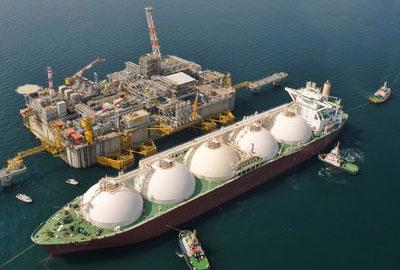
Liquefied Petroleum gas (LPG),is a fossil fuel, like oil and natural gas. It can be refined from oil and natural gas the same way gasoline is refined from crude oil. While most energy companies are not focused on LP gases, they produce them nonetheless because they are a byproduct of the refining process for other fuels.
When an energy company draws natural gas from the ground, about 90 percent of it is methane. The rest is in the form of various LP gases, which the company separates from the methane before the methane is fed into pipelines or stored in cylinders for use in our homes.
The amount of LP gas that comes from natural gas varies, but it is usually from 1 to 3 percent.
LP gases are separated from crude oil, as well. The refining process produces about a 3 percent yield of LP gases, although if refinerieswere retooled to focus on LP-gas extraction, that number could be as high as 40 percent.
The Discovery of LP Gas Initially, the natural-gas industry had problems with the “extra” compounds contained in the gas. The propane and butane was unstable, evaporated easily and created higher vapor pressures when storing and transporting natural gas.
The first solution was to simply “weather” the natural gas, allowing the LP gases to boil off into the atmosphere.
Dr. Walter Snelling, an inventor and scientists who worked for the U.S. Geological Survey, began experimenting with the condensed forms of these waste materials in 1910. By 1911, he had produced samples of propane and butane and had already envisioned a storage-and-distribution system for these fuels. In 1913, he was granted a patent for his method of producing LP gases.
A Versatile Fuel LP gas is easy and safe to store, which makes it a very portable fuel. It has been utilized for many different applications, some of which you’ve probably used yourself. Small, disposable butane lighters use the LP gas you are most likely to see on a daily basis. They contain a mixture of butane and isobutane.
If you have a portablegas grill, or if you go camping in a trailer or motor home, you use LP gas there, as well. The refillable gas tank on your grill uses propane, and the propane tanks on your motorhome can power a furnace, heat a hot-water tank or even power the refrigerator and freezer. Small tanks of camping fuel available at most sporting goods stores also use propane.
The nozzles on the tanks have been standardized throughout the camping industry, so these tanks can be attached to camp stoves, lanterns, small water heaters and a variety of other devices.
Propane is useful in any situation where fuel is needed but it’s not practical (or possible) to run lines for natural gas to the site. You can find LP gas on boats, at isolated cabins and hunting lodges or in rural areas that aren’t served by commercial energy companies.
In countries like India, where some large cities do not have reliable natural gas or other fuel service, LP gas makes up a major share of the energy market. Everyday heating and cooking needs are supplied by propane instead ofoil or coal.LP gas isn’t only for home and leisure use, however.
Many industries use LP gas as a source of heat for metal working, glass working or ceramics. Many industrial forklifts are LP-gas powered because LP gas provides enough power to do heavy lifting while generating reduced fumes and pollutants in confined warehouse spaces.
One of the fastest growing uses of LP gas is in automobiles. Cars built or converted to run on LP gas are becoming more and more common.And LP gas that is used in cars is called autogas.
Autogas
According to the World Liquefied Petroleum Gas Association (WLPGA), more than 9 million vehicles in 38 countries currently operate on LP gas (autogas). It’s not a new idea: Propane-powered vehicles have been around for decades.
The benefits include reduced emissions, quoted by WLPGA as “50% less carbon monoxide, 40% less hydrocarbons, 35% less nitrogen oxides (NOx) and 50% less ozone forming potential compared to gasoline”. With government incentives and tax breaks figured in,autogas can be much cheaper than gasoline.
Even without the incentives, it is usually much cheaper. Autogas is a high-octane fuel, offering performance comparable to gasoline and diesel, and many owners claim that autogas runs more smoothly, resulting in less wear and tear on engine components.
The easiest way to start using propane for transportation is to buy a vehicle that was designed and built to use autogas. A wide range of manufacturers; including major American car companies like Ford, General Motors and Daimler-Chrysler, offer propane-powered options on some models.
Typically, you won’t find these cars on the showroom floor — they have to be specially ordered. In some cases, there is no production model powered by LP gas, but an LPG system can be factory installed as an option.
Examples of cars that are offered as LP gas models include the Ford Crown Victoria, Dodge Ram, Ford F-150 truck, Chevrolet Cavalier and Toyota Camry.
Rarely (though more often in Europe), cars are built solely with an LP-gas fuel system. The engine is tuned and adjusted specifically to run at maximum efficiency on propane, which results in reduced engine wear and better mileage in the long run.
However, many consumers are worried that a propane filling station could be hard to find. For that reason, most LP gas cars have dual fuel systems — one for gasoline and one for propane. The systems are set to switch automatically between the two fuels as appropriate. This allows owners to use clean, cheap propane when it’s available, but they still have the option of a quick fill-up at the local gas station if they need it.
Conversion
The process of converting a car to run on propane is fairly demanding and requires a good knowledge of automotive systems in general to accomplish. Several companies offer kits that include all the needed parts to perform the conversion.
Those without the necessary know-how should try to find a local mechanic with experience in LP-gas conversions to get the job done. Although propane is very safe as an automotive fuel, if the system is not installed correctly, there can be safety problems.
The first step is choosing a tank. Most conversions are dual-fuel conversions, meaning you won’t be replacing your old fuel system, you’ll simply be adding a second. As a result, the propane tank will take up some of the storage space in your car, usually in the trunk.
Donut tank (left) and torpedo tank Tanks come in “torpedo” or “donut” form. Torpedo tanks generally have more capacity, but will take up more space in your car. Donut tanks are designed to fit in the spare tire well of your car. They are smaller tanks, and you’ll have to sacrifice your spare tire. In larger vehicles, you could mount multiple tanks for increased capacity.
Once the tank is bolted in, a fill point must be drilled into the car’s body, usually near the gasoline fill point or at the back of the trunk. The ideal location is one that requires minimal piping to connect to the tank.
The fuel lines themselves are copper tubes, which offer a certain amount of flexibility when the lines are routed. The tank must be connected to the fill point, and lines also have to run along the underside of the car up to the engine.
A solenoid valve(LPG valve) must be installed on the fuel line in between the tank and the engine.
This valve cuts the flow of LP gas when the car is running on gasoline and when the engine is shut off. It also has a filter built in that removes any dirt that may be in the fuel.
The next major component is called a regulator, also referred to as a vaporizer.
Disclaimer
Comments expressed here do not reflect the opinions of Vanguard newspapers or any employee thereof.