By Sola OGUNDIPE
As the global push to eradicate polio from the surface of the Earth, slowly approaches the finish line, the Centers for Disease Control and Prevention, CDC, is set to release a new study mapping the Fulani settlements and nomadic routes in selected wards of Nigeria’s high-risk polio states.
Meanwhile, Nigeria, Afghanistan and Pakistan are conducting Supplementary Immunisation Activities (SIAs) to reach more children with polio vaccine this September.
Polio incidence has dropped more than 99 percent since the launch of global polio eradication efforts in 1988. According to global polio surveillance data from August 28, 2012, 128 polio cases were reported from four countries, the bulk of which (96 percent or 123 of the 128 cases) are from the three remaining endemic countries – Pakistan, Afghanistan and Nigeria. This figure is the lowest number of cases globally to have been recorded during a seven-month period in the last 10 years.
The CDC study, it was gathered, remains vital to eradication efforts considering that the hard-to-reach groups such as the Fulani are not currently incorporated into the Federal Ministry of Health and local government planning processes, leaving a great number of Nigeria’s children routinely missed during polio campaigns.

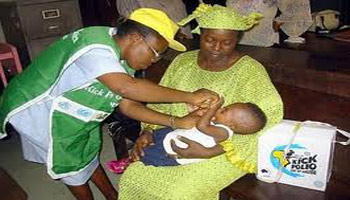
*Nigeria will have to reach every last child to be able to stop the transmission of the wild polio virus. Photo: Courtesy UNICEF.
Findings show that the same argument is true for routine maternal and child health services, leaving these populations disproportionately disadvantaged and without access to basic health services.
Indications from the CDC study, revealed that while nomadic populations were very accepting of polio vaccinations and wanted to be included, they simply had never been reached by vaccinators in the past.
This is a situation which differs from other communities with chronically high levels of refusals and noncompliance which the polio programme has yet to really research and better understand in order to respond and hopefully change this behaviour more effectively).
Nigeria remains the most polio endemic country with over 70 cases of new infections by the end of August 2012. Although the country has reached an estimated 90 percent of all children at risk in the country with polio vaccinations, difficulty now is in reaching the final 5-8 percent of the missed children that are required to reach a herd immunity level sufficient to eradicate the virus.
Close watchers of the health industry say scaling up to reach and cover the hard to reach settlements and nomadic populations in the next six-12 months would have a huge impact, but again, would not necessarily be an easy task as the polio programme is facing shortcuts in funding globally, especially in view of the global economic crisis.
As of early 2012, the world was not on track to eradicate polio by December 2012, yet the world remains closer than ever been to the eradication target.
In the final push toward global polio eradication, CDC continues its close collaboration with partners, including the World Health Organization (WHO), the United Nations Children’s Fund (UNICEF), Rotary International, and the Bill and Melinda Gates Foundation to ensure a coordinated global and country-level response.
Already, CDC polio eradication activities and staff have moved into the EOC operational structure to ensure maximum use of CDC resources to support polio eradication, and to scale up timely technical expertise and support for the remaining polio-endemic countries including Angola, Chad, Democratic Republic of the Congo, Afghanistan, Pakistan and Nigeria. Countries at risk of polio outbreaks are also under observation.
According to the a CDC statement issued weekend, a total of 402 personnel have worked in the EOC and in the field since the activation on December 2, 2011, to support CDC’s headquarters polio eradication efforts. Of these, 98 employees have completed 169 field deployments to Angola, Chad, Nigeria, Cote d’Ivoire, and other areas. On a daily basis, an average of 80-90 CDC personnel are working in the EOC.
Several new vaccination campaigns have been planned including launch of new GAVI programmes in September and October:
On February 25, 2012, WHO removed India, one of the four remaining endemic countries, from the list of countries considered to have never interrupted the transmission of wild poliovirus. India has not had a case of polio since January 13, 2011 and no recent environmental samples have detected wild poliovirus.
Without eradication, a resurgence of polio could paralyse more than 200,000 children worldwide every year within a decade.
Disclaimer
Comments expressed here do not reflect the opinions of Vanguard newspapers or any employee thereof.