. Begin expansion of 1.5m vulnerable residents on social register
By Steve Oko
UMUAHIA – The United Nations Children’s Fund (UNICEF), in partnership with the International Labour Organisation (ILO) and the European Union (EU), has reaffirmed its commitment to supporting Abia State in strengthening social protection systems aimed at reducing poverty and improving the welfare of vulnerable citizens.
The initiative, supported under a European Union-funded programme on sustainable and innovative social protection systems, is aimed at creating a legal framework that will guarantee the continuity of social protection interventions beyond political administrations.
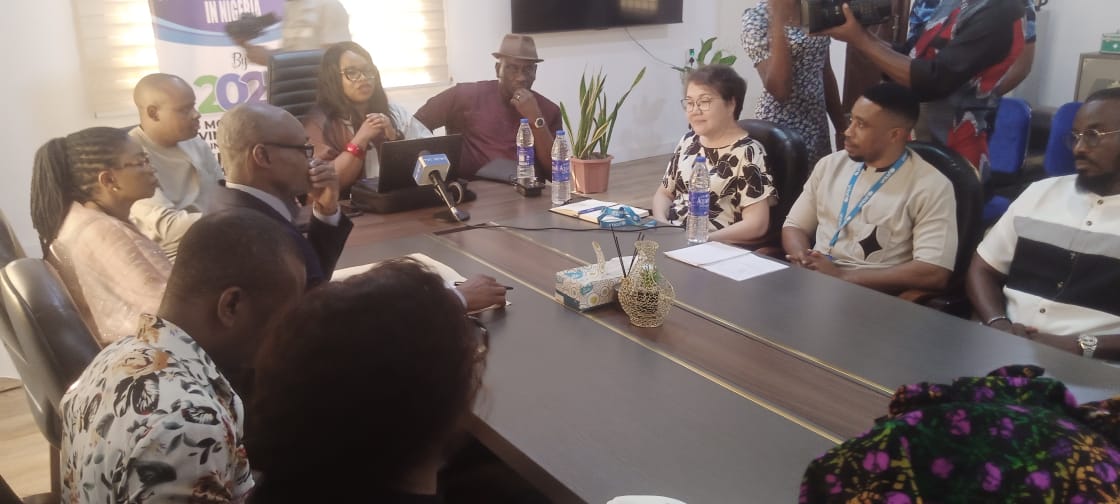
Speaking during a stakeholders’ engagement on social protection policy implementation in Umuahia, UNICEF Social Policy Manager, Zarema Yerzhanova, said the project was designed to support Nigeria’s efforts at building an effective social protection framework capable of delivering sustainable development outcomes.
Yerzhanova noted that the initiative, funded by the European Union and implemented by UNICEF in collaboration with the ILO, had become a reality in Nigeria at a critical period when governments at all levels were seeking stronger mechanisms to address poverty and vulnerability.
“It is a great pleasure for me to be here today at this important meeting. The purpose of our meeting is to discuss with our state partners the progress made and plans for the implementation of the project,” she said.
According to her, social protection remains a key policy instrument for achieving improved outcomes for children and enhancing human capital development across the country.
“The importance of social protection in Nigeria cannot be overstated. Nigeria already has a fairly developed social protection policy framework at the federal level, and we are currently working with partners to revise the national social protection policy framework.
“Our engagement with Abia State comes at a very timely moment because the state government has demonstrated commitment towards strengthening social protection systems. We see social protection as a major policy lever to deliver results not only for children but also to improve human capital development and contribute to a prosperous economic future for the nation,” Yerzhanova added.
Contributing, UNICEF Social Policy Manager for the Enugu Field Office, Victor Chima, said the programme, which began in 2024, had involved continuous engagement with state and local government stakeholders.
Dr Chima explained that social protection encompasses policies and programmes designed to prevent poverty and vulnerability throughout citizens’ lives, including support for children, families, pregnant women, the unemployed, the elderly, persons with disabilities, survivors of abuse and healthcare beneficiaries.
Speaking at a stakeholders’ meeting on social register expansion and the development of a social protection policy and bill in Umuahia, the Commissioner for Poverty Alleviation and Social Protection, Mrs Ngozi Blessing Felix, said the state had commenced the process of drafting a Social Protection Bill to safeguard vulnerable citizens.
She disclosed that Abia is one of only four states selected to benefit from the EU-supported programme being implemented in partnership with UNICEF and other development partners.
According to her, discussions have already commenced with the Abia State House of Assembly, while a draft bill is expected to be ready by September 1, 2026, for consideration and eventual assent by Governor Alex Otti.
Felix explained that the proposed law would complement the state’s Social Protection Policy and provide a sustainable framework for supporting poor and vulnerable residents irrespective of changes in government.
The Commissioner further revealed that Abia is currently updating and expanding its social register, which contains about 1.5 million individuals and over 240,000 households identified as vulnerable.
Also speaking, the Attorney-General and Commissioner for Justice, Mr Ikechukwu Uwanna, said the state was working closely with UNICEF, the International Labour Organisation (ILO) and the European Union to ensure the timely preparation of the bill for transmission to the House of Assembly.
He explained that the legislation seeks to domesticate the social welfare provisions contained in Section 17 of the Nigerian Constitution and create a durable legal foundation for social protection in the state.
On his part, the Commissioner for Local Government and Chieftaincy Affairs, Prince Uzor Nwachukwu, said mayors, traditional rulers, village heads, religious leaders and other community stakeholders would play a key role in identifying genuinely poor and vulnerable persons for inclusion in the register.
He stressed that community participation would enhance transparency and prevent manipulation of the process, noting that beneficiaries would be identified collectively by community members rather than by individuals.
Earlier, the State Coordinator of the Abia State Operations Coordinating Unit (SOCU), Mr Ezenwa Maduagu, said the exercise would be driven through a Community-Based Targeting (CBT) approach designed to generate credible data on poor and vulnerable households.
According to him, trained targeting teams and enumerators would engage community leaders and residents, who would collectively identify vulnerable households before the lists are harmonised and validated.
Felix noted that the exercise is guided by 47 vulnerability indicators, including unemployment, old age, disability, chronic illness, poor access to healthcare and educational deprivation.
Citing National Bureau of Statistics data, she said about 31 per cent of Abia residents live below the poverty line, underscoring the need for a robust and sustainable social protection system.
She added that UNICEF, NASSCO, the state government and other stakeholders are collaborating to ensure that vulnerable citizens receive adequate support and improved access to basic social services.
The stakeholders’ meeting formed part of ongoing efforts to strengthen institutional frameworks and ensure the effective implementation of social protection policies aimed at improving the living conditions of vulnerable groups across Abia State.
Disclaimer
Comments expressed here do not reflect the opinions of Vanguard newspapers or any employee thereof.