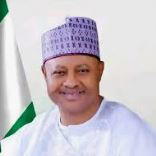
Governor Uba Sani of Kaduna State
By Ibrahim Hassan-Wuyo
As political activities ahead of the 2027 general elections gradually gather momentum, Kaduna State has emerged as one of the key battlegrounds where narratives, counter-narratives and political perceptions are being carefully shaped.
Among the recurring themes promoted by critics of Governor Uba Sani is the allegation that he betrayed his predecessor. However, a closer examination of Kaduna’s recent political history suggests that the accusation may be more rooted in political sentiment than in objective reality.
Politics is often defined by loyalty, but it is equally governed by responsibility. While personal relationships and political alliances are important, elected leaders ultimately owe their allegiance to the people and the constitution. In the case of Governor Uba Sani, his actions since assuming office appear to reflect a commitment to governance and institutional accountability rather than personal loyalty to any individual.
Long before becoming governor, Uba Sani was active in politics and public affairs in Kaduna State. He was involved in political activities and held positions that exposed him to key political developments in the state.
The transition from the Buhari era to the 2023 elections represented a defining moment for Kaduna politics. New power blocs emerged, fresh alliances were formed, and competing interests sought to influence the succession process. It was during this period that political tensions became increasingly visible, creating the impression that longstanding relationships were beginning to fracture.
Yet political differences do not automatically amount to betrayal. Democracies thrive when institutions supersede individuals. Once elected, Governor Uba Sani inherited the responsibility of governing Kaduna State according to his own vision and the expectations of the electorate. To suggest that every policy departure from his predecessor constitutes betrayal is to misunderstand the essence of democratic leadership.
Since taking office, Uba Sani has placed considerable emphasis on inclusion, stakeholder engagement and rebuilding trust between government and communities. His administration has actively pursued dialogue with various groups and stakeholders across the state.
Economically, the administration has stated its intention to promote investment, infrastructure development, agricultural growth and broader economic opportunities across Kaduna State.
It is therefore unsurprising that opponents would continue to raise the allegation of betrayal as part of the ongoing political debate ahead of the 2027 elections. Political campaigns often rely on competing narratives as parties and candidates seek to influence public opinion.
As Kaduna moves closer to the 2027 elections, voters are likely to focus less on claims of personal loyalty and more on measurable performance. Questions relating to security, economic growth, infrastructure, education, healthcare and social welfare will ultimately carry greater weight than disputes between political actors.
In the final analysis, the debate should not be about whether Governor Uba Sani remained loyal to a former ally. Rather, it should be about whether he has remained loyal to the people who elected him. That question, like many others in a democracy, will ultimately be answered by voters at the ballot box.
Disclaimer
Comments expressed here do not reflect the opinions of Vanguard newspapers or any employee thereof.