By Favour Ulebor, Abuja
The Global Fund has identified gender based violence, GBV, and intimate partner violence, IPV, as major barriers to ending the HIV epidemic in Nigeria, stressing the need for increased investments and coordinated interventions to address the challenge.
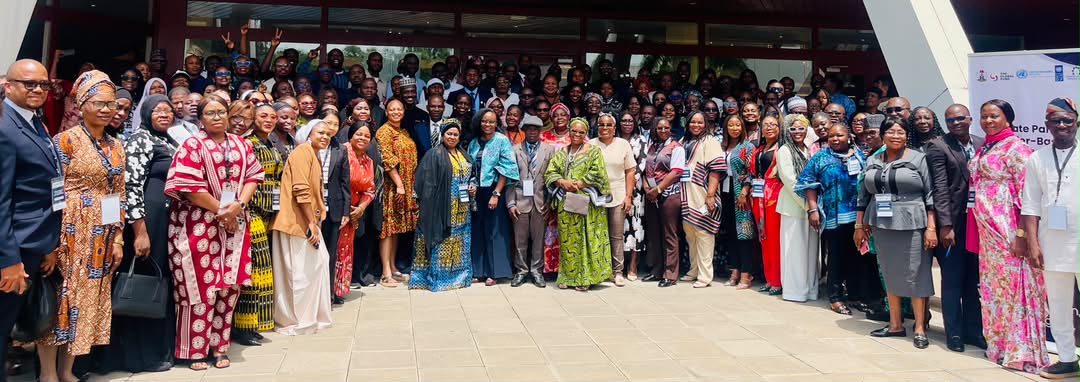
Head of HIV at the Global Fund, Dr. Izukanji Sikazwe, stated this on Thursday in Abuja at the Global Fund Grant Cycle 8, GC8, National Consultative Workshop on Gender Equality, Gender Based Violence and Intimate Partner Violence Programming in Nigeria.
The workshop was organised by the United Nations Development Programme, UNDP, under the Joint United Nations Team on HIV/AIDS, with support from the Global Fund and in collaboration with the Federal Ministry of Health, Federal Ministry of Justice, Federal Ministry of Women Affairs, National Human Rights Commission, NHRC, UN Women, UNFPA, the Institute of Human Virology Nigeria, IHVN, and other stakeholders.
Sikazwe said gender based violence and intimate partner violence continue to fuel new HIV infections and prevent many people from accessing HIV prevention and treatment services.
She noted that the Global Fund was working with the Federal Government, state institutions and communities to identify areas where investments could reduce violence and improve access to healthcare services.
According to her, reports showing that many cases of violence were committed by family members and persons known to victims were particularly worrying because such environments should ordinarily provide protection and support.
Also speaking, Gender Lead at UNDP, Onyinye Belinda Ndubuisi, said the workshop was aimed at creating a multisectoral platform to strengthen responses to intimate partner violence and gender based violence.
She said stakeholders were examining gaps in existing programmes and exploring ways to ensure that GBV interventions are properly integrated into Nigeria’s Global Fund Grant Cycle 8 funding request.
Ndubuisi explained that the goal was to move beyond awareness campaigns and develop practical interventions that provide support for survivors while promoting gender responsive programming across sectors.
Country Director of the Joint United Nations Programme on HIV/AIDS, UNAIDS, Nigeria, Ms. Krittayawan Boonto, said the consultation was important because Nigeria still relies significantly on external funding for HIV programmes.
She stressed the need to ensure that GBV interventions are clearly reflected in funding proposals with measurable targets, implementation plans and accountability mechanisms.
Boonto noted that while Nigeria has enacted laws such as the Violence Against Persons Prohibition Act and the Child Rights Act, enforcement remains a challenge and many cases of violence still go unreported.
Earlier, Director of Public Prosecutions of the Federation, Oyedepo Iseoluwa Rotimi, SAN, said the fight against HIV, tuberculosis and malaria could not succeed in isolation from efforts to tackle gender based violence, intimate partner violence, stigma and discrimination.
He noted that key populations and their partners account for an estimated 40 per cent of new HIV infections in Nigeria despite representing less than five per cent of the population.
Rotimi also called for stronger legal protection, improved access to justice, expanded healthcare services in correctional facilities and greater support for survivors of trafficking and gender based violence.
Meanwhile, Senior Human Rights Adviser at the National Human Rights Commission, Hilary Ogbonna, disclosed that Nigeria recorded 2,755 cases of gender based violence and intimate partner violence between January and April 2026.
Presenting data from the NHRC Human Rights Observatory dashboard, Ogbonna said 1,255 of the reported cases were committed by family members, while 630 were allegedly perpetrated by religious leaders.
He urged stakeholders to ensure that GBV and IPV are treated as major development, human rights and public health concerns, adding that stronger referral pathways, survivor centred services and adequate funding would be critical to addressing the challenge.
Disclaimer
Comments expressed here do not reflect the opinions of Vanguard newspapers or any employee thereof.