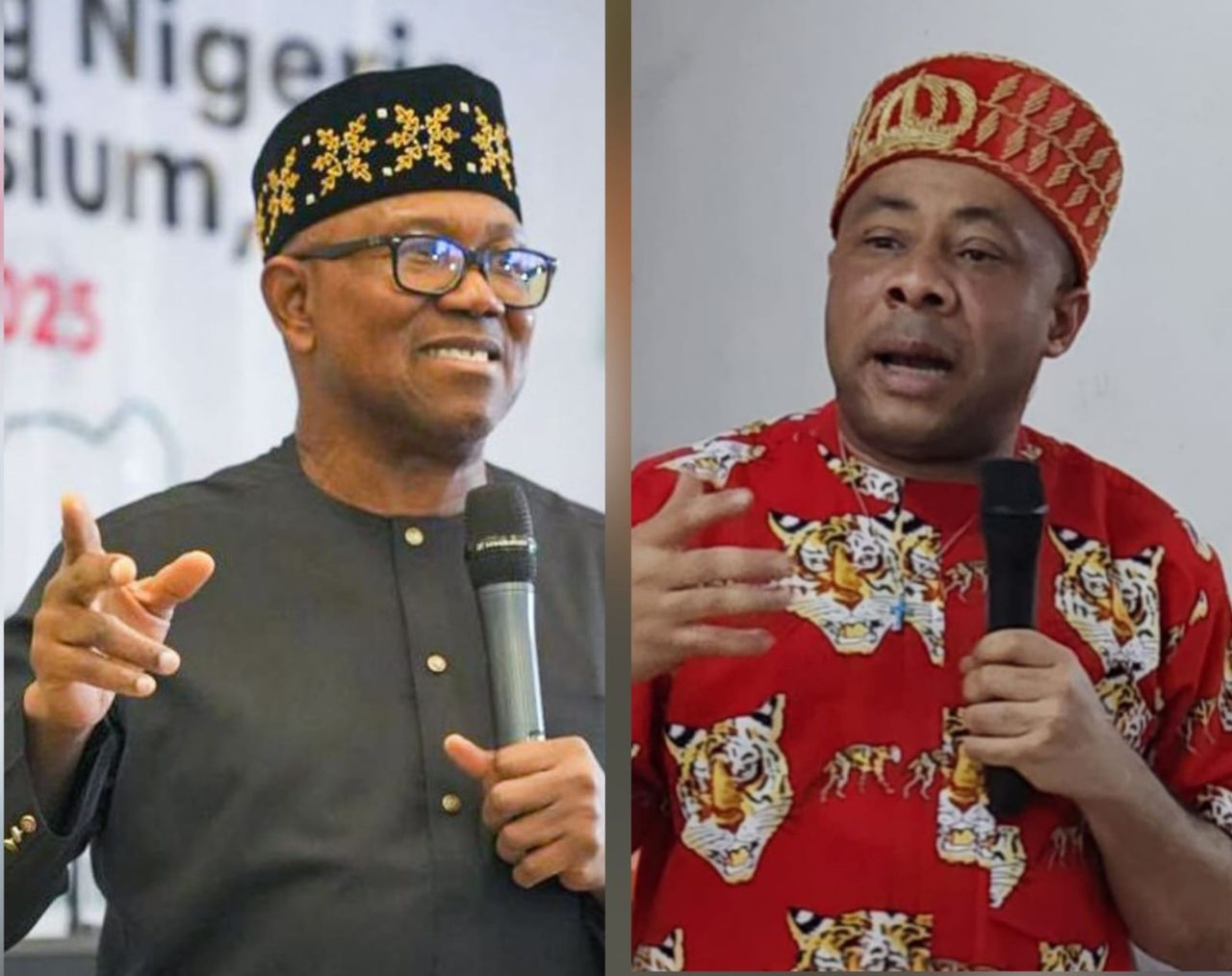
A policy analyst and pharmacist, Ikeagwuonwu Chinedu Klinsmann, has condemned the February 24, 2026 attack on the convoy of Peter Obi in Benin City, describing the incident as a dangerous escalation of political violence and a direct threat to Nigeria’s democratic order.
In a statement issued on Tuesday from Stockholm, Sweden, Klinsmann said the attack, which reportedly occurred at the private residence of John Odigie-Oyegun in Edo State, must be treated with the utmost seriousness by security agencies and all stakeholders committed to protecting democratic governance in Nigeria.
According to reports cited in the statement, armed men allegedly trailed Obi and other political actors from a political gathering to Odigie-Oyegun’s residence and opened fire at the entrance gate, damaging vehicles and injuring some persons. Although no lives were lost and both Obi and Odigie-Oyegun were said to have been safely inside the residence at the time, Klinsmann stressed that the absence of fatalities does not diminish the gravity of the incident.
“I unequivocally and unreservedly condemn this dastardly and utterly reprehensible attempted assassination of Mr. Peter Obi,” he said. “No political disagreement, no matter how intense, justifies the use of violence.”
He added that when armed individuals trail a political figure from a public engagement to a private residence and open fire, “that ceases to be mere thuggery. It becomes a direct attack on democracy itself.”
Klinsmann warned that if a high-profile political figure with visible security presence could be targeted so brazenly, “then the hope of the ordinary Nigerian going about his or her daily hustle becomes even more precarious.”
The policy analyst said his position was not driven by partisan considerations but by concern for democratic values and national security.
“This is not about personalities. It is about principle. It is about the sanctity of human life and the integrity of our democratic space,” he stated. “Nigeria belongs to all of us, regardless of party lines, and we must all reject violence as a tool of political engagement.”
While acknowledging reports that the Edo State Police Command received a distress call and that patrol teams responded promptly, forcing the attackers to flee, Klinsmann said the response must go beyond initial assurances.
“Investigations must not be cosmetic. They must be comprehensive and conclusive. Nigerians deserve to know who did this, who sponsored it, and what measures will be put in place to prevent a recurrence,” he said.
He cautioned that failure to decisively address political violence could erode public confidence in the electoral process and weaken civic participation.
“Democracy thrives on debate, persuasion, and the ballot box – not on bullets,” Klinsmann said. “If citizens begin to perceive that political participation carries a risk of physical harm, voter apathy will deepen, civic engagement will decline, and extremist elements will gain ground.”
Klinsmann also linked the Benin City incident to the wider security challenges facing the country, including insurgency, banditry, cult-related violence and communal clashes, calling for security sector reforms, improved intelligence-sharing and non-partisan policing.
“Insecurity anywhere is insecurity everywhere,” he said, warning that violence in public life weakens institutions, discourages investment and threatens national cohesion.
He urged political leaders across party lines to collectively denounce the attack, stressing that condemnation of violence must be consistent and not selective.
“Today it is Mr. Peter Obi. Tomorrow it could be someone else from another platform. The principle must remain constant: violence has no place in our politics,” he said.
Klinsmann further appealed to youths to resist being recruited as instruments of political violence and called on civil society, religious leaders, professional bodies and the media to sustain pressure for accountability and promote a culture of peace.
Concluding, he said the attack “must not be swept under the carpet,” adding: “We cannot afford to trivialise or politicise an act that strikes at the heart of our democratic experiment. The safety of every Nigerian, high-profile or ordinary, must be guaranteed.”
Disclaimer
Comments expressed here do not reflect the opinions of Vanguard newspapers or any employee thereof.