By Ibrahim Hassan-Wuyo
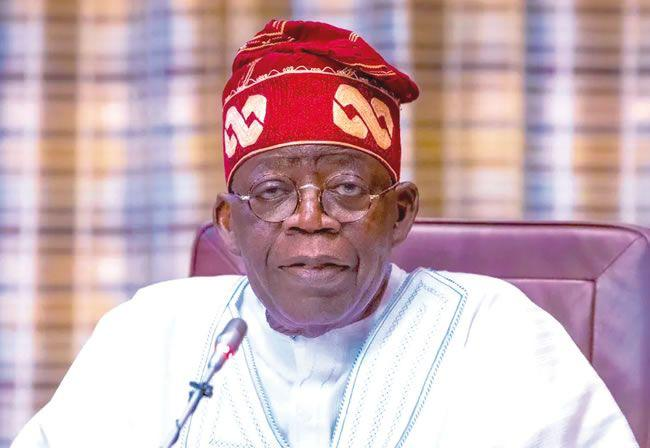
President Bola Ahmed Tinubu’s political journey has been marked by constant battles, remarkable resilience, and an unwavering readiness to confront adversity.
This is the central theme of a reflective essay by Bamidele Atoyebi, Convener of the BAT Ideological Group and National Coordinator of Accountability and Policy Monitoring, who described Tinubu as “a man of war”—not in the literal sense, but for his enduring toughness and ability to survive political storms.
Atoyebi, also a publisher at Unfiltered and Mining Reporting, traced Tinubu’s rise from the tumultuous days of the Third Republic to his current position as Nigeria’s President, noting that every phase of his career has been characterised by fierce struggles and strategic endurance.
He recounted Tinubu’s early political experience as a senator in 1992, disrupted by the annulment of the June 12, 1993 election, which pushed him into pro-democracy activism under the National Democratic Coalition (NADECO). “His time in exile solidified his reputation as a political combatant whose cause was democracy itself,” he wrote.
Atoyebi also highlighted the turbulent period of Tinubu’s governorship in Lagos State (1999–2007), describing Lagos as being “under siege” during the 2004 face-off with the Federal Government following the creation of 37 Local Council Development Areas (LCDAs). The ensuing financial blockade by President Olusegun Obasanjo’s administration, he noted, became a defining moment that showcased Tinubu’s administrative ingenuity as Lagos devised alternative revenue sources and later secured judicial validation.
Tinubu’s political staying power after the 2003 elections—where he emerged as the only surviving Alliance for Democracy governor in the South-West—was cited as further proof of his strategic depth.
Atoyebi underscored Tinubu’s role in the formation of the All Progressives Congress (APC) in 2013, describing the merger as a “watershed moment” that reflected his coalition-building skills and political engineering. The subsequent APC victory in 2015, he argued, cemented Tinubu’s position as a central force in national politics.
He noted that controversies surrounding Tinubu’s academic records—first raised in 1999 and revived during the 2023 presidential campaign—formed part of the many battles the President has had to repeatedly confront.
Atoyebi also referenced internal tensions during the Buhari administration, including struggles over party leadership and influence, but maintained that Tinubu’s political structure remained resilient.
The 2023 presidential contest, he said, may have been Tinubu’s toughest battle yet, marked by economic strain, internal opposition within the APC, and the turbulence of the naira redesign policy. Despite these hurdles, Tinubu secured the party’s ticket, won the election, and emerged unscathed from prolonged legal scrutiny.
“Tinubu’s career demonstrates a recurring pattern: every setback becomes the foundation for a new campaign,” Atoyebi wrote, portraying endurance as the President’s defining political trait.
While acknowledging lingering controversies around Tinubu’s wealth, academic profile, and political methods, he argued that few Nigerian politicians have matched Tinubu’s organisational strength or enduring influence.
Now confronted with the realities of governance and heightened public expectations, Atoyebi said the President’s resilience is undergoing yet another test, especially as economic reforms stir nationwide debate.
He concluded that Tinubu earns the label “man of war” not for aggression, but for the courage with which he confronts adversity. “The storms came, but he stood. The trials came, but he triumphed,” Atoyebi wrote, adding that history will ultimately decide the legacy of a leader whose political life has been defined by battles and endurance.
Disclaimer
Comments expressed here do not reflect the opinions of Vanguard newspapers or any employee thereof.