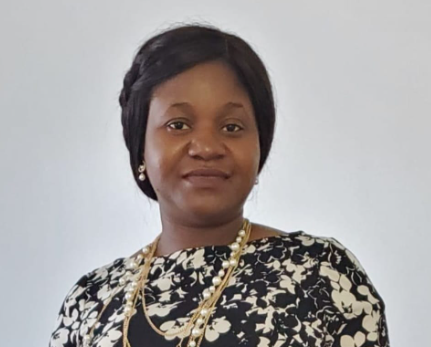
Adeola Jayeola
By Kenneth Oboh Over the last 12 years, Adeola Jayeola has basked in the euphoria of defining moments that have shifted her mindset. It has been a journey of transformation and intentional growth as her professional path in supply chain management and logistics continues to align with her personal aspirations and values. In this exclusive interview, she exudes purpose and a drive for significant impact. Having fostered adaptability and dedication in an industry with a growing female representation, she talks about her growth, and a priority for operational excellence combined with building a culture of safety, empathy, and resilience that sustains long-term impact.
Could you share with us what inspired your transition from Cooperatives & Rural Development to supply chain management, and how this decision redefined your professional purpose?
I didn’t choose supply chain industry, it chose me! My first degree was in Cooperatives and Rural Development, which exposed me to the daily hardships rural dwellers faced, challenges I had always envisaged solving alongside them, but life had other plans for me. For over seven years, I worked in the sales function of Nigerian Breweries , which thankfully gave me a holistic view of how value is exchanged behind the scenes.
A chance opportunity saw me transitioning from sales to supply chain in 2017. That’s when I realized the world thrives on supply chains that move not only goods but also talents, enabling emerging cities and transforming both rural and urban communities. I knew I had found what I was made to do. What began as a career shift became a calling to create systems that deliver products, as well as opportunities, resilience, and hope.
Can you describe a deep, defining moment in your supply chain career — such as leading a team through a crisis or helping a client achieve a breakthrough?
While working at Nigerian Breweries as a logistics manager in the early part of 2021, I had to make the tough but necessary decision to halt my warehouse operations to ensure broader operational continuity across the brewery, during a critical forklift shortage that left multiple departments unable to function. I did this because I was the forklifts’ custodian.
“The result? A chaotic shopfloor by morning, but the leadership team recognized the long-term value of that decision; all but one of the departments in the brewery would function, albeit not optimally, but on a large scale, rather than having the whole brewery shut down. I have come to realize that the right choice isn’t always the easiest, but one that serves a collective purpose, even at a personal cost.
What was the most challenging decision you made during your career shift, and what did you learn from it about your own leadership style?
My most challenging decision was embracing the transition from sales to logistics, knowing it would test me in completely new ways. Unlike sales, where success is measured in numbers and relationships, supply chains demand pressured real-time decisions, with little room for errors. I had to quickly master System, Applications and Products in Data Processing (SAP), manage warehouse crises, and make operational calls that affected production lines and deliveries, with resulting costs.
Again, I realized through this experience that my leadership is defined by staying calm in high-stakes situations, adapting quickly, and rallying my team around solutions when uncertainty is highest.
Can you share a story of when you used your supply chain expertise to clarify your mission or leadership philosophy?
One defining moment I can’t seem to forget so soon was managing logistics at Nigerian Breweries. It was in the dead of the night and a packaging line that had commenced bottling relying on my assurance of pallet availability was on the brink of shutting down, because the suppliers failed to meet their delivery timelines. There was intense pressure on me as the manager on duty with everyone looking up to me for a solution. It was quite a challenge for me to decide on impulse. But I made the call to pause parts of my operations and reassigned my team to de-palletize empty bottles, which freed up just enough pallets to keep production moving.
Though the packaging line continued without interruption, my own shift’s operation took a hit. It was a trade-off that showed very clearly how every call affects someone somewhere in the chain.
That experience was a reminder to me that supply chain isn’t just about moving goods, but about making tough, real-time decisions that serve a broader purpose. I realized that as a leader I must always remain calm and collected under pressure, and leverage creativity to solve problems, as well as keep the broader goal in mind.
What strategies did you employ to overcome a major crisis or disruption in supply chain operations, and how did it define your leadership in the moment?
Supply chain is not for the faint-hearted. It’s a fast-paced, precision-driven, and often unforgiving world, where decisions made in a fleeting seconds can impact millions in product and productivity.
I once erroneously inputted the wrong empties stock for a major brand in a system report, which informed the production plan for upcoming weeks. It was a major error. Had I not acted swiftly, it could have led to the draining of an entire Bright Beer Tank (BBT), a significant loss to the business. Under such overwhelming stress, I rallied resources, sourcing the required empties from trade and even sister breweries. It was a lesson in accountability and recovery, and proof that mistakes, while painful, can build resilience.
It was a race against time, and failure wasn’t an option. I pulled every string I could, and thankfully, I succeeded.
How have your values and priorities shifted through your career, especially during defining moments as a supply chain professional?
My values and priorities have shifted from focusing only on performance metrics and achievements to embracing resilience, adaptability, sustainability and people-centered leadership. Early in my career, I was driven by achieving sales targets and operational key performance indicators (KPIs).
But transformative moments in supply chain like preventing warehouse mishaps, keeping production lines running against the odds, or making tough calls during crises, taught me that success isn’t just about numbers; it’s about establishing trust among teams, protecting individuals, and building sustainable systems that withstand disruption. I have learned to prioritize operational excellence and build a safety culture, empathy, and resilience that sustains long-term impact.
What pivotal relationships or networks shaped your journey from rural development to supply chain—and can you share a specific instance?
During my final thesis as an undergraduate, I was on a mission to understudy a certain community. The people provided me with more information than required, trusting that the project once published would attract the state government to provide the community with the necessary assistance.
Unfortunately, it did not pan out as we thought. I had always looked forward to improving their livelihoods or standard of living and kept remembering how their hard work was undermined by broken logistics; produce rotting before reaching the markets, and profits lost to inefficiencies. This unknowingly was my first step into supply chain; I realized that my purpose was not only to support production but to fix the systems that connect communities to opportunities.
How do you nurture team resilience and adaptability as a supply chain leader, especially in moments of crisis or transition?
At the beginning of every shift, I prepare my team by holding a brief meeting with them to communicate clear goals, get suggestions on approaches to use to achieve our goals, and assure them of my support. I also make sure to celebrate every “win,” with them, however small.
During crises, we meet to update one another, focusing on clear communication, and laying out the facts, the options, and the priorities, so that everyone is abreast of the situation and the way forward. I also encourage team members to see setbacks as lessons rather than failures. One instance was when budget cuts reduced third-party manpower and threatened our operations. Rationalizing my decision to my team, I stepped in to reassign available hands strategically, prioritizing tasks and reallocating teams in real time. I also empowered team members to improvise within clear boundaries.
These didn’t just solve the problem but built their confidence that we could handle the next one together. I built resilience not by avoiding disruption, but by strengthening my team to adapt, recover, and even innovate through it.
How did you thrive as a woman in a male dominated field?
Thriving as a woman in supply chain, especially in a factory environment dominated by male voices, required more than competence. I needed to be determined, emotionally intelligent, and resilient. I had to balance long hours with family responsibilities and make tough sacrifices to support both work and home.
I faced resistance from associates unwilling to take orders from a woman and had to assert my authority, sometimes through decisive disciplinary action. I realize that leadership is about proving expertise, standing firm in the face of bias, and leading with strength and clarity, and not about gender.
Disclaimer
Comments expressed here do not reflect the opinions of Vanguard newspapers or any employee thereof.