By Chioma Obinna
The Danish Government has intensified collaboration to strengthen cold chain infrastructure in Nigeria and across Africa, with a clear call for renewable-powered, climate-smart solutions to address food security and public health challenges.
Speaking on behalf of the Danish Government at a Cold Chain Roundtable in Lagos, Victoria Epelle, Trade Advisor for Sustainable Food and Agriculture at the Royal Danish Consulate General, said cold chain development must be treated as an urgent climate adaptation priority, not as a donor-driven afterthought.
“The first priority is decentralized energy solutions for health and food facilities.
“Solar-powered and hybrid cold storage systems can reduce reliance on the fragile grid while ensuring reliability in both rural and urban areas. Waiting for the full grid to be fixed would delay progress for years. By piloting renewable-powered and IoT-enabled systems, Nigeria can build resilience now while contributing to long-term energy reforms.,” Epelle said.
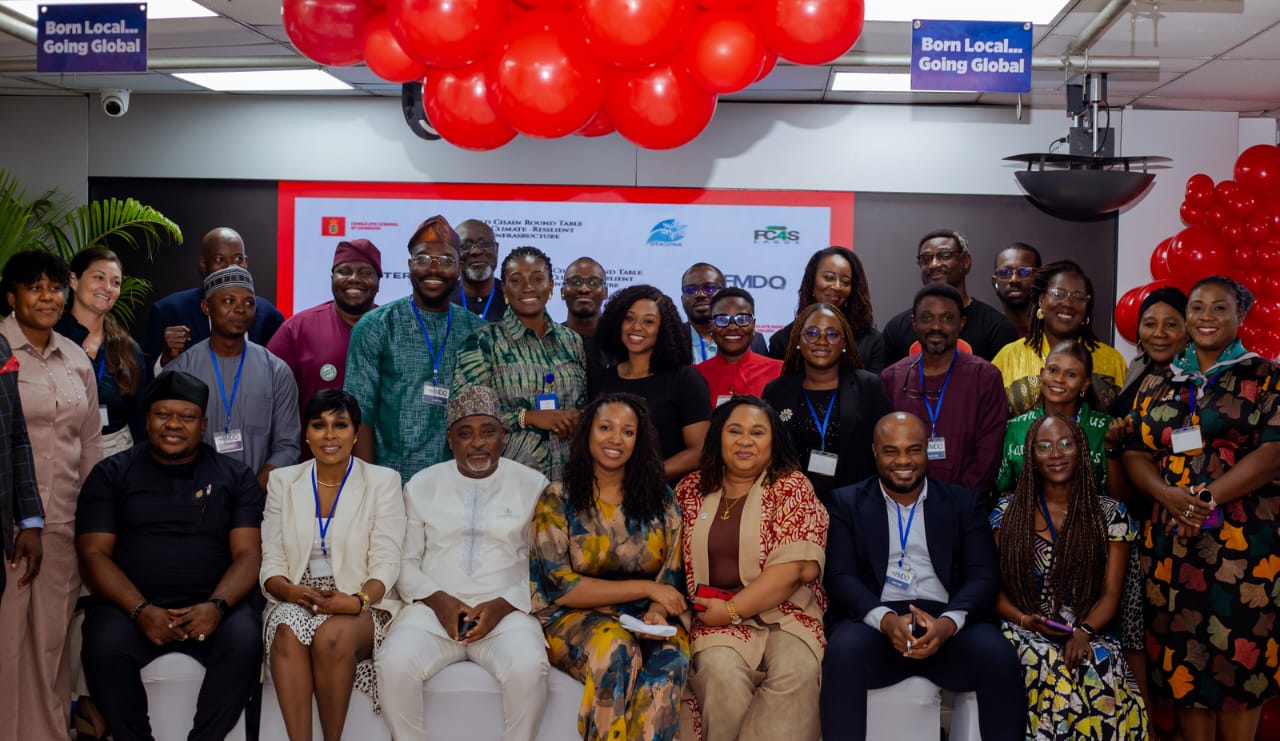
The roundtable, hosted by Denmark in partnership with the Organisation for Technology Advancement of Cold Chain in West Africa (OTACCWA), Financial Centres for Sustainability (FC4S), and APM Terminals, drew together players from agriculture, healthcare, logistics, finance, and technology.
Key speakers included Titilayo Oshodi, Special Adviser to the Lagos State Governor on Climate and Sustainability, Jette Bjerrum, Consul General of Denmark, and Alex Isong, President of OTACCWA, alongside private-sector innovators such as APM Terminals, Ecotutu, Frosthub, Alt Bank, and CT Technologies.
Epelle emphasised that the future of cold chain in Nigeria lies in blended finance models that lower barriers for hospitals, small businesses, and logistics operators.
“Public-private partnerships where logistics companies co-invest, leasing models that cut upfront costs, and access to climate finance will be critical,” she noted.
“But ultimately, sustainability will come from embedding cold chain into Nigeria’s broader health and agricultural financing frameworks, not treating it as an isolated donor project.”
She stressed that cold chain must be holistic and multi-use, serving not just vaccines but also insulin, blood, oncology medicines, and perishable food. “A resilient cold chain is shared infrastructure with broad application—that is the approach Denmark is encouraging,” Epelle added.
The Danish Government also highlighted global examples that Nigeria could adapt, including solar-powered milk coolers in Kenya, mobile cold storage units in India, and flood-resilient storage hubs in Bangladesh.
Epelle argued that Nigeria must localise such models, combining renewable energy with climate-smart design. “These solutions show that resilience is possible. The challenge now is for Nigeria to adapt and scale them within its own context,” she said.
The Lagos roundtable was not just about dialogue, organisers stressed. Participants agreed that three clear outcomes would follow. These include a set of financing and policy recommendations to be shared with federal and state authorities, including the Federal Ministry of Health and NAFDAC; a standing stakeholder network to drive collaboration beyond the event; and a Cold Chain Action Brief to capture recommendations and track implementation, with follow-up quarterly check-ins.
Epelle underscored the importance of accountability, noting that Nigeria’s progress will be benchmarked against regional initiatives. “One purpose of this roundtable is to convert commitments into clear next steps with timelines, and to hold leaders accountable through continuous engagement,” she said.
Denmark also announced upcoming capacity development trainings in select Nigerian states, focused on renewable integration, IoT-based monitoring, and connecting financiers with operators.
Despite recent signs of progress—such as NAFDAC’s push for stricter temperature controls, growing state-level interest in renewable cold storage, and the Central Bank of Nigeria’s engagement with green financing—Epelle acknowledged the distance still to cover.
“There is still a long way to go,” she said. “But if we can connect the dots between innovators, financiers, regulators, and operators, then Nigeria can build a cold chain system that is resilient, inclusive, and climate-smart.”
Disclaimer
Comments expressed here do not reflect the opinions of Vanguard newspapers or any employee thereof.