By Ayo Onikoyi
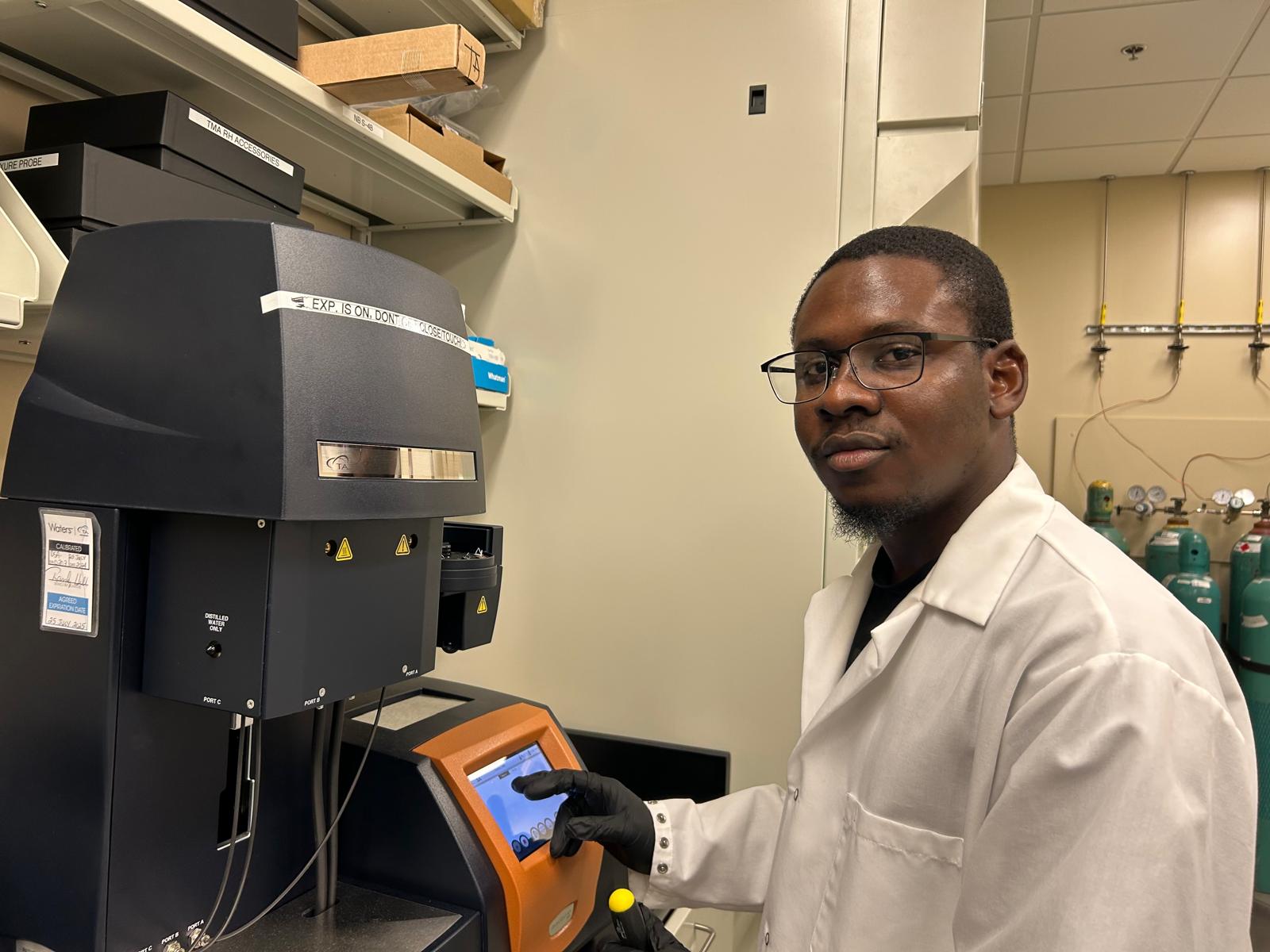
In an era where the call for eco-friendly alternatives grows louder by the day, Nigerian chemical engineer Obiora Muojama, currently pursuing his PhD at the University of Alabama, has made a significant breakthrough that could transform the packaging industry. In the course of his current research program, Muojama has developed an innovative method for producing natural, biodegradable packaging materials that promises to rival conventional plastics.
At the heart of this groundbreaking research lies a process known as Supercritical Fluid Impregnation (SFI), a technology celebrated for its minimal environmental footprint. The team successfully utilised SFI to impregnate a hydrophobic additive, Ethyl Oleate, into a cellulosic substrate. The result is a purely natural composite material capable of replacing traditional plastic food packages.
“Our research shows it’s possible to create packaging that is not only fully biodegradable but also cost-effective and scalable,” says Muojama, whose passion for sustainable materials stems from years of study and dedication. “This is a step towards resolving the global crisis of plastic pollution”, he further stated.
Unlike many biodegradable options that degrade under limited conditions, this newly engineered composite retains durability and moisture resistance, crucial properties for food packaging applications. The impregnation of Ethyl Oleate significantly enhances the hydrophobicity of cellulose, without introducing synthetic polymers.
Muojama’s work arrives at a time when industries face mounting pressure to adopt greener materials. The implications of this study stretch beyond packaging, opening doors to medical, agricultural, and consumer applications. “Supercritical impregnation is versatile. Its ability to embed functional additives in natural substrates could change how we design materials across sectors,” Muojama adds.
The research was recently published in the Industrial & Engineering Chemistry Research; a longstanding and reputable journal of the American Chemical Society, and already, the academic community has responded with enthusiasm. Muojama has presented the study at high-profile conferences, including the ACS Green Chemistry & Engineering Conference and the AIChE Annual Meeting, highlighting its potential to disrupt the status quo.
With a background in chemical engineering from the University of Benin, where he graduated with first-class honours, Muojama has steadily built expertise in green chemistry, sustainable polymers, and biomass valorisation. His commitment earned him the prestigious ACS Sustainable Travel Grant and the Ken Zarker Memorial Award.
Beyond the lab, Muojama actively mentors young researchers, having co-founded Kinematics Consult to support academic mentoring and process simulations. His journey reflects a blend of research excellence and community service, a balance that underscores his holistic approach to science.
As industries grapple with reducing plastic waste, Muojama’s work offers hope grounded in rigorous science. The choice to utilise cellulose, an abundant and renewable resource, aligns with global sustainability goals and paves the way for practical solutions.
Looking ahead, Muojama is optimistic about commercialisation prospects. Pilot studies are underway to test the scalability of the process, and discussions with potential industry partners are in progress. “The real impact comes when these materials hit the shelves and consumers see real alternatives to plastic,” he explains.
Muojama’s dedication to sustainable innovation is rooted in a vision: a future where material design supports, rather than harms, the environment. “If science can offer solutions to our biggest problems, it must,” he concludes. And through his work, it is already doing so.
Disclaimer
Comments expressed here do not reflect the opinions of Vanguard newspapers or any employee thereof.