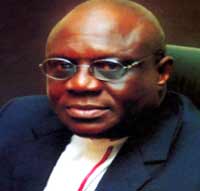
Dr. Izagbo
By Emmanuel Aziken, Political Editor
Anthony Izagbo, PhD is many things combined in one: Sportsman, media practitioner, politician, leadership expert, businessman among other identities. However, what brought him to public renown was his service as Commissioner of Youth and Sports in Delta State in the years leading to the return to civil rule. A former Vice-President of the Nigeria Hockey Federation, Izagbo was also a member of the Nigeria Olympic Committee and is presently Vice-President, of the Nigeria – Vietnam Chamber of Commerce and Industry.
Given his multiple pursuits it is not surprising that he has taken up the issue of branding as a study. Izagbo has written a book, Rebranding Nigeria: Leadership and the National Image Project which is due for launch this weekend. Ahead of the launch he visited Vanguard headquarters in lagos during which he gave an insight into his latest hunt and the matter of the Nigerian brand. Excerpts:
Why this book on branding and leadership?
We need credible leadership that will be dedicated to service. People say servant leadership, but you could have a servant and have a leader all in one, but truly, who is a leader? Even the bible says that he who must lead should be the least, you have to be the servant in order to be the leader. That is what servant leadership is all about. What is leadership?
Leadership is service and until we see leaders that would be devoted to serving the people, until you see leaders that will be talking about the goodwill of those that they are leading we cannot have what you call transformational leadership. If you must be a leader you must be service oriented, you must talk about the welfare of the people more than your own welfare. If we have such leaders we can now start talking about people wanting to transform the society. Now the sing-song is the transformation of the nation but that will only come if it is laced with service and that is the message in the book.
What do you think is the Nigerian brand?
Do we have a brand? We need to know what a brand is before we start talking about rebranding. You need to have a brand before you can rebrand. From the sixties we have tinkered with all manner of programmes all aimed at creating a Nigerian brand…with the civil war after the military came into government and even the Gowon administration came with the 3Rs, Restructuring, Rehabilitation and Reconstruction to put before the citizenry a nation that we all could say that we are one and to put the effect of the war behind us.

Dr. Izagbo
But before we could go far into that, we had one coup after the other, we came with WAI, MAMSER, Heart of Africa and all these were all pointed towards having what we could call the Nigeria brand. But the issue of rebranding came to the fore when the former minister of Information and National Orientation brought it to national lexicon and then we all started talking about rebranding.
I am saying that rebranding is of two types, you have the soft, you have the hard. It can only be soft before it becomes hard. You have to first of all create the brand locally and internally before you can be thinking of rebranding for international acceptance. Why should you be talking of a brand when you have not put the basic infrastructure of the nation together? Our education (system) is in comatose, our health sector is nothing to write home about and as we speak, I am sure that you are running on generators in your office.
So, you must fix all these before the people can trust the leadership and then they can all start thinking of service or loyalty to the Nigerian state. What we see today is that everybody seems to be talking from a very narrow perspective, you are either from the South-South, North-Central, Southwest or what have you. All these crises that we are experiencing today from the insurgency in the South-South, to Boko Haram in the North are all products of failed leadership.
What brand would you want to turn Nigeria into?
First, we have spent so much time and energy projecting Nigeria to the outside world expecting a positive response from outside when we have not done what we ought to do internally. We do not get the kind of respect and attention by going on air, spending air time on television, by saying Good People Great Nation, that is not it.
It is not what you want people to say of you that makes you what you are; it is what you are that makes what people will say of you. If you are good internally, people will see you as good. If you take nations that started with Nigeria, see how they have progressed. Take Malaysia or Singapore, we started almost together as independent nations, but see where they are today. A few years ago the Ghana Must Go thing came into the national lexicon because Ghanaians were asked to leave and they were packing their wares in a particular type of bag. Today, Nigerians themselves are the ones going over to Ghana to do the kind of thing that Ghanaians were doing here before.
So, what did Ghana do to have that kind of international acceptance and perception that have even made Ghana a tourist destination?
What did they do to achieve all these? It was because they were able to fix their internal systems and these are products of credible service oriented leadership.
What role does the followership play in giving a nation a positive image?
If the head is not good, the body cannot be good. A leader sets direction and it is that direction set that the people will follow. We have focused so much on asking our people to change. When our leaders go abroad and at international airports they queue, but when they come here they just walk across .
The people have a role and the role is one that will be set by our leaders. Leadership is not just political leadership but includes leadership from the home, in the school, among religious institutions, educational institutions etc. we have problems in all strata of leadership in this country but we harp on the political leadership because it is the apex in the leadership ladder and if we have very credible leadership at the top, every other thing will fit in. Look into the past fifty years and look at the six or so months that Murtala Muhammed was Head of State, think of the international perception of the Nigeria nation, think of what even people at home felt being Nigerians. The people will change once the leaders have changed.
Do you see the present political leadership as having the capacity to transform Nigeria in the way you envisage?
As it is said, the morning shows the day. So far, we are yet to have the kind of leaders that will change Nigeria.
Disclaimer
Comments expressed here do not reflect the opinions of Vanguard newspapers or any employee thereof.