By Evelyn Usman
As the war against narcotics intensifies in Nigeria, stakeholders in narcotics and law enforcement have reminded officers of the National Drug Enforcement Agency, NDLEA of the importance of upholding human rights and ensuring that the rule of law was upheld,while enforcing the law.
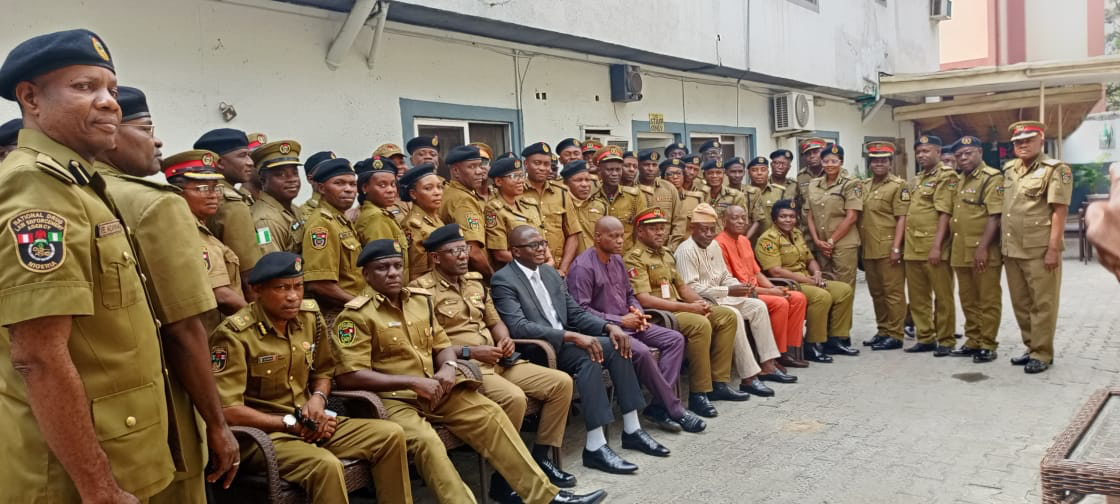
Speaking at the 1st annual conference and retreat for senior officers of the Lagos Strategic Command of the NDLEA, the stakeholders stressed the need for the dignity of individuals to be protected ,and for officers to exercise restraint when dealing with suspects.
One of the guest lectures, Deputy Commander General of Narcotics, DCGN Abdul Momodu (Rtd) in his paper titled ‘ Role of human rights in law enforcement’, noted that some law enforcement agents were oblivious of where their rights stops and where that of suspects starts.
He attributed ignorance of human rights violation to one of the major reasons law enforcement agencies lost cases in court and therefore called for caution while handling suspects, reminding that no suspect should be detained more than the constitutionally stipulated time.
According to him “ As a law enforcement officer, you should be very careful on how you treat a suspect. You should understand that human rights are inalienable. You must understand that you are not the person giving a suspect his or her human rights. It is given to him by the law and it is only the law that can strip him or her of the rights to freedom”.
He further stated that the responsibility of feeding any suspect was that of the law enforcement agency under whose custody a suspect is .
“If you can’t feed them, grant them bail. These are human beings. You can’t keep human beings in a place and you claim you don’t have money to feed them. You took them in and there are so many facilities to deal with incongestion to reduce the number. The law says you shouldn’t keep them for more than 24hours. That is what the law said. And those positions were put so that you will not burden yourself with having to feed people. And now the law also says that if you cannot conclude investigations within or as timelessly as possible, grant them administrative bail.
“Cell is not a prison. Prison is meant to keep people for the long term. Cells are meant to keep people temporarily. And the law has given all the law enforcement agencies 24 hours to a maximum of 72 hours. And if you must keep a suspect more than that, you go to court to ask for an extension of time which is two weeks in the first instance and if you cannot complete your investigations for two weeks ,you’ll ask for an additional two weeks and no more. That is a maximum of 28 days to keep one suspect. So, keeping them and claiming you don’t have money is irreconcilable”.
On his part, the second facilitator, retired Deputy Commander-General of the NDLEA, Dr. Segun Oke,who delivered a paper on ‘ mentoring as a tool for law enforcement officers’ performance’ said mentoring was crucial for development, as it involved a teacher or leader guiding a student to acquire new knowledge and skills.
“Mentoring is a process that helps individuals develop, and it’s essential for law enforcement officers to receive guidance from experienced professionals,” he explained.
He emphasized the importance of training for law enforcement officers, likening it to a farmer preparing his tools for the farm.
“Training is essential for officers to increase their competencies and productivity, ultimately leading to better performance,” he noted.
Earlier in his welcome remark, the Commander , Lagos State Strategic Command Abubakar Wali,explained that the conference was an opportunity for officers to reflect on their achievements, contemplate their challenges and renew their commitment to their mission.
The workshop, according to him, was also designed to enhance officers’ operational effectiveness.
While reminding the officers of the importance of continuous growth and collaboration, he said “ our shared experiences and knowledge equip us to tackle the complex challenges we face in drug law enforcement and community safety.
“ We will engage in comprehensive training sessions, workshops, and discussions Together, let us strengthen our resolve to protect our communities and ensure a drug-free Nigeria”.
Disclaimer
Comments expressed here do not reflect the opinions of Vanguard newspapers or any employee thereof.