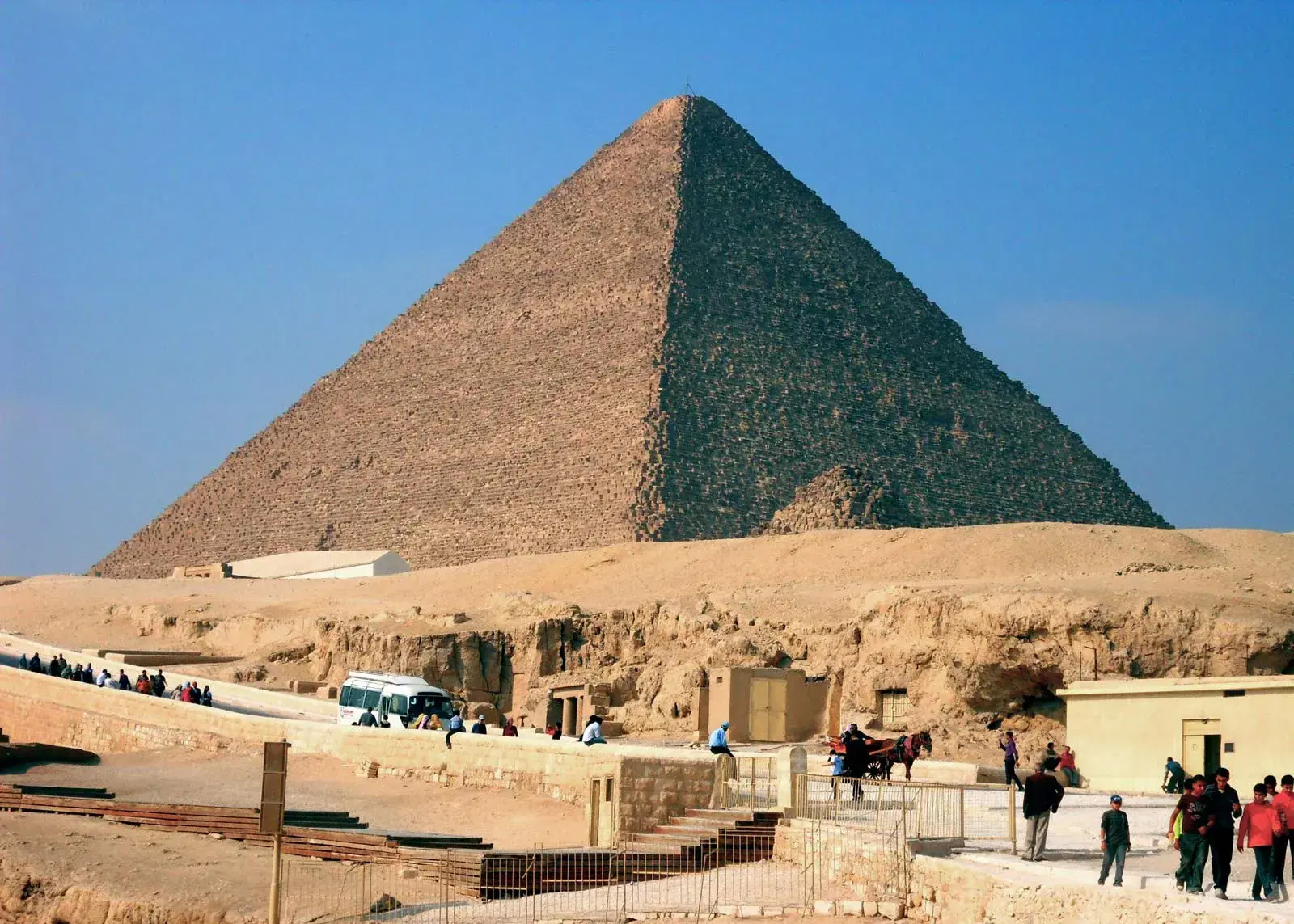
Great Pyramid of Giza
By Akanni Dorcas
When people think of pyramids, Egypt’s towering monuments are often the first that come to mind. However, Africa is home to many more pyramids than most realise, some of which are lesser-known but equally captivating. From the Nubian pyramids in Sudan to the circular ones in Algeria, these structures tell stories of power, culture, and engineering brilliance. Here are five African countries with the most pyramids.
Sudan
Sudan has the most pyramids in the world, with around 200 to 250 structures. Most of these are located in the Meroë region. They are smaller than Egyptian pyramids but are historically and culturally significant. These pyramids were built between 2600 BC and 350 AD to serve as tombs for the kings and queens of the Kushite Kingdom.
Read Also: 10 wonders of the world and countries to find them
Sudanese pyramids are tall and narrow, ranging from 20 to 98 feet in height. Notable sites include Meroë and Napata, which show the grandeur of the Kushite civilisation. Although smaller than the Giza pyramids, Sudan’s pyramids showcase a unique architectural style that reflects the region’s rich history and its distinct identity from ancient Egypt.
Egypt
Egypt is famous for its pyramids, with at least 118 known structures. These pyramids were built as tombs for pharaohs and queens during the Old and Middle Kingdoms and are iconic symbols of ancient architecture. The Great Pyramid of Giza, built for Pharaoh Khufu, is the last surviving wonder of the ancient world and attracts millions of visitors annually.
Other significant pyramids include the Step Pyramid of Djoser at Saqqara, constructed around 2630 BCE, and the pyramids at Dahshur and the Giza Plateau.
Algeria
Algeria is home to more than 100 pyramids, many of which are circular rather than triangular. These structures, found in areas like Tiaret and Batna, are very different from the pyramids of Egypt and Sudan. The Numidian pyramid of Imedghassen, dating back to the 3rd century BC, is one of Algeria’s most famous pyramids.
In Tiaret, thirteen pyramids serve as royal tombs for Amazigh rulers. Additional circular pyramids can be found in Tipaza and Tlemcen. Some of these structures are aligned with celestial bodies, showing the builders’ advanced knowledge of astronomy. However, many of Algeria’s pyramids face challenges like neglect and vandalism, making preservation essential to understanding their historical value.
Ethiopia
Ethiopia’s pyramids are found in the form of stelae and funerary monuments in Axum. These tall, obelisk-shaped structures were built as royal tomb markers between 100 and 940 AD. Although they differ in appearance from traditional pyramids, their purpose aligns with similar African burial traditions.
The Stelae of Axum were constructed by the Axumite civilisation, a powerful empire known for its trade and early adoption of Christianity.
Libya
Libya’s desert landscapes contain pyramid-like structures built by the Garamantian civilisation. This ancient society flourished between 500 BC and 700 AD in the Fezzan region. These pyramids, though smaller and less preserved than others in Africa, were used as burial sites for rulers.
The Garamantians thrived in one of the world’s harshest environments, developing advanced irrigation systems and maintaining trade routes across the Sahara.
Other African nations, including Niger and Morocco, also have pyramid-like structures. These are often linked to indigenous and pre-Islamic traditions.
Disclaimer
Comments expressed here do not reflect the opinions of Vanguard newspapers or any employee thereof.