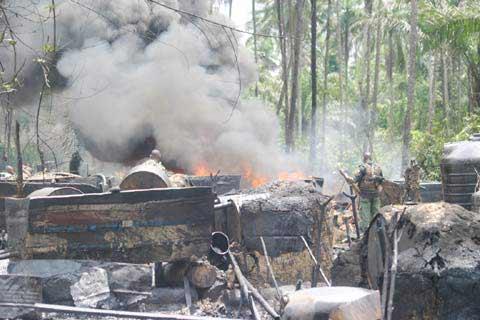
File photo: Illegal refineries being destroyed.
By Samuel OYADONGHA
Yenagoa – While unrest in the Niger Delta has sharply declined since a 2009 amnesty deal, crude oil theft and illegal refining of petroleum products has increased in the region in spite of the clamp down on the illicit trade by the country’s security forces, the Joint Task Force codenamed Operation Pulo Shield.
Interestingly, Pulo an Ijaw word meaning oil. The implication is that the JTF is now all out to stamp out this business which is causing more harm to the region’s already fragile ecosystem.
Only last week, the Joint Task Force nabbed another batch of suspected crude oil thieves in Bayelsa State and items recovered from them include a generator set, pumping machine, 8hp outboard engine, a pumping valve, a speed boat, and N42, 010,00 among other personal effect.
The suspects were nabbed by men of the Joint Task Force on routine patrol of the creeks of Southern Ijaw local government area of the state.

Destroyed illegal refineries.
Influential Nigerians and even the military itself have been accused of involvement in the lucrative illegal oil business, which include a relatively sophisticated level of theft and refining. But the military has denied involvement in the practice.
Oil firms blame theft and sabotage for the majority of oil spills in Nigeria, a claim strongly disputed by environmental activists.
Nigeria is one of the world’s largest oil producers, but its Niger Delta region remains badly polluted and deeply impoverished.
It was reliably learnt that last one year alone, the country’s security forces destroyed no fewer than 6000 illegal refineries scattered across the mangrove swamp of the delta.
Sadly, only about 30 per cent of the refined oil is recuperated according to report while the remaining 70 per cent is discarded into the environment.
A security source said, the country is losing about losing about $15.8billion annually to oil thieves operating in the mangrove creeks of the Niger Delta who are not only bleeding the economy but also compounding the woes of the already fragile environment.
According to the source, the fact that electricity supply from the national grid to the communities is not reliable has made petrol powered generators the main form of power supply across the Niger Delta making illegal refining a thriving business in the region for the unemployed youths who are not aware of the long term effect on the environment and the health of their people.
Disclaimer
Comments expressed here do not reflect the opinions of Vanguard newspapers or any employee thereof.