•Says Nigerian political actors have budget for violence
By Charles Kumolu, Deputy Editor
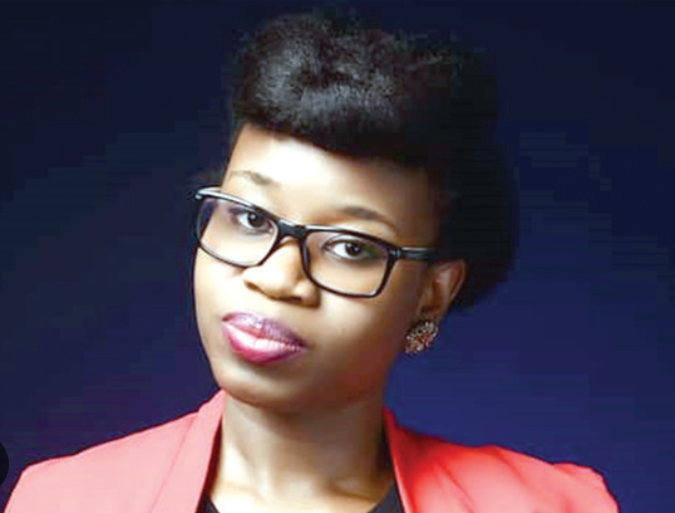
The recent emergence of 44-year-old Bassirou Faye as President of Senegal after a contentious pre-election period, has uppended many election denominators in Africa, especially West African sub-region. In this interview, Programme Director of YIAGA Africa, Cynthia Mbamalu, highlights the dynamics that ensured his emergence and the import of the outcome in Nigeria’s electoral process and system. She explains why age wasn’t a factor in the election of President Faye, insisting that political actors in the country have a lot to learn from Senegal.
The emergence of Senegal’s President Faye appears uncommon in Africa, especially on account of his age and the tumultuous pre-election issues in the country…
First, is to congratulate the people of Senegal because the election was crucial within the Francophone countries, especially in the West African sub region within the context of the rising spate of coups, attempted coups and the struggle by the Economic Community of West African States, ECOWAS, to even keep itself. So, it’s important to congratulate the people of Senegal for having a groundbreaking election that defied all odds to hold. If you think about the age of the President, which is what everyone is talking about, even in the US, you have basically an election where old people contest and win. And Africa is a young continent where majority of our leaders are old people. It is a young continent governed by old people. In Senegal, about 60 per cent of the population are young people.
Therefore, having a 44-year-old emerge as President is historic, not just for Senegal, it is for West Africa and Africa. On my thoughts about him winning the election, it also shows the power of protest votes. This is what citizens in a democracy should understand.
Protest votes do not necessarily mean to stay away from the election. Protesting or expressing grievances does not mean you stay away from the election. It means that you express your grievance by going to the polls and expressing your grievances through the ballots.
Courts
You could see that he emerged just a few weeks to the election because he wasn’t the candidate of the party initially. Ousmane Sonko was actually the supposed candidate until the court cases and the conviction. But this young fellow who was like a protege of Sonko in the struggle emerged as the candidate. And for some reasons, several things that happened in the pre-election period supported his emergence.
There was also the growing displeasure by the populace against then incumbent President, Macky Sall. Remember the election was initially scheduled for February until the then President Sall, decided to postpone the election through a decree. The people protested, demanding the election held as scheduled and demanding the President doesn’t stay in office beyond his mandated constitutional term. When the opposition candidate was barred from contesting because of double conviction, this young man emerged as candidate. Because the people were already angry, it was almost a given that he was likely going to win against the ruling party. For me, that is the power of protest vote. When the people are displeased with the system, when the people are displeased with a ruling government, the best and effective way to express it is through the ballot.
61.3 per cent of votes
And it means organising and showing up to vote. If you think about the turnout alone, the presidential election recorded 61.3 per cent of votes. If you compare that with Nigeria, you would see for a long time, we haven’t recorded 50 per cent turnout and we are yet to achieve that. In the 2023 elections, it was 26.7 per cent turnout. One thing we are learning is that with higher turnout, we are likely to change the outcome of an election. This turnout was some numbers lesser than the 2019 elections. In 2019, the turnout was about 66. 2 per cent. If you compared that, there was a little decline but they still maintained the 60s. This was an uncertain election because at some point, they were not certain the election would hold. When the constitutional council gave its order that the election would hold, everyone got on board.
Their campaigns were not as robust as they should be because there were more protests because people were arrested. One of our partners, who was arrested shared his experience regarding how he was charged and locked up. It seemed like in the pre-election period, a lot of time was spent on protest for the release of detained people than on campaigns.You can imagine that without campaign and enough voter education, we still had this large turnout. There were more protests than campaigns. Faye emerged from a process that was driven by the people and a process that was fought for by the people. It was a process that was basically speaking loudly that democracy must work in Senegal, and that their constitution must be respected and upheld. That was the major factor that made his victory possible.
I don’t think age was a major factor. He probably would have been 50 and could have still won. The contest already created a space for the citizens to express their agitations through the ballot. That is a win for democracy and a case where democracy sub corrects. It is possible to have people in power who want to force their will on the people, but when you have strong institutions that understand they have an important role to safeguard democracy, when you have conscious people who realise that their power is better expressed when they come out to vote, it becomes difficult for an authoritarian or someone who wants to foist his will on the people to remain in power. That was what happened in Senegal.
Apart from the people factor, are there things about their legal framework that you think probably contributed to the outcome that Nigeria should learn from?
I think if there is anything we can learn from Senegal, it is the importance of building strong institutions. The same way our constitution provides for timeline on expiration of term of office is the same as Senegal. What their Constitutional Council did was to basically interpret the law. The law is clear that you cannot stay in office beyond April 2. It was on the backdrop of an attempt to seek a third term, which had failed initially. Sall tried to get a third term, but he failed. One of his reasons was that the country wasn’t ready for the election, but we saw how the elections held with almost minimal challenges. It is important we learn about the importance of independent institutions, especially the judiciary. We need an independent judiciary that understands that it should play an important role in safeguarding democracy. When the court understands it exists to interpret the law, safeguard the law and that it is not doing this for any individual, but for constitutional democracy, when courts are fully aware that they are here to interpret the law, things would change. What happened in Senegal was that the opposition challenged the decree by the President in the Constitutional Council. In Nigeria, we had cases where people already believed the courts had been compromised. If there is anything we can learn from Senegal, it is the need to constantly build strong institutions, especially the judiciary.
Citizen activism
The judiciary needs to be absolved from politics. I remember we had a planning meeting where fears were expressed that the council wasn’t going to rule otherwise because in Africa it is difficult to have a ruling that contradicts an order from the President. It is because the executive is so powerful, but the Constitutional Council saved the day. The second thing we should learn is citizen activism. We saw how the citizens challenged the decree and demonstrated that democracy is not built by outsiders. Democracy is not an abstract thing. Only the people can build and support it. The people didn’t just protest and ignored the law. While they were protesting, they were in court challenging the executive order. We saw how the people turned out to vote regardless of the challenges. It was almost a 10-hour process. They voted and waited for the votes to be counted.
When we reviewed the last Kenyan election that produced Ruto, you pointed out some things that were engraved in their electoral framework that made a contentious election have an acceptable outcome.
In Senegal, what aspects of their electoral process do you think Nigeria should consider emulating for better electoral outcomes?
The electoral system is still a majoritarian system. They have a system whereby for a winner to emerge he needs to have an absolute majority of the votes, which is more than 50 percent of the votes. And if no candidate secures 50 percent, they go for a second round. Interestingly, the President won with about 54.2 percent of the votes. The electoral system is almost like ours. Sometimes, I think the problem doesn’t mean the Nigerian system is fundamentally flawed. The problem is that we have a political class that is constantly looking for ways to manipulate the system. For example, you need two third majority to win an election, and it is even a lesser standard when compared with Senegal. If you think about the last election in Nigeria, if you put together the votes of two opposition candidates, it was more than what the eventual winner got. I know there are proposals for Nigeria to adopt an absolute majority where to win you need to score more than 50 percent of the votes. I really think if we work the way our electoral system is, it will give dominance to one or two parties.
The political class has constantly devised ways to manipulate the system. Now, when you talk about the process, the opposition was also a coalition in Senegal. You had an opposition that had been significantly visible in the years leading to the election. If you followed Senegal politics, you will hear of Sonko because he is always in the news. Faye has been positioned as a pan-Africanist whose will to work with the West provided the interest of his people is protected. Senegal has an opposition that was consciously organising and mobilising the people. If you want to win an election against a popular ruling party, you have to be deliberate. Our opposition parties need to understand that to win an election, you need to show the people an alternative, which means you have to show that you will continuously engage the people within the political space. You have to be consistent in the things you say, consistent in being the voice of the people and your principles.
Election administration
On election administration in Senegal, there were less incidents of logistics challenges. It is one major thing we are yet to deal with. It is not about a challenge of our electoral system but rather the absence of the political will to get things done on the part of our election management body. It is because we have had an election management body that has existed in different names. Consistently, there have been efforts to grant the election management body administrative and fiscal independence.
The last amendment ensured that the Independent National Electoral Commission, INEC, had access to funding one year before the election. Incrementally, we have seen reviews and amendments to further strengthen the electoral commission. However, when it comes to output we are yet to see an electoral commission that can conveniently conduct a general election without logistics challenges. INEC might say Nigeria is a bigger country than Senegal, but no election is new. The electoral commission should understand the importance of building trust in the system.
It should understand that if logistics challenges remain a consistent part of the process, it becomes a way to practically disenfranchise eligible voters. If you looked at the Senegal elections, part of the findings of our partner organisations was that where voters didn’t vote, it was because their names were not on the register.
didn’t arrive. But in Nigeria, there were many cases where materials and personnel never arrived at polling units. Most times, INEC say they would go back to the polling units to conduct elections. But YIAGA Africa’s 2023 data shows that INEC never went back to conduct elections in most polling units. Maybe it is about three percent, but if you put that together, it is three per cent of 170 polling units.
That is substantial. Even if it is one voter who could not vote for no fault of his or hers, that is disenfranchisement. One of the things we can learn from Senegal is to ensure that elections are seamlessly conducted and ensure that every eligible voter votes. Sadly, we shouldn’t be learning from other countries in West Africa because we were supposed to be setting the pace as the supposed big brother Africa. We had elections in Liberia, and I was impressed that even though their process was slow, they were meticulous to ensure that every voter who showed up to vote, voted. And even when there was need to recount, the recounting was done.
The tallying process was slow, but it was obvious they wanted to count every vote. Nigeria provided support to Liberia, but you could follow their process through. It is not about the size of the country, but how intentional our election management body should be to ensure the election was seamless. The thuggery we have in Nigeria is the role of political actors. In Senegal, they had multiple political interests in this election. In Nigeria, we have multiple political interests but we have a political class that would rather rig than trust the system to produce an outcome that reflects the will of the people. We have a political class who now see rigging as a show of strength. To them, it is a way to show their opponents they are stronger than them.
It is now a contest of personality and ego instead of a contest to safeguard democracy. That why there is issue of thuggery in every election to influence the outcome. We didn’t see these incidents happen in Senegal. They are Africans too, but they don’t act the way we do. It is because we have political actors who do not want to play by the rules. We engage the political actors, they have budget for violence, they have budget to manipulate the system. You even have INEC officials who manipulate the process not because they want to but because people pay them to do so. We didn’t see that in Senegal. In fact, in Liberia where there were officials who wanted to manipulate the process were caught, the authorities initiated the process of disciplining them even before the election ended. Let us stop using our size and diversity as an excuse for bad behaviour.
Disclaimer
Comments expressed here do not reflect the opinions of Vanguard newspapers or any employee thereof.