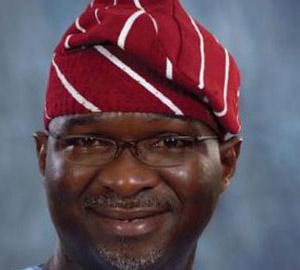
*Fashola
BY EMMANUEL AZIKEN, POLITICAL EDITOR
DURING an interactive session with newsmen last weekend, Governor Babatunde Fashola had a question for reporters: “How many of the elite of the society who are championing the cause of the poor have their own children in that school?”
The upbraid was the governor’s response to scathing criticisms from friends and foe over growing insinuations of the Lagos State administration’s resort to unpopular and anti – poor policies.
The reference to the hike in school fees at the Lagos State University, LASU from a previous high of N25,000 to a new minimum of N200,000 is only one of the accusations leveled against the Fashola administration.

*Fashola
Another point of discord has been the tolling of the Lekki-Epe Expressway, a situation that has led to some motorists paying as much as N720 per day for passing through the road on a daily basis.
Before the implementation of the two policies, the administration had been rocked with allegations of poor performance on account of the deplorable condition of the inner roads in the state. The deplorable condition of the roads hyped intra party dissonance within the ruling Action Congress of Nigeria, ACN in the state.
Many members of the party who saw the poor performance of the local government chairmen as an opportunity to remove them from office during the October, 2011 local government elections were disappointed as the party hierarchy in the state foisted many of the same ineffectual chairmen during the elections.
Protestations by party members were dismissed by party leaders. Those who went to the polls to vote them out were also disappointed with the results of the elections turning into a sour credibility reference for the leading national opposition party which had made electoral sanctity its watchword at the federal level.
The main opposition in the state, the Peoples Democratic Party, PDP alleged that it was cheated out in many constituencies where it alleged it won.
Given the acrimony over the alleged poor performance in the second term, the hike in the school fees at LASU and the tolling of the Lekki-Epe expressway were enough fire to fan bitterness among the populace.
While party officials especially Mr. Joe Igbokwe, the publicity scribe of the local chapter of the party, sought to soothe popular antagonism against the administration, government officials, perhaps unused to criticisms against a governor they saw as a performer remained stuck in seeming disarray.
Until the governor’s session with a select group of newsmen at the twilight of last year, the government’s position on the issues remained largely ambiguous.
It was as such not surprising that the governorship candidate of the PDP in the 2011 elections, Dr. Ade Dosunmu weighed in to remonstrate with the governor accusing the governor of being insensitive to public opinion.
“Governance is not about profits and loses; it is about serving the people who have freely given you their mandates. Let me reiterate that government exist for the people and not the people for government. The people of Lagos State have given their trust by voting you as governor and you should not betray the trust,” Dosunmu said in a statement.
“I therefore urge Gov Fashola to listen to public opinion and stay action on the collection of tolls on that road. The people living in that area of the state pay their taxes like every other Lagosians, hence they should not be subjected to extra_financial burden,” the PDP gubernatorial flag bearer added.
Responding, Fashola said that his hands were tied on the matter of the Lekki_Epe expressway as he claimed that the concession agreement tied his hands.
According to him the administration resorted to the arrangement following the pleas for intervention from the Lekki community. Fashola who was Chief of Staff to the immediate past governor, Asiwaju Bola Tinubu said that on several occasions at that time that he facilitated audience for the people of the community who came to complain about the state of infrastructure in the community.
What the people got was perhaps more than what they bargained for in the form of the 30 kilometer expressway. Unarguably, one of the best laid roads in the country today, the road was constructed by a consortium, the Lekki Concession Company, which according to the governor was arranged by some local entrepreneurs, banks and international investors.
Many Lagosians have decried what they see as the secrecy behind the company with some allusions to the immediate former governor, Tinubu.
It was an issue that fired up the normally calm governor during the session with the media.
“There is nothing to hide. I am too far gone with the way I have lived my life to start doing deals and stealing from the purse I am supposed to be protecting, I am too far gone. In two years time I will be fifty, so there is nothing anyone can do to humiliate me anymore.”
“If Bola Tinubu did not start this imagine where would have happened here. The man deserves some fairness. Irrespective of what you think about him, give him his dues as well and some of these things are not true. Bola Tinubu does not own Lekki Concession Company. Who ever has the proof let him bring it. There is some responsibility that is necessary in government.”
According to him the agreement on the concession of the road was a major boost for the country in the international community being that it was the first road concession agreement south of the sahara outside of South Africa.
Affirming that his hands were tied on the contract, the governor added:
“We have signed the contract. Some other banks within the Nigerian economy have lent money and that has informed the rate of interest. So, for you to change anything everybody must give up something, you must now sign new agreements.
So it is not something that the governor can just come say, “go and remove it.” If I go out there and say remove it, somebody must still have to pay for it, that means we will have to subsidise it like we did N4 billion last year.”
He disclosed that the administration paid N4 billion to the LCC for its decision to suspend the implementation of tolling in 2010.
On the controversy following the hike in tuition fees in LASU, the governor disclosed that the school was about turning into a dumping site for only the children of the poor because of both the dilapidated infrastructure and the very low standards that had made the rich to resort to private and foreign universities.
“What I owe the children of the poor is to give them an opportunity to as much as possible compete with my own children,” he said.
“I believe that we would do a major damage if we end up having a university where only the children of the poor want to go there. It will break up the society one day. It will limit the chances of the children one day. A university for the poor only is a ticking time bomb,” he added.
“I mean well and I have tried to provide safety nets for everybody who we think might be affected. We wont have a university until I can send my son there. Confidently, today I told my nephew you are going to study medicine at LASU because it is the best university in medicine today.”
“We want a university where the rich and poor can interact again and we hope to be able to support the poor among them. What is the value of this N25,000 free education? If it takes you eight years to get a four year degree, is it really free? What is the value of four years that you have lost? “ he asked.
Dosunmu of the PDP is, however, unconvinced insisting that the state administration must depart from its profit and loss motif in government.
“The Lagos State government must change its excess profit driven approach to governance employing every means at its disposal including using traffic agencies, LASTMA, KAI and now the state tertiary institutions (LASU, LACOED etc) as a means of generating money. The people of Lagos State deserve some amount of civility, respects for their rights and delivery of the dividends of democracy.”
Fashola, however, insists that he is not out of touch with the feelings of the poor noting his own not too privileged roots.
“There were days in school I couldn’t eat, I was living on friends in school, I have been through it, so I am not disconnected. I didn’t school abroad, I went to university in this country. I was in school during IBB when he removed our meal subsidy, we protested, we were on the road, I am not disconnected.”
The meal subsidy was in fact scrapped by the Buhari administration in 1984 when Governor Fashola was a law student at the University of Benin. Those days of half a quarter chicken per student that Fashola glimpsed at UNIBEN indeed are now far gone!
Disclaimer
Comments expressed here do not reflect the opinions of Vanguard newspapers or any employee thereof.