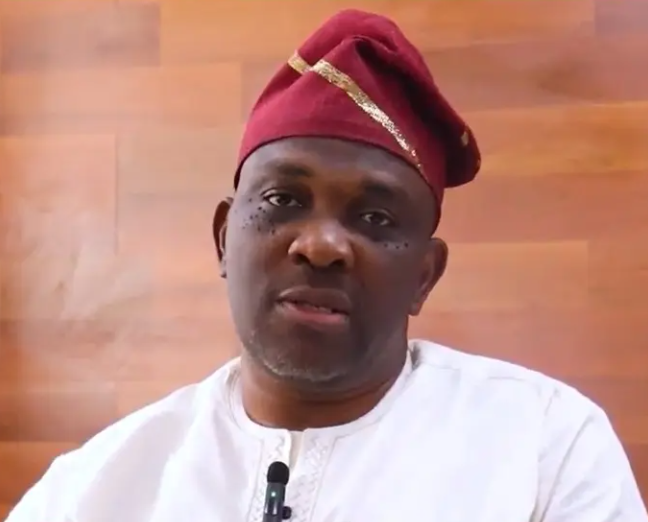
After a year marked by the crises of Naira scarcity following the Naira redesign policy of the former Central Bank Governor, Godwin Emefiele, and tensions from the politics of the 2023 General Elections, Vanguard’s Precious Chukwudi interviewed the President of the Association of Corporate Affairs Managers of Banks (ACAMB), Mr. Rasheed Bolarinwa, who narrated how the association, under his leadership, was able to weather the storm in its affirmed commitment to the protection of the image and advancement of the banking sector. Mr. Bolarinwa also projected 2024 and the plans of the association to drive exponential growth within the sector.
You’ve spent two years as the President of ACAMB. What has changed ever since you came into office?
Working in the ACAMB, a lot has changed. We’ve brought enthusiasm, you know, and strong interest back in the activities of the association. And we’ve had a couple of milestones that we’ve recorded. We’ve increased the pace of our knowledge-sharing sessions, having consistent and occasional knowledge-sharing sessions on relevant topics, and inviting third-party professionals and subject matter experts to have an interaction with our members. We’ve also held the first stakeholder conference with the organized private sector. The organized private sector constitutes almost 80% of the customer-base of the banking industry. We were able to bring all these stakeholders together under one umbrella. It has never happened in the history of the association. We’ve done the first one, we’ve done the second one. The second one was held not too long ago.
Beyond that, we’ve also been able to bring back enthusiasm in the activities of the association. We’ve done a couple of things by ensuring that our members have a strong interest in what we do. We held what we call aerobics. That was the first time we would do that. We brought everybody together, had a wonderful aerobics at a space that was provided for us by one Ecobank transnational and their beautiful ambience where we had a wonderful time. And the person who led us in that session was a former BBA member who is into fitness and the rest. The response was very beautiful and people are asking for more.
As the umbrella body of corporate and marketing communication professionals working in banks, how much support do banks give to ACAMB?
The support has been immense. They pay their annual dues and they’ve been very consistent. We have a lot of banks that have been very consistent in doing this. There are others that can do more. Even when we seek assistance, when we want to have an event, they are always there to support. They sponsor most of the events. We did the aerobics, we had sponsors. We did what we call the stakeholders conference, both the maiden edition and the sequel. And we had very wonderful support. Even we had third-party support. People in the media, outdoor companies who gave us electronic boards to advertise far ahead of the events. Beyond monetary, we see people showing interest coming for the events.
We also had recently, about four weeks ago, held a media parley with both the financial press and those who are in the digital space: ACAMB media parley. And that was even part of what we achieved as well and it was well received. We’ve also worked very strongly with current committee members of CIBN – that’s the institute that regulates the activities of bankers in Nigeria; and ACAMB has played a very, very strong role since we came on board. Almost every event that CIBN holds, we have a very strong pride of place that we play as an association and we believe very strongly that our members will continue to give us their support.
The group heads of the respective corporate communications department of the banks, beyond giving us financial support whenever we have events, have also shown their willingness to physically be present at most of these events. And that’s all you need because ACAMB belongs to all of us as professionals.
What gains trickle down to customers, and other stakeholders as ACAMB plays the key role of protecting the reputation of Nigeria’s financial institutions?
I know bank customers were able to see how this association intervened during the unfortunate fallout that happened during the Naira redesign policy, which started on October 2022. The announcement was made in June-July. There were fallouts that were not intended, where people didn’t have access to cash and how that dislocated the social fabrics of the society. You saw the attacks on bankers and banks across Delta, Abeokuta, Sagamu and the rest, and ACAMB was able to play a very strong role.
Our voice was heard loud and clear. We’re able to educate customers on what they need to do at every point in time, the need for them to embrace and explore more alternate channels; that as a customer you don’t have to physically hold cash before you can get by. We’re able to stay focused during that crisis. ACAMB was the voice that almost all the stakeholders were able to listen to very strongly.
We were on radio, tv, we wrote press releases, we granted interviews to the media, and media worked very strongly with ACAMB for us to push out the information out there that when you go to an ATM, this is the expectation, what you need to do. You don’t have to attack banks because most of the banks are owned by Nigerians. We were able to educate and run strong advocacy about the need for people to go on with the cashless policy. If you have a shop, you don’t have to. Once you have a PoS machine in your shop, when people come with their debit card and they want to buy things, it makes life easy. How many times do you see people stashing cash in their pockets, moving around? Once you have your debit card, you get to the filling station, you buy fuel.
We were able to educate Nigerians on how to navigate that difficult time that happened and the feedback that we got thereafter, when the judgment was given and we revert back to status quo, the feedback we got was that ACAMB, more than any other stakeholder within the financial services space, stood to be counted at that moment. And we are just humbled by that contribution that we’re able to make in that difficult moment. So we believe very strongly that with advocacy and all the stuff that we’ve done across board, customers have come to realize the importance of this association, especially on the issue of how POS operators were trying to fleece Nigerians. We were able to educate them. The amount of money you need to pay and how you need to protect your rights. Whenever you approach a POS operator, you don’t have to fight anybody. We’re able to educate Nigerians on what they need to do during those difficult moments and thereafter. At every point in time when there are issues that we realize within the sector, we are always able to use that platform of ACAMB to educate customers and those who consume banking products.
Looking inward, if there are negative activities in the banking sector; are there frameworks within ACAMB’s ambit to proffer solutions?
Yeah, we have a framework within space. When we realize that the banks are being unnecessarily attacked, especially by adverse media, oftentimes we rally round and draw the attention of the particular media to what they have done.
We also currently have a legal body or chamber that takes up most of those cases whereby when banks have been unnecessarily attacked, we always try to let the particular media organization realize that this is not the way to go about it. If you go on social media, when we see those negative sentiments, once it triggers, we are able to inform our colleagues, even though we believe that almost every bank has a software tool with which you can be able to track negative sentiments about your brand and what are those issues. And we’ve encouraged our members to always respond appropriately. But there are protocols for resolving complaints.
When you access banking services and you have issues, there are protocols that you need to go through to have a final resolution of whatever complaint that you lodge. Unfortunately, most banking consumers don’t explore those protocols and wait for the turnaround time, the TAT, for it to mature. At the point where you lodge your complaints, you wanted to access a banking service, but you didn’t get the value for the service that you wanted. You need to lodge your complaint. You call a call center of the bank that’s affected; the particular bank that you have. You need to make a call to that center.
You’ll be given a complaint ticket and they will tell you the time within which that complaint that you have lodged will be resolved. Because oftentimes, there are dependencies. If you use a merchant PoS and you have a cash retract and you are unable to get value at that point, and you lodge the complaints to the bank, they will have to go through a process by which they’ll be able to lodge the customer’s complaints. They’ll have them to determine that actually that money is hanging somewhere. They will get back to the bank. There are timelines. Oftentimes it takes between 72 hours and seven working days. These are some of the things that we will continue to employ and allow customers to be aware. You don’t have to go to social media to call out a bank. Social media is not a complaint medium. Even though most people go there trying to believe that when when they escalate to the social media, that’s when their customer complaints will be resolved. Oftentimes it’s not always the truth.
The new year is upon us: what are your expectations for ACAMB in 2024?
We believe very strongly that what we have achieved in the outgoing financial year will pale into insignificance in what we look at achieving in 2024. We believe very strongly that we will take strategic communication. Very strongly. We will engage more with stakeholders and our customers and consumers of banking products. And we believe very strongly that working with other stakeholders within the banking sector will continue to strengthen and make the banking industry take its pride of place that it has always been.
The banking sector is the leader in this country. Whether in peaceful times or in times of crisis, the banking sector, more than any other sector, stands to be counted. Covid-19, ENDSARs protests that happened, and flooding that happened within the country.
At every point, whenever there’s a crisis, whether during or after the crisis, you always see the banking sector playing a pivotal role in what we do. Our investment. We provide funding for different projects, transformative projects that transform both subnational, local government, and even the national level. We collaborate very strongly with businesses to upscale. We provide all the necessary technical advice, funding, and the rest for every sector. SMEs, we are always there. Funding the fashion industry, we are there. Funding the health sector, we are there. No sector doesn’t feel the impact of the banking industry.
Disclaimer
Comments expressed here do not reflect the opinions of Vanguard newspapers or any employee thereof.