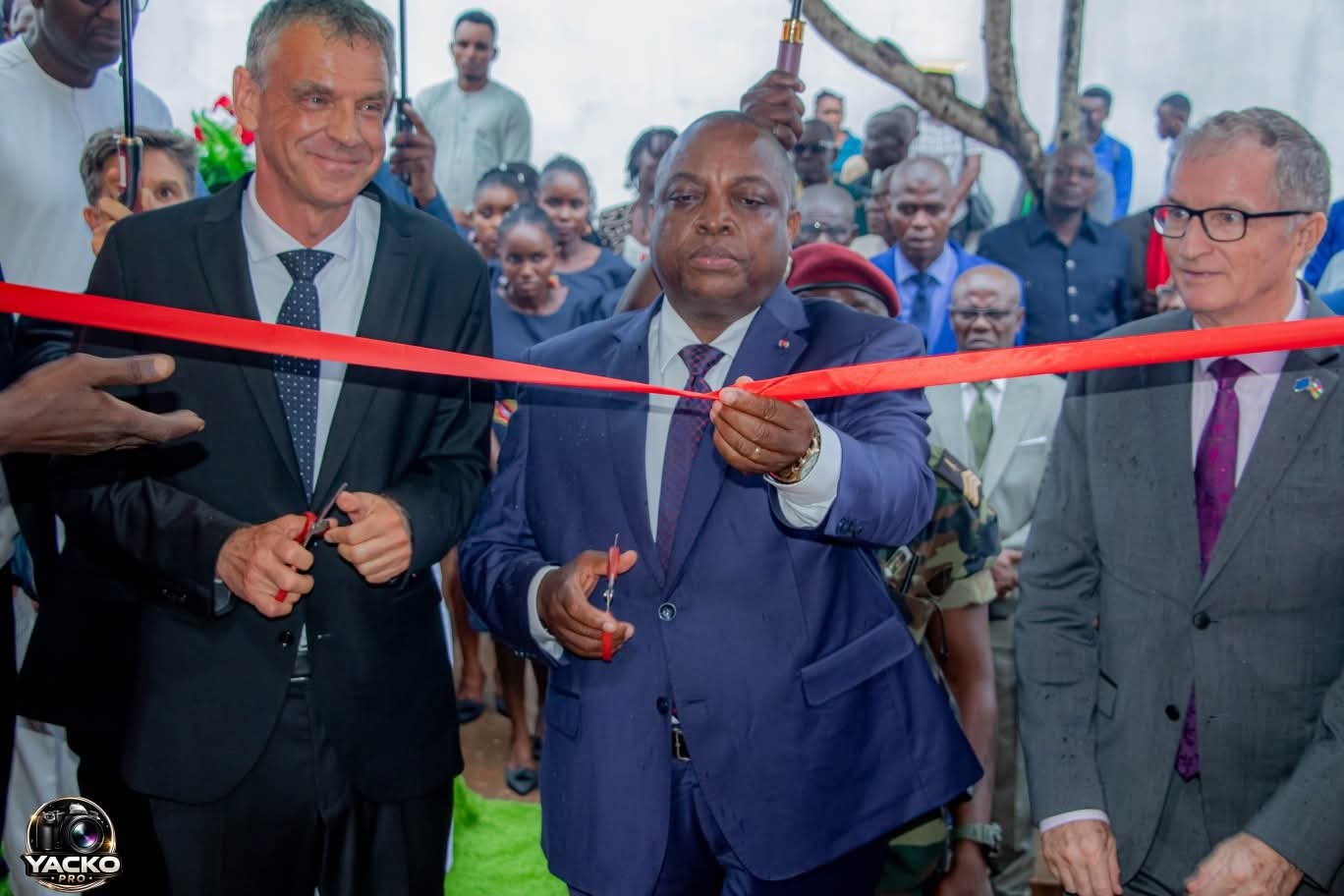
By Joseph Erunke, Abuja
Nigeria and the wider Lake Chad region are set to benefit from a major new regional water management initiative following the official launch of the Lake Chad Water Management (LACHAWAMA) Action in Bangui, Central African Republic.
The initiative, launched by the European Union, the Federal Republic of Germany, the Lake Chad Basin Commission (LCBC) and the Government of the Central African Republic on 20 May 2026, is designed to strengthen regional cooperation around shared water resources while supporting climate resilience, stability and sustainable development across the Lake Chad Basin.
For Nigeria, where millions of people in the North-East depend directly on the Lake Chad Basin for farming, fishing and livestock, the programme is expected to support stronger environmental management, regional stability and community resilience in areas affected by climate-related pressures and insecurity.
The wider regional action also includes support for resilient infrastructure, hydrological monitoring systems, technical assistance and investment facilitation for sustainable water management across the basin.
LACHAWAMA is financed by the European Union and jointly funded by Germany through the Federal Ministry for Economic Cooperation and Development (BMZ). The first operational component of the programme, implemented by GIZ in collaboration with the LCBC and member states, is jointly financed with €7 million from the European Union and €4.25 million from Germany.
The Lake Chad Basin remains one of Africa’s most important transboundary ecosystems, providing water and livelihoods to more than 50 million people across Nigeria, Cameroon, Chad, Niger and the Central African Republic.
Speaking during the launch ceremony in Bangui, President of the Central African Republic, Professor Faustin-Archange Touadéra, described the programme as a vital initiative for the future of the Lake Chad Basin and a reflection of the collective responsibility of member states to address growing climate and environmental challenges.
“The Central African Republic is a source of the Lake Chad Basin’s hydrological system, which comes with a particular socio-environmental responsibility,” President Touadéra said.
He also called for stronger collaboration among governments, development partners, private sector actors and civil society organisations to support implementation of the programme.
“Let us save the Lake Chad Basin for the well-being of humanity,” he added.
Representing the European Union Ambassador to Nigeria and ECOWAS, Ambassador Gautier Mignot, was the Chargé d’Affaires of the European Union Delegation to the Central African Republic, Mr Serge Panaget, who noted that the initiative aligns with the EU’s broader Global Gateway and Team Europe approach, which supports African-led solutions to shared regional challenges.
“Climate change and environmental pressures do not stop at borders. Nigeria’s partnership with its neighbours through the Lake Chad Basin Commission is essential for long-term stability and development.
The European Union is proud to stand alongside Nigeria and regional partners in strengthening cooperation around one of the region’s most important shared resources,” he said.
He further noted that the programme goes beyond infrastructure and policy coordination to focus on the long-term prosperity and well-being of communities across the basin.
“For young people in northern Nigeria and across the Lake Chad region, strengthening resilience around water and natural resources is also about expanding opportunity and supporting long-term stability. It is about helping communities build sustainable livelihoods, deepen cooperation and create a stronger foundation for future generations. This is why the European Union continues to invest in partnerships that place people, sustainability and regional cooperation at the centre of development,” Mr Panaget said.
The programme will strengthen regional governance systems, improve hydrological data sharing and support environmentally sustainable, climate-resilient and conflict-sensitive water resource management across the basin.
At the regional level, LACHAWAMA will support multi-stakeholder dialogue platforms across transboundary sub-basins to improve coordination on water management, biodiversity, climate adaptation and conflict prevention.
At the local level, it will support practical solutions aimed at improving resilience and strengthening sustainable natural resource management for vulnerable communities.
Speaking during the launch ceremony, Executive Secretary of the Lake Chad Basin Commission, Ambassador Ibrahim Babani, described the programme as a demonstration of the collective commitment of member states to address common challenges through cooperation.
“LACHAWAMA reflects our shared conviction that the challenges facing the Lake Chad Basin require collective and coordinated responses. Through this programme, the LCBC reaffirms its commitment to supporting its member states in building sustainable and cooperative solutions around our shared water resources,” he said.
The launch event brought together representatives of governments, regional institutions, diplomatic missions, development partners, civil society organisations and technical experts, reaffirming a shared commitment to stronger regional cooperation and the sustainable management of shared water resources in the Lake Chad Basin.
Representing European partners at the event were the Chargé d’Affaires of the European Union Delegation to the Central African Republic, the German Ambassador to the Central African Republic and Cameroon, the GIZ Regional Director, the LACHAWAMA Project Director and a representative of Germany’s Federal Ministry for Economic Cooperation and Development (BMZ), underscoring the strong Team Europe commitment to supporting sustainable water resource management, climate resilience and regional stability in the Lake Chad Basin.
Disclaimer
Comments expressed here do not reflect the opinions of Vanguard newspapers or any employee thereof.