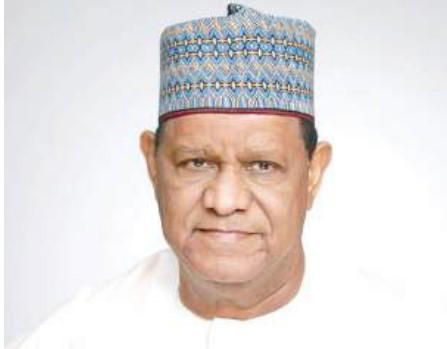
Mohammed Hayatu-Deen
By Mohammed Hayatu-Deen
Former President Olusegun Obasanjo said something recently that every Nigerian already knows in their hearts, but that too few leaders have been willing to state plainly: a government that cannot guarantee the security of lives and property has forfeited its right to exist.
When he says Nigerians must not accept kidnapping as a way of life, the meaning is unmistakable. The normalisation of this horror, the quiet acceptance that families must endure such trauma and the gradual numbing of our collective outrage is itself a form of national defeat.
But it is not enough to agree with President Obasanjo’s diagnosis. The more important question now is not whether the current government has failed on security: it manifestly has. The real question is: what must be done?
That is the conversation the ADC should be leading. We must focus on offering Nigerians clear, credible answers to the deep-rooted challenges that are making them poorer and less safe with each passing year.
Let me contribute to that conversation by outlining my priorities.
On security, we need a comprehensive, full-spectrum response, a firehose approach that tackles the crisis from every direction simultaneously. First, Nigeria must urgently re-engage its neighbours to rebuild regional intelligence-sharing and joint military operations, particularly the Multinational Joint Task Force. This force, comprising Nigeria, Niger, Chad and Cameroon, was once a cornerstone of the fight against insurgency in the Lake Chad Basin. At its peak, it coordinated cross-border offensives, disrupted terrorist supply lines and reclaimed territory.
Today, however, that cooperation has significantly weakened. Political tensions, especially with Niger, and a lack of sustained diplomatic engagement have eroded trust and operational effectiveness. What was once a robust regional mechanism is now functioning below capacity at a time when it is needed most. President Obasanjo is right: Nigeria cannot confront this crisis in isolation. Repairing these relationships and restoring coordinated action is mission-critical.
Second, we must reclassify banditry and kidnapping as acts of terrorism and dismantle the culture of impunity that allows these criminal enterprises to operate openly and profitably. Special courts should be established to ensure swift and certain justice, replacing a system where cases linger for years without resolution.
Most importantly, we must confront the economic roots of insecurity. Without jobs, opportunity and hope, the appeal of criminal networks to desperate young Nigerians will persist.
On the economy and cost of living, the situation is equally urgent. Nigerians are poorer today than they were three years ago. Macroeconomic reforms were poorly sequenced, and the burden has fallen disproportionately on ordinary citizens. When the price of a staple like rice doubles within a short period, that is not misfortune, it is policy failure.
We must bring public spending under control, aggressively support local agriculture and reduce our dependence on imports. Nigeria has been here before. Previous efforts to boost domestic rice production, in particular, through interventions, border controls and support to farmers, initially showed promise but were not sustained. Today, those gains have largely unravelled, and the country has slipped back into heavy reliance on rice imports, exposing Nigerians to global price shocks and currency pressures.
This cycle must be broken. We need consistent, long-term policies that support farmers with inputs, financing, storage and market access, not stop-start interventions that collapse under their own inconsistency.
At the same time, government waste must be decisively cut, and every naira saved redirected into critical infrastructure: roads, schools and power.
In parallel, we must launch a national jobs drive through a large-scale public works programme, funded by strategic partnerships between government and the private sector. Jobs remain the most direct and sustainable answer to both poverty and the insecurity it fuels.
These are not abstract promises. They are grounded in over four decades of experience creating jobs, reforming institutions and leaving every organisation I have led stronger than I met it.
Nigeria stands at a critical juncture. What President Obasanjo described is not merely a political challenge, it is a national emergency. The ADC must offer Nigerians a genuine alternative, rooted in seriousness, substance and competence.
Let us elevate this conversation and provide real solutions. Nigerians have run out of patience for anything less.
Mohammed Hayatu-Deen (OON), a businessman and former Chairman of the Nigerian Economic Summit Group (NESG), is a presidential aspirant on the platform of the ADC.
Disclaimer
Comments expressed here do not reflect the opinions of Vanguard newspapers or any employee thereof.