Nigeria’s drive toward a cashless economy is entering a more complex phase, with industry stakeholders shifting focus from adoption to interoperability of digital payment systems.
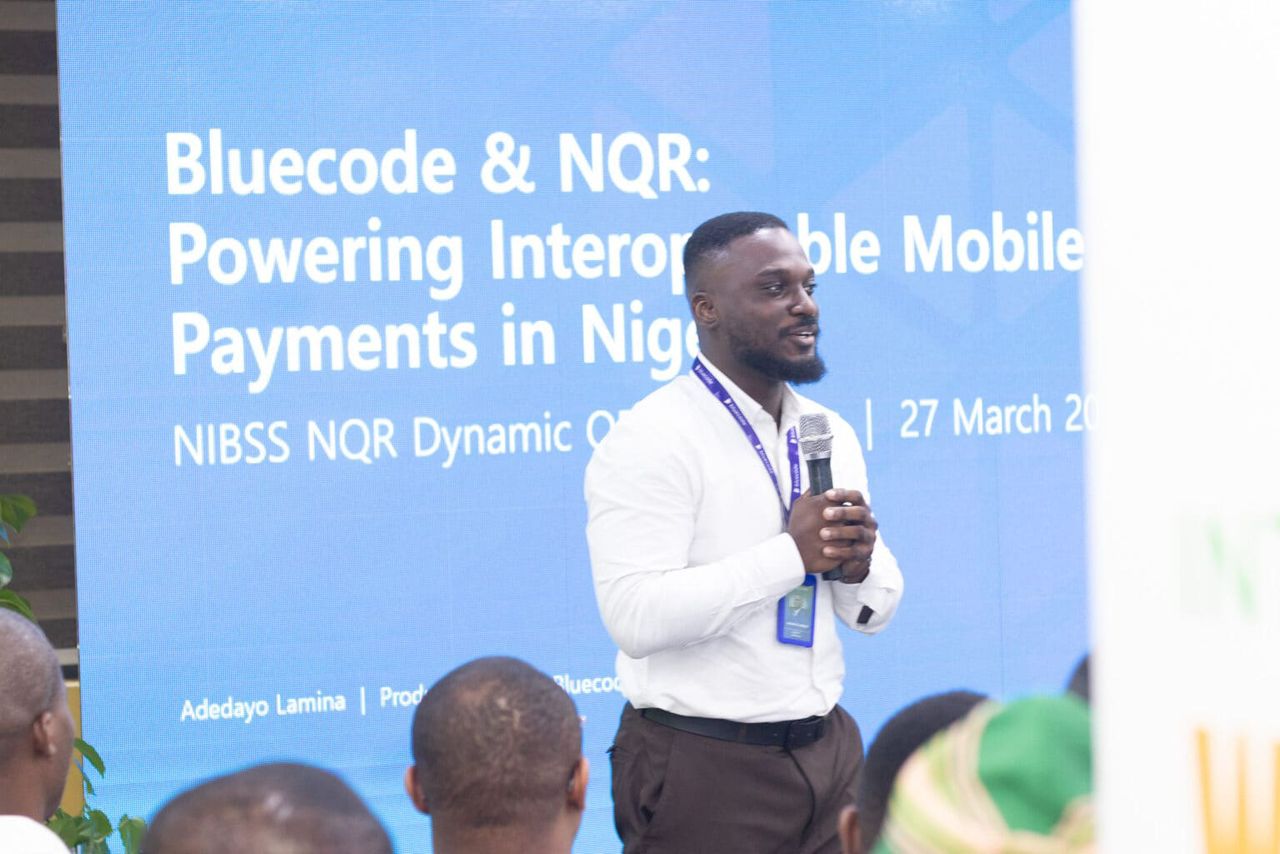
This formed the core of discussions at the NIBSS NQR Dynamic QR Demo Day held in Lagos in March 2026, where Bluecode Africa joined banks, fintech firms, and payment operators to demonstrate advancements in seamless payment integration.
At the event, Bluecode Africa delivered a live demonstration highlighting its interoperable QR payment capability. The demo showed a consumer successfully completing a transaction at a Bluecode-enabled merchant using an NQR-supported bank application through a single scan, without the need for additional app downloads or merchant-side integrations. The payment was processed instantly at the point of sale, effectively bridging previously disconnected payment schemes.
Speaking during the demonstration, Bluecode Africa product manager, Adedayo Lamina, emphasized the significance of interoperability in Nigeria’s evolving payments landscape. “This demonstration shows that digital payments in Nigeria can move beyond isolated systems to a truly connected ecosystem where users and merchants interact seamlessly regardless of platform,” he said.
Lamina, who has led the rollout of the company’s interoperable contactless payment scheme over the past three years, has coordinated efforts across engineering teams, financial institutions, and Tier-1 Nigerian banks. The initiative has reportedly grown to cover over 70,000 merchants and more than one million enabled wallets nationwide.
Industry observers note that the success of the demonstration underscores the importance of collaboration among ecosystem players. The project involved coordination with the Nigeria Inter-Bank Settlement System (NIBSS), Chamsswitch, and several Nigerian banks, a process often cited as a major hurdle in infrastructure development.
Also speaking on the company’s strategy, Managing Director of Bluecode Africa, Odin Krismayr, highlighted the firm’s integration-first approach. Rather than introducing entirely new consumer platforms, the company focuses on enhancing existing payment infrastructure to improve usability and adoption.
For merchants, particularly small businesses, the solution offers added value through static QR codes, which provide a low-cost and easily deployable payment option without the need for sophisticated hardware or technical maintenance.
Bluecode Africa’s participation at the NIBSS event reflects a broader shift within Nigeria’s financial ecosystem, where stakeholders are increasingly prioritising connectivity between systems over standalone product development.
While widespread commercial adoption will depend on continued collaboration across the banking sector, the Lagos demonstration signals that the technical groundwork for interoperable payments in Nigeria may already be more advanced than previously assumed.
Disclaimer
Comments expressed here do not reflect the opinions of Vanguard newspapers or any employee thereof.