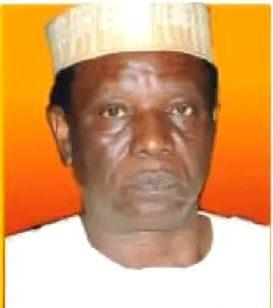
The appointment of Tunji Disu to replace Kayode Egbetokun as Inspector General of Police (IGP) took me by surprise. To start with, I didn’t even know Disu was still in service because the last time I heard of him, the rumour was that he had been superseded. I actually thought he had since been screened out as is often done in the Police when some privileged junior officers are for no persuasive reasons suddenly lifted above their erstwhile seniors. I was thrilled to find that it was the same Tunji Disu I once knew by reputation that had been picked to serve as acting IGP pending his confirmation by the relevant bodies. I was as excited about his elevation as I was when Solomon Arase of blessed memory was similarly picked some years ago.
However, whatever inflexible standards those who influenced the appointment of Disu may have considered did not really bother me. My joy was that contrary to the trend since after President Olusegun Obasanjo left office in 2007, someone with impeccable credentials and excellent cognate experience to meet the mandate of an office was nominated. Most other appointees into critical public offices in Nigeria had been selected on the basis of prescriptive criteria. But Disu on his own is coming into office with multiple academic qualifications: two Masters degrees – one in Entrepreneurship and another in Criminology, Security and Legal Psychology along with an Advanced Diploma in Forensic Investigation and Criminal Intelligence.
As if Disu’s dream was to master every schedule of law enforcement, his academic attainments stretched to as far as International Relations and Strategic Studies, just as his deployments took him through virtually every unit where he left behind the experiences he garnered from extensive professional training on forensic and criminal intelligence, small arms smuggling, internet fraud and strategic leadership. In the area of deployment, the new police boss had served as: Divisional Police Officer (DPO) in several states, headed special units such as the Special Anti-Robbery Squad (SARS) and anti-kidnapping teams, Principal Staff Officer, Commissioner of Police in Rivers State and the Federal Capital Territory (FCT), before becoming Assistant Inspector-General in charge of the Special Protection Unit.
While his mates were busy exploiting the Nigerian ethos of lobbying for promotion and cringing for lucrative postings, Disu had his eyes on the verdict of history seeking to excel at each post. First, he received accolades for reducing crime in Lagos when he commanded the Rapid Response Squad (RRS) between 2015 and 2021. He did not stop there as he immediately shot into national fame when his team won the Best Anti-Crime Squad award in West Africa in 2016. A decade earlier, he had led the first Nigerian police contingent on the African Union Mission in Sudan (AMIS), serving as acting Chief of Staff in Darfur. It can therefore be argued that Tunji Disu is on familiar grounds with ample capacity to bring his wealth of experience to bear on his new assignment.
No one is likely to successfully dispute the claim that through his own solid personal achievements; Disu positioned him as one of the best hands for the job of IGP in today’s Nigeria. The narrative is that the man is not just a known achiever, he is also an insider in the location of the particular subject matter. But whether or not our people will allow him to freely operate to maximize his potentials is a different matter. The way out is for all well-meaning citizens to give him a helping hand to succeed. This is why I pledge my support today as someone familiar with the challenges of the office of a chief executive in a Nigerian public sector entity. Luckily, Disu has come into office at a time when my support will not just be personal but also institutional and pro bono.
Today, I lead a specialized tertiary institution, the newly established Tonnie Iredia University of Communication, Benin City – Africa’s trailblazing institution for communication, digital invention and the creative economy. When I told a friend my plan to support IGP Disu, he immediately asked me if my university teaches policing and police methods? His question in my humble opinion points to the gap in manpower development in the Nigeria Police and such other institutions. The Police have enough training institutions on policing and police operations. A recent research paper on policing actually suggested that as high as 36 percent of senior Nigerian police personnel have postgraduate qualifications.
It is therefore time for our police to depart from the routine of doing the same thing all the time while expecting different results. If Disu really wants to transform the police, then he needs to be assisted to fashion out smart programmes that can convert his personnel into police ambassadors. It is indeed time to change the old order whereby many police personnel are ever willing to testify to the ‘hopelessness’ of their organization. This is more so when it is realized that only a few would stop their family members from enlisting in the same police force, they are demarketing. Similarly, it is hard to meet police personnel who have job satisfaction while many junior police operatives would readily confirm that they are just in the police until they can find better jobs. Does it mean there are no Nigerians who have passion for law enforcement? If so, staff welfare alone may not be a sufficient remedy.
There is also the need to draw attention to the nature and type of a police environment. Nigerian police barracks are generally filthy and congested; they are also hardly renovated for which the authorities ought to be blamed as part of inadequate accommodation for the police. But who is to be blamed when police stations have exactly the same look as local mechanic workshops? How come all manner of dilapidated vehicles find accommodation in our police stations? Does it occur to the police that how a typical police station looks like is a reflection on the police as an organization? What are the details of the curriculum of a course on reputation management which police PROs and others often attend?
The police used to be in charge of anti-corruption cases. In due course, other bodies, the EFCC and ICPC were set up to take over the mandate. The sharp difference in the environments of these new bodies when compared with that of the police speaks for itself. The same is true of the old Motor Division of the Police which is now known as the FRSC. The decision of the latter to operate in a more decent environment suggests that they are extra conscious of public perceptions. It is difficult to earn public respect if one pays little attention to public opinion. How accidented vehicles are parked not being a core mandate of the police can be better managed than it is now because first impressions matter.
I have had cause to relate with some police stations of recent. In at least two of the stations, I got to know that the personnel are under instructions to accept but not to acknowledge any letter or petition. The immediate implication of the policy is that such stations lack accountability and that the police is likely to deny receiving any letter. But when the same letter is copied to the office of the IGP, one finds a dedicated office where letters are promptly received and acknowledged with smiles. What this suggests is that the police lacks uniformity in operating processes and procedures. In other words, if the police force is not run like a living organism whose component parts interact to ensure the survival of the whole, the police as an entity can hardly attain a unity of direction.
The point to be made is that Tunji Disu has more than too much to do. Those who cannot support him should at least not distract him. I immediately see two problem areas here. First, government has a way of constituting ‘too many cooks in the police kitchen’ making it difficult for tasty foods to come out of there. Police Council, Police Service Commission, Ministry of Police Affairs and national assembly committees that demand rather than recommend are all there for Disu to contend with. While wishing him success with the numerous cooks, a bigger problem lies with the police operatives who usually function at cross purposes with their CEO. If Disu cancels checkpoints, it is likely to boom the more.
Disclaimer
Comments expressed here do not reflect the opinions of Vanguard newspapers or any employee thereof.