By WILFRED OBIOTIKA
Having travelled across the length and breadth of Nigeria by road, it is no exaggeration to conclude that our system of governance suffers deeply from an absence of maintenance culture. Roads, which are the lifelines of a nation’s economy and mobility, are in deplorable condition—potholes dot nearly every kilometre, drainage systems are blocked or non-existent, and new roads decay shortly after commissioning. Ironically, citizens who pay taxes, levies and daily tolls are the very victims of this neglect, condemned to destroy their vehicles on roads that are better described as death traps.
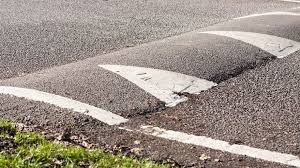
Of particular concern is the situation in Anambra State, where communities have taken it upon themselves to erect speed bumps at almost every turn. On the Oko–Ekwulobia road, for instance, it is practically impossible to drive for three seconds without meeting another hump. These bumps are so numerous and uncoordinated that one begins to wonder if they are part of the state’s official traffic management system or simply the handiwork of frustrated residents seeking to protect their communities from reckless drivers. Whatever the motive, the outcome is counterproductive and symptomatic of deeper governance failure.
Ordinarily, speed bumps are installed to slow down vehicles in sensitive areas—near schools, hospitals, churches, or markets—where the movement of people is heavy and unpredictable. They are meant to save lives, not endanger them. However, in Anambra and many other states, this noble idea has been abused beyond measure. Every community now sees it as a right to mount road barriers in the name of “security” or “safety,” often without approval from traffic or works departments. The result is a chaotic network of bumps, some as high as small hills, others so irregularly shaped that even heavy-duty vehicles get trapped or damaged in the process.
The logic behind this practice might appear understandable: to control speed, deter criminals, or reduce road accidents. Yet, in reality, these bumps have not achieved any of those objectives. The Oko–Ekwulobia route still witnesses speeding, accidents, robberies, and kidnappings, despite the presence of hundreds of bumps. What they have achieved instead is the progressive destruction of vehicles, especially commercial buses, tricycles and heavy-duty trucks that use these roads daily. Shock absorbers collapse, springs snap, engines weaken, and tyres burst prematurely—all of which add to the already unbearable cost of transportation and vehicle maintenance.
The unregulated erection of speed bumps reflects more than a failure of planning; it portrays a subtle form of authoritarianism and high-handedness within the governance system. In a democratic society, the control and management of public infrastructure are responsibilities of the state, not of individuals or community groups. When residents begin to alter public roads as they please, it signals a breakdown of authority, order and accountability. Even more worrisome is the complicity of local officials who either turn a blind eye or collect bribes to permit such acts.
It is an affront to civil governance that wealthy or politically connected individuals can wake up one morning and order the construction of bumps in front of their homes, businesses, or churches simply because they desire a quieter neighbourhood. Public roads are not private property. They are built and maintained with public funds and therefore must remain under the supervision of government agencies. Allowing privileged individuals to alter them at will is not only unfair to other road users but also undermines the very principle of equality before the law. Across the world, traffic control measures are guided by engineering standards and scientific data. In technologically advanced countries, road safety is ensured through reflective signs, warning posts, zebra crossings, speed cameras, road markings and controlled lighting systems.
Speed bumps are used sparingly and only where absolutely necessary, often preceded by clear warning signs to protect both vehicles and drivers. In contrast, Nigerian roads are littered with crude, unpainted and unmarked mounds of asphalt or concrete that spring up overnight without notice. At night, especially on poorly lit highways, such bumps have caused fatal accidents rather than prevented them. The indiscriminate erection of bumps not only disrupts smooth travel but also slows economic productivity. Vehicles that could easily make inter-town trips within minutes now spend hours manoeuvring over unnecessary barriers. Fuel consumption increases, journey time doubles, and the lifespan of vehicles shortens—all of which contribute to rising transportation costs. For transport operators who already struggle with inflation, fuel scarcity, and spare parts costs, these artificial obstacles are the last thing they need.
Governance must always balance security, safety and public convenience. While communities may act out of fear or frustration, government must not abdicate its duty to regulate and maintain order. It is therefore imperative for the Anambra State Government—and indeed, all Nigerian states—to conduct a comprehensive audit of all speed bumps on their roads. Only approved, standard bumps designed by engineers should remain, while all illegal or excessive ones must be removed.
Instead of this crude method of control, government should install appropriate warning signs, speed limit posts, reflective boards and thick white markings—especially near schools, churches, hospitals and markets where pedestrian movement is high. This is a globally accepted approach that protects both drivers and pedestrians without damaging vehicles or impeding movement. Furthermore, it must be clearly stated in law that no private citizen, group, or community has the right to erect bumps on federal or state roads without express approval from the Ministry of Works or the Federal Road Safety Corps, FRSC. Local councils may be allowed to regulate bumps only on rural or community roads, and even then, such constructions must meet safety standards.
In conclusion, the time has come for Nigerian leaders to demonstrate that governance is not just about constructing new roads, but also about maintaining and regulating the ones already built. The current culture of neglect and disorder on our highways is unacceptable and unsustainable. The unnecessary bumps that dot our roads are more than just physical obstructions—they symbolise the bumps in our governance system: unplanned, impulsive, and thoughtless. A nation that desires progress must uphold the discipline of planning and the humility to learn from global best practices. Government must reclaim its authority on road management, enforce standardisation, and ensure that every public road serves the people, not punish them.
•Toochukwu Obiotika wrote from the Living Grace Restoration Assembly Inc., Nkono-Ekwulobia, Anambra State.
Disclaimer
Comments expressed here do not reflect the opinions of Vanguard newspapers or any employee thereof.