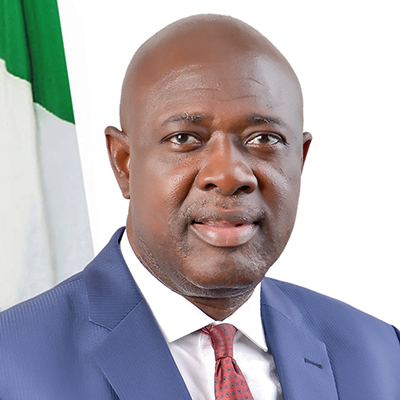
Heineken Lokpobiri
By Obas Esiedesa, Abuja
The Minister of State for Petroleum Resources (Oil), Senator Heineken Lokpobiri, has said that recent asset divestments by International Oil Companies (IOCs) have unlocked over $5.5 billion in fresh investments into the country’s oil and gas sector, boosting production and confidence in the industry.
Lokpobiri, who spoke on behalf of President Bola Ahmed Tinubu at the Africa Energy Week in Cape Town, South Africa, described the divestments as “transfers of confidence, capability, and ownership,” noting that they have already added about 200,000 barrels per day to national output.
Lokpobiri in a statement by his media aide, Nneamaka Okafor, declared that Nigeria is “open for business” and committed to creating a transparent, stable, and investor-friendly environment that prioritizes efficiency and long-term growth.
“This gathering is more than a conference, it is a call to action,” the Minister said, adding that Nigeria was ready not only to participate in the global energy market but also to lead reform and growth on the African continent.
The Minister said the Petroleum Industry Act (PIA) has provided a predictable fiscal and regulatory framework that ensures licensing transparency, host community engagement, and strengthened oversight, pointing out that “What makes Nigeria now different is the legal, regulatory, financial, and structural transformation we are delivering”.
According to him, the sector is witnessing strong recovery, with the “Project One Million Barrels” initiative raising daily crude production to between 1.7 and 1.83 million barrels per day. In July 2025 alone, output rose by 300,000 barrels per day, while the number of active drilling rigs grew from 31 in January to 50 by July.
On Africa’s broader energy landscape, Lokpobiri called for greater value retention from hydrocarbon resources, warning that the continent spends more than $120 billion annually on imports.
He urged African countries to invest in infrastructure, industrial growth, and localized value chains and emphasized the need to harness Africa’s domestic capital base, estimated at nearly $4 trillion in pension and insurance funds, for energy investments.
“The question is no longer about the availability of funds, but how we can channel them into productive investments on our continent,” he said.
On the global energy debate, Lokpobiri argued for balance, stressing that the focus should be on “availability, accessibility, and affordability of all forms of energy” rather than abandoning traditional sources.
He noted that Nigeria will responsibly utilize its oil wealth while building a diversified and sustainable energy base.
Disclaimer
Comments expressed here do not reflect the opinions of Vanguard newspapers or any employee thereof.